Mingming Sun 孙明明
Professor at BIMSA
Understanding the world requires a system of concepts that supports computation and logical reasoning.
I study how AI can reshape scientific concepts, models, and rules, and how these in turn underpin systems that verify AI outputs and improve reliability, deepening our understanding of the world with each cycle.

Research questions
Selected publications
Full bibliographyStructured language representation
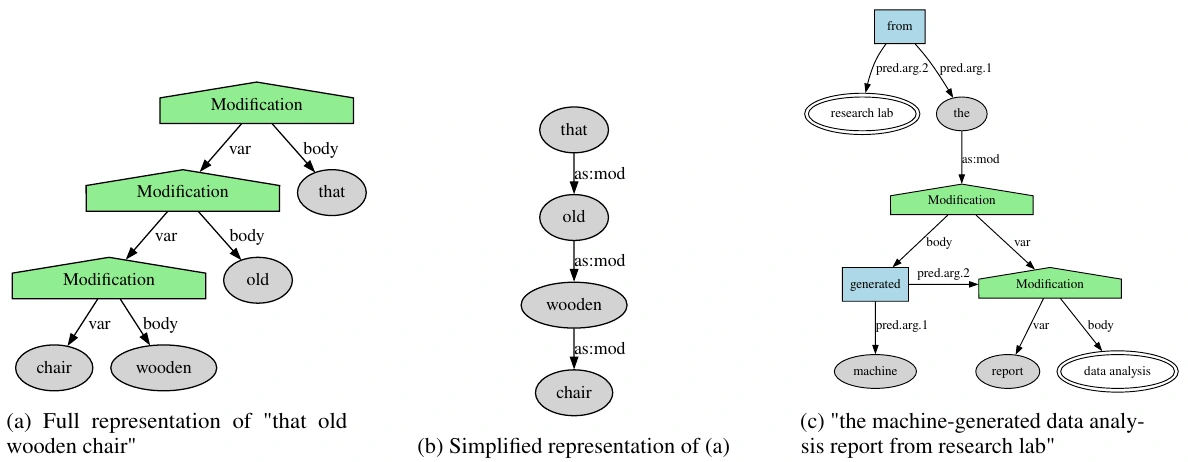
Open Information Annotation provides a predicate–function–argument representation for extraction. Lingua-Graph extends this approach to substructures that several language tasks can reuse.
ACL 2026 · First author
Lingua-Graph
Represents entities, relations, and nested facts in a single graph so that several language understanding tasks can share the same structure.
EMNLP 2020 · First author
Open Information Annotation
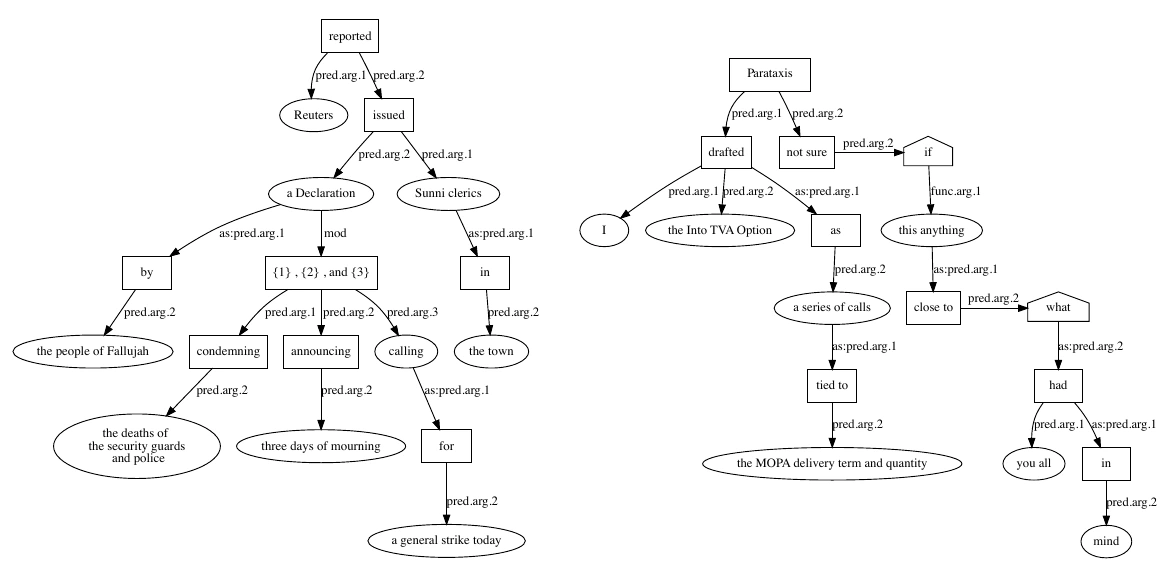
Introduces a predicate–function–argument annotation and a labeled dataset as a shared intermediate step for open information extraction.
Learning between language and knowledge
Logician learns to extract facts from text. Orator learns the reverse direction, and the dual system uses feedback from both tasks to train the models.
EMNLP 2018
Logician and Orator
First author · Pairs open-domain information extraction with its reverse task, information narration, and uses feedback from the two directions to train both models.
WSDM 2018
Logician
First author · Introduces the SAOKE knowledge format and trains a neural model to extract a sentence’s facts jointly.
Logic and reasoning systems
I study how explicit rules can support inference over large, incomplete knowledge bases, and how to combine those rules with learned representations.
Writing & talks
· First Joint BIMSA–USTB Symposium on Mathematical and AI Applications
Analytic Natural Language Processing for Cognitive Computation
Introduces Lingua-Graph and shows how entity recognition, coreference, and relation extraction can work with substructures of a shared graph.
· BIMSA Lecture
AI and Complex Systems: Can We Simulate Humans and Nature?
Examines how AI can simulate complex systems and what further evidence is needed to explain the mechanisms behind their behavior.
Teaching
Qiuzhen College, Tsinghua University · Spring 2025 to Autumn 2026
Natural Language Understanding
Language and knowledge representation, language modeling, reasoning, and intelligent systems.
Course slidesIndustry experience and honors
Career and awardsI led the Cognitive Computing Lab at Baidu Research, where I worked on cognitive natural language processing, search recommendations, autonomous driving, and ERNIE Bot. Before Baidu, I worked as a data scientist at Tencent.
Baidu’s work on knowledge-enhanced language models received a 2023 World Internet Conference Award for Pioneering Science and Technology. My honors at Baidu include the Baidu Pride Special Award and the Baidu Supreme Award.