Natural Language UnderstandingDeep Learning Basic

Natural Language
Understanding
Deep Learning Basic
Understanding
Deep Learning Basic
Mingming Sun
BIMSA
Outline

Outline
History of Deep Learning
Why Deep Learning
Feed-forward Neural Networks and Back-Propagation
Convolution Neural Networks
Recurrent Neural Networks
0.4 Deep Learning Basics 0.4.1 History of Deep Learning
0.4 Deep Learning Basics 0.4.1 History of Deep Learning
Neural Bionics
Neural Bionics
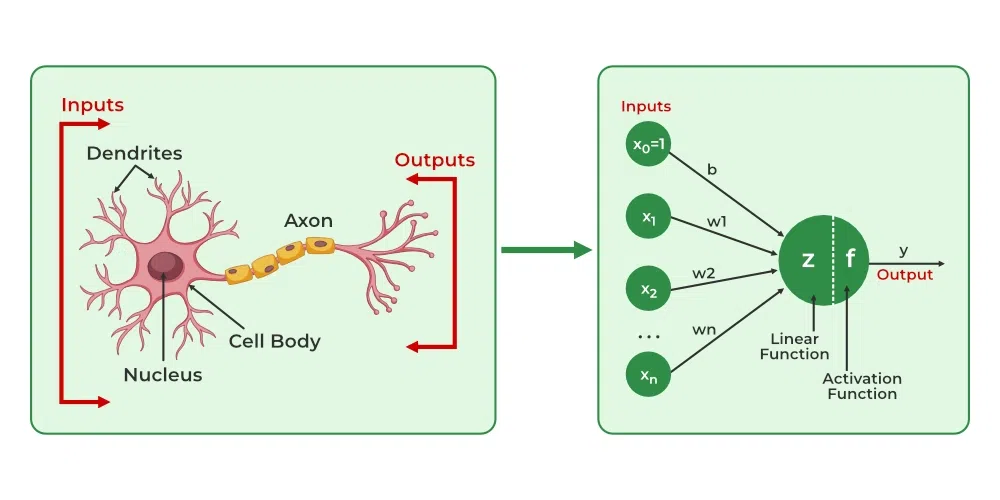
M-P Neuron Model (1943, McCulloch & Pitts): The first formalized and systematized artificial neuron model. It can implement basic logic gates (such as AND, OR, and NOT gates), thereby demonstrating that neural networks can perform logical computations.
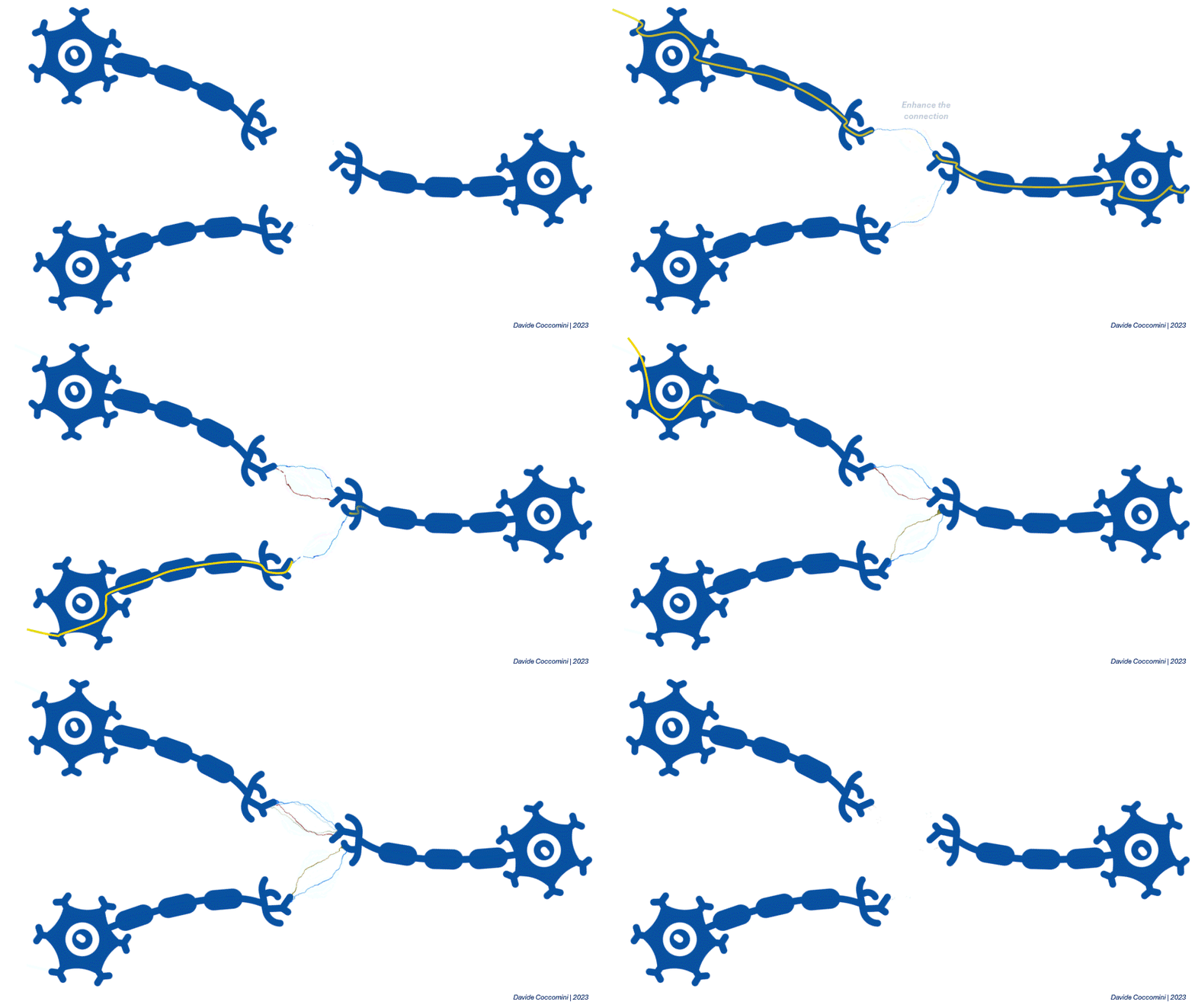
Hebb’s learning rule (1949, Hebb): Inspired by the principle of synaptic plasticity observed in the human brain: “neurons that fire together, wire together.” The first learning rule for neural networks to solve classification problems.
Expectation, Despair, and Hope
Expectation, Despair, and Hope
1958: Frank Rosenblatt invents the Perceptron, the first trainable single-layer neural network.
1969: Minsky exposes the limitations of linear separability in perceptrons, triggering the first AI winter.
1986: Hinton, Rumelhart, and others introduce Backpropagation, enabling training of multi-layer networks.
Dormancy and Brewing
Dormancy and Brewing
1989: Yann LeCun develops an early Convolutional Neural Network (CNN) for digit recognition.
1997: Hochreiter & Schmidhuber propose LSTM, revolutionizing sequence modeling.
2006: Hinton’s Deep Belief Networks (DBNs) reignite interest in "deep learning.”
However, in this small-data phrase, SVM dominate this period.
Dominate the Domain AI
Dominate the Domain AI
2012: AlexNet dominates ImageNet (error rate: 15.3%), sparking the deep learning boom.
2014: Ian Goodfellow invents GANs; VGGNet and GoogleNet advance image classification.
2015: ResNet uses residual connections to train networks with 1,000+ layers (ImageNet error: 3.57%).
2017: The Transformer architecture (Vaswani et al.) reshapes NLP.
AGI
AGI
2018: BERT (Google) redefines NLP; GPT-1 pioneers pre-trained language models.
2020: GPT-3 demonstrates few-shot learning (175B parameters).
2022: ChatGPT goes viral, Pretrain-SFT-RLHF as road map to AGI;
2023: GPT-4 achieves near-human expertise;
2024: GPT-o1/DeepSeek-R1 introduce the RL based deep-think;
2025: Agents, Coding, Math, …
0.4 Deep Learning Basics 0.4.2 Why Deep Learning
0.4 Deep Learning Basics 0.4.2 Why Deep Learning
Traditional Machine Learning
Traditional Machine Learning
Data
Feature
Shallow Machine
Why Neural Nets Failed in Small Data Period?
Why Neural Nets Failed in Small Data Period?
Small Data Period (Pre-2010s): Hundreds, at most Thousands samples
Recall the Bias-Variance Trade-off, complex machines will have large variance when sample size is small, thus is easy to overfit.
Shallow machines dominate this period.
Shallow NN is identical to kernel machines. Deep NN are too complex;
NN is sensitive to initialization.
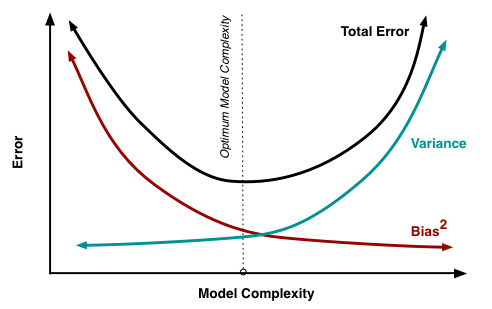
https://scott.fortmann-roe.com/docs/BiasVariance.html
How Hinton Solve this Problem
How Hinton Solve this Problem
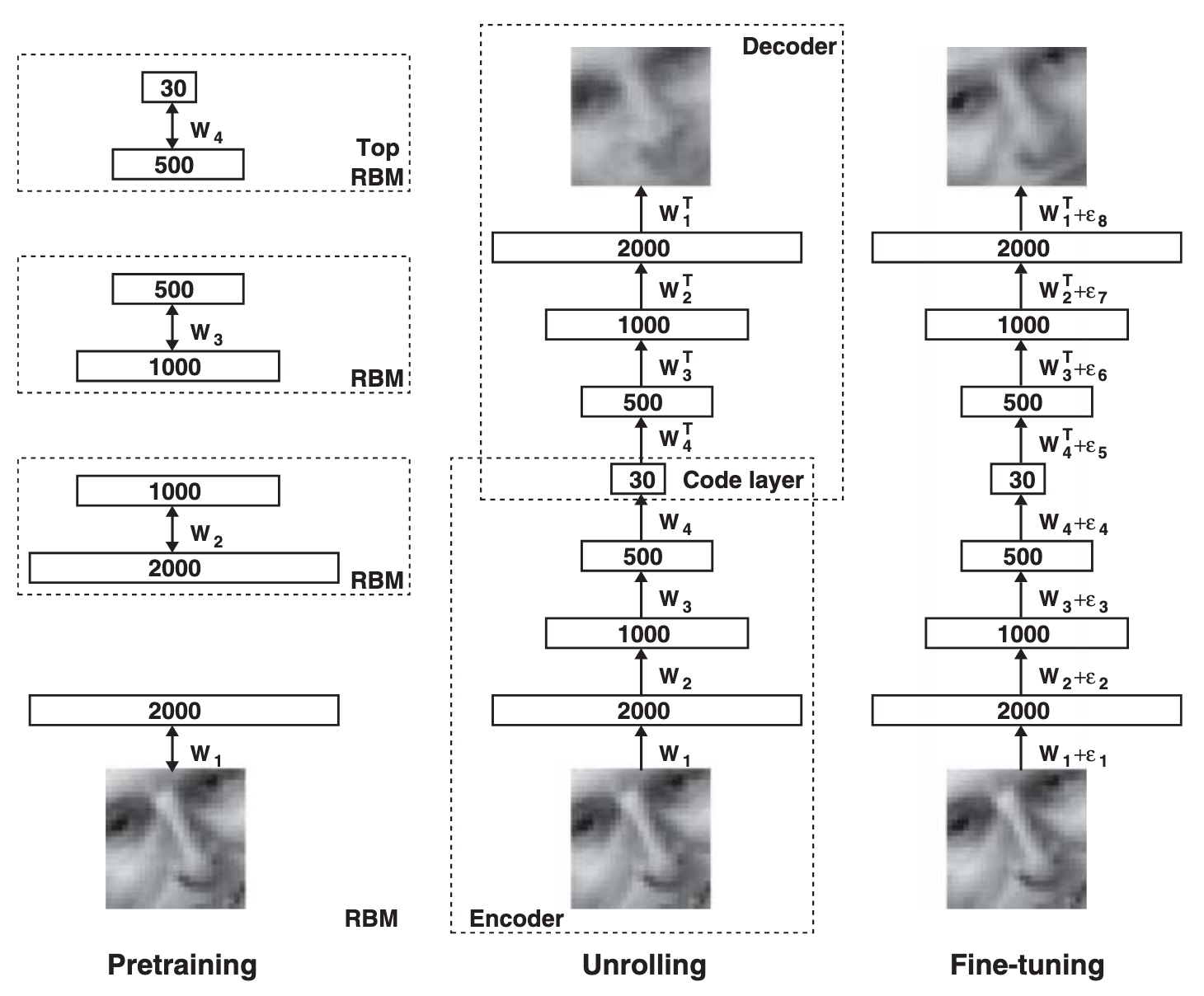
1.Hinton, G. E. & Salakhutdinov, R. R. Reducing the Dimensionality of Data with Neural Networks. Science 313, 504–507 (2006).
Deep Learning
Deep Learning
“Depth … is defined for circuits. A circuit is a directed acyclic graph where each node is associated with a computation, and whose output results are used by the successors of that node. … The depth of a circuit is the longest path from an input to an output node. ”
“…(Yao, 1985), showing that logic gates circuits of depth-2 require exponential size to implement d-bit parity where a deep circuit of depth O(log(d)) could implement it with O(d) nodes. H ̊astad (1986) then showed that there are functions computable with a polynomial-size logic gate circuit of depth k that require exponential size when restricted to depth k − 1 (Ha ̊stad, 1986).”
Think: what is the architecture depth of decision trees?
Bengio, Y. & Delalleau, O. On the Expressive Power of Deep Architectures.
Non-local Learning
Non-local Learning
Local Learning
Learning depends only on local signals (e.g., Hebbian learning: synaptic updates rely only on the activity of connected neurons).
Pros: biologically plausible; Cons: hard to capture complex global dependencies.
Non-local Learning
Parameter updates require global or distant signals (e.g., backpropagation gradients).
Pros: captures long-range dependencies and global structure with higher-level abstraction.
Deep Learning is Non-Local Learning
Deep learning’s success partly relies on non-local mechanism across layers and modules.
Representation Learning
Representation Learning
Deep Learning = Learning Multiple Levels of Representation
“The intent is to discover more abstract features in the higher levels of the representation, which hopefully make it easier to separate from each other the various explanatory factors extent in the data.”
Deep representations lie within the human brain and human knowledge structures, among other areas.
Bengio, Y. & Delalleau, O. On the Expressive Power of Deep Architectures.
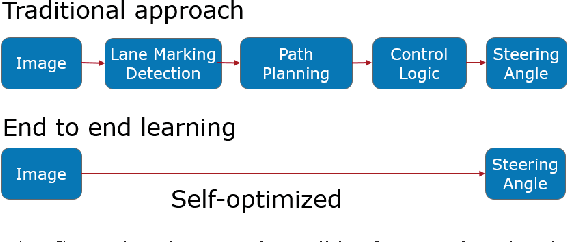
End-to-End Learning
End-to-End Learning
Zhilu Chen, Xinming Huang Published in IEEE Intelligent Vehicles… 11 June 2017
It connect every component to the final loss;
Thus make each hidden component more closely cooperative.
Case Study: Decision Tree
Case Study: Decision Tree
Shallow Learner
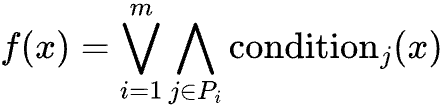
In circuit terms, always equivalent to a depth-2 AND–OR structure.
Local Learner
Training relies on local greedy splits (e.g., information gain / Gini).
No global error optimization or cross-layer coordination.
Not Representation Learning
Merely partitions the input space into regions → outputs predictions.
Does not generate new feature representations or hierarchical abstractions.
Not End-to-End Learning
Learns by stage-wise tree construction, not by unified differentiable optimization.
0.4 Deep Learning Basics 0.4.3 Feedforward Neural Networks and Backpropagation
0.4 Deep Learning Basics 0.4.3 Feedforward Neural Networks and Backpropagation
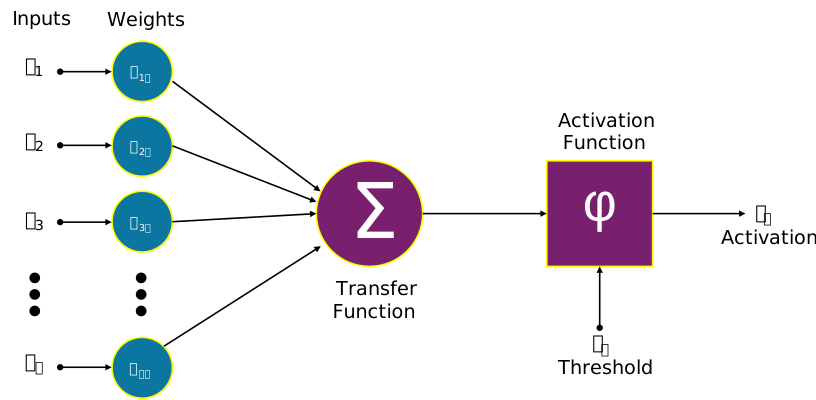
Artificial Neuron
Artificial Neuron
https://en.wikipedia.org/wiki/Artificial_neuron
Activation Functions
Activation Functions
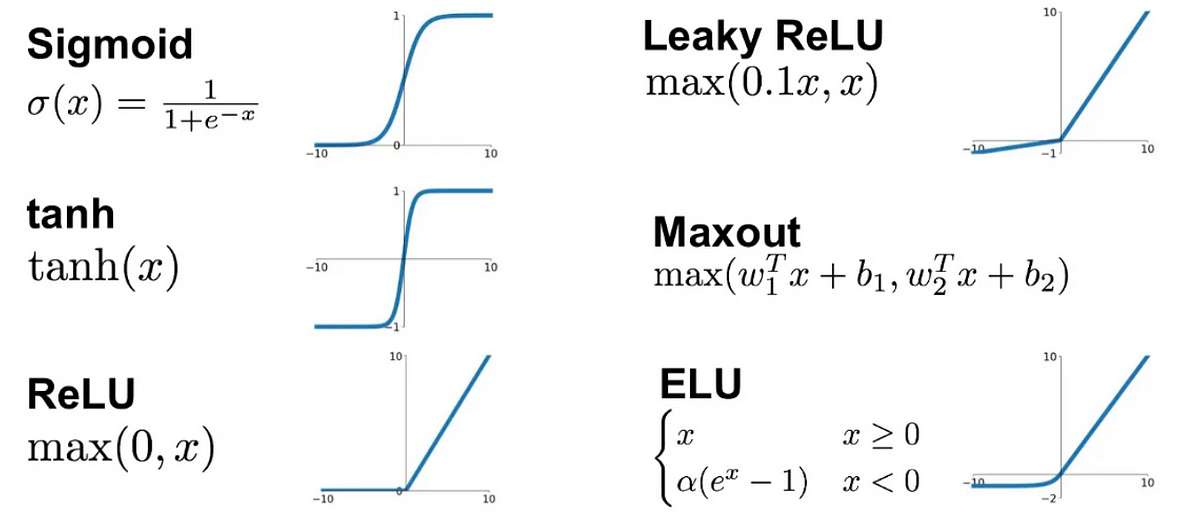
https://medium.datadriveninvestor.com/types-of-activation-functions-in-deep-learning-e7c2a48d3242
Feedforward Neural Network
Feedforward Neural Network
Input Sample with fixed dimension (feature vector);
Output Target also with fixed dimension (probabilities of classes);
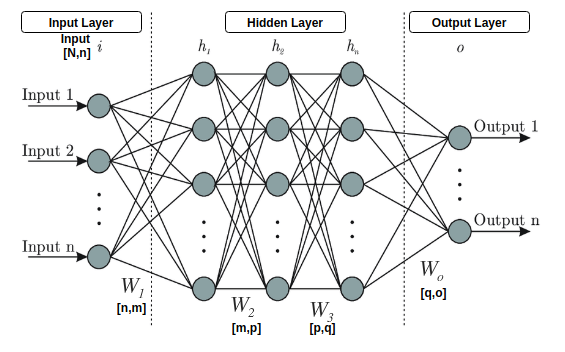
https://medium.com/analytics-vidhya/linear-algebra-how-uses-in-artificial-intelligence-2e1e001c65
Back-Propagation
Back-Propagation
https://analyticsarora.com/8-unique-machine-learning-interview-questions-on-backpropagation/
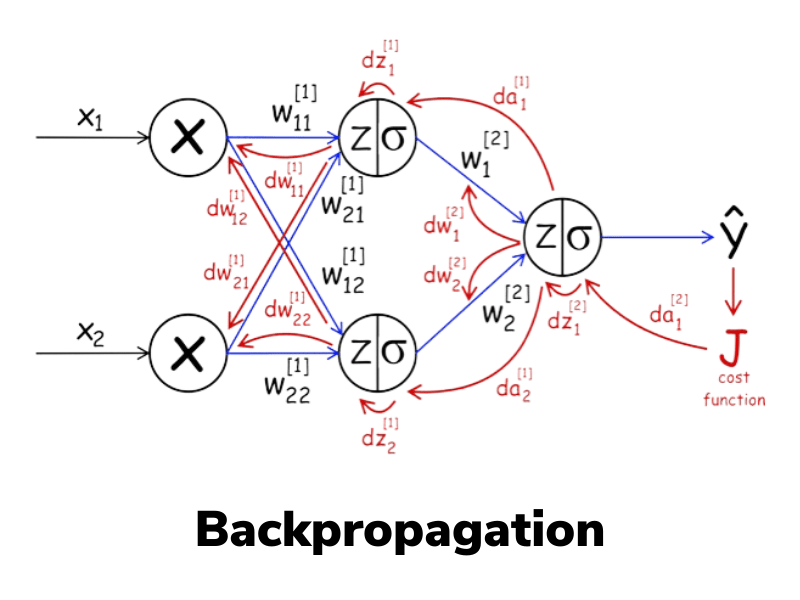
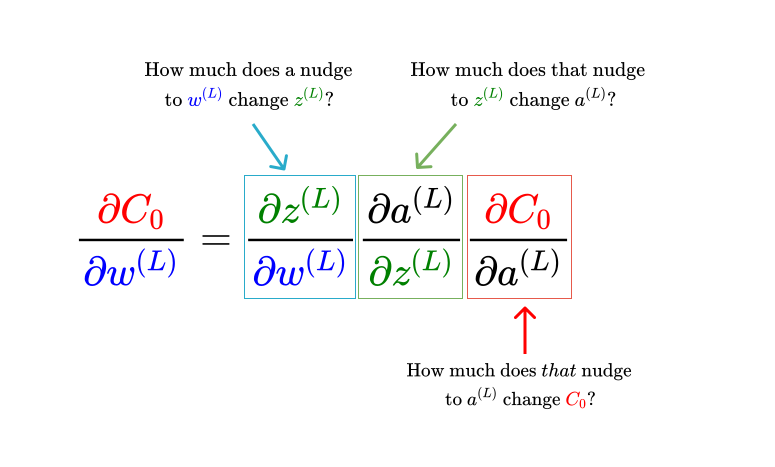
https://www.3blue1brown.com/lessons/backpropagation-calculus
Residual Block and ResNet
Residual Block and ResNet
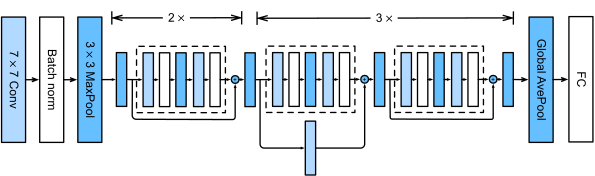
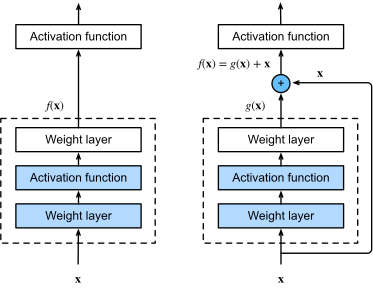
Residual Block
ResNet 18
When networks goes deeper, their performances will degrade (not overfitting, as the training performance also drop);
ResNet extends the depth to 100-1000, with better performance.
https://d2l.ai/chapter_convolutional-modern/resnet.html
0.4 Deep Learning Basics 0.4.4 Convolutional Neural Networks
0.4 Deep Learning Basics 0.4.4 Convolutional Neural Networks
From Fully Connected Layers to Convolutions
From Fully Connected Layers to Convolutions
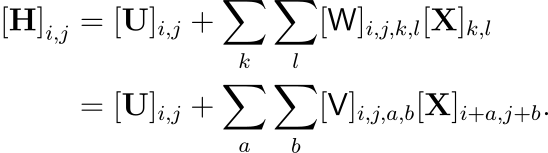
For images, fully connected layers are as follows:
Translation Invariance:
Locality:
Convolution:



https://d2l.ai/chapter_convolutional-neural-networks/conv-layer.html
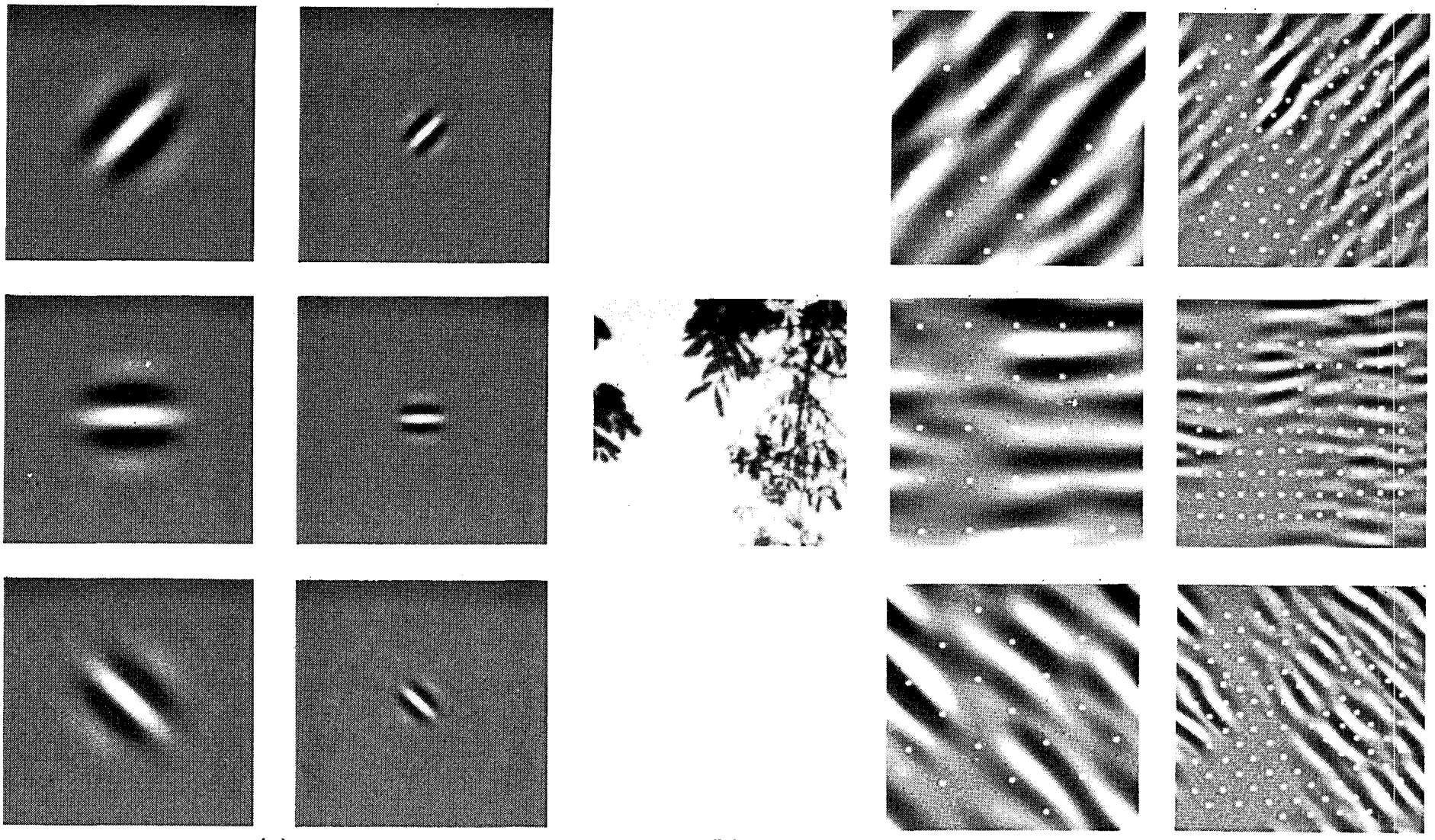
Proof in Vision
Proof in Vision
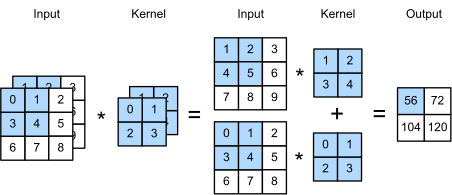
https://d2l.ai/chapter_convolutional-neural-networks/conv-layer.html#fig-correlation
Convolution and Pooling Operation
Convolution and Pooling Operation
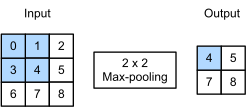
convolution
pooling
https://d2l.ai/chapter_convolutional-neural-networks/conv-layer.html#fig-correlation
Convolution Network (LeNet)
Convolution Network (LeNet)
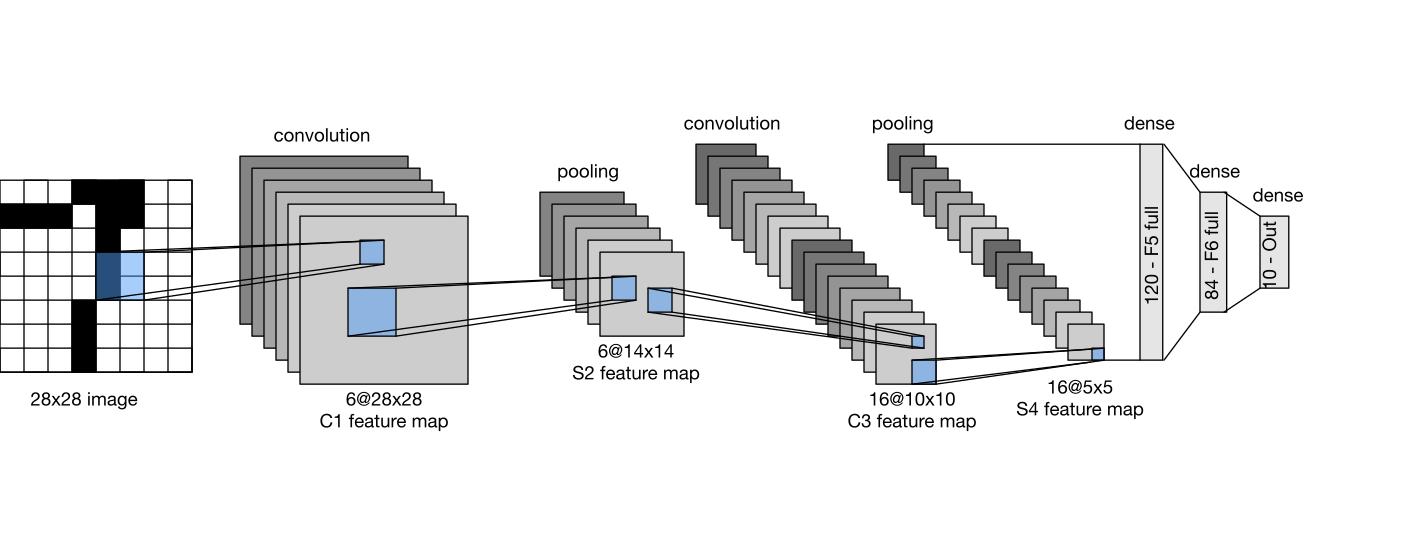
https://d2l.ai/chapter_convolutional-neural-networks/conv-layer.html#fig-correlation
Convolution Network (AlexNet)
Convolution Network (AlexNet)
https://d2l.ai/chapter_convolutional-neural-networks/conv-layer.html#fig-correlation
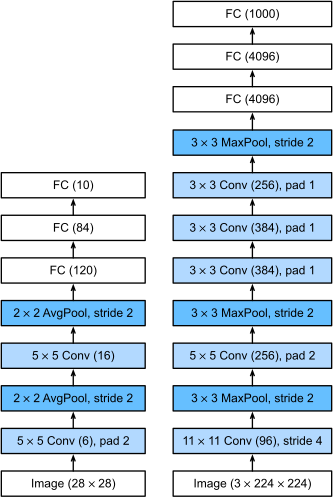
LeNet
AlexNet
Convolution Network for Text
Convolution Network for Text
https://d2l.ai/chapter_convolutional-neural-networks/conv-layer.html#fig-correlation
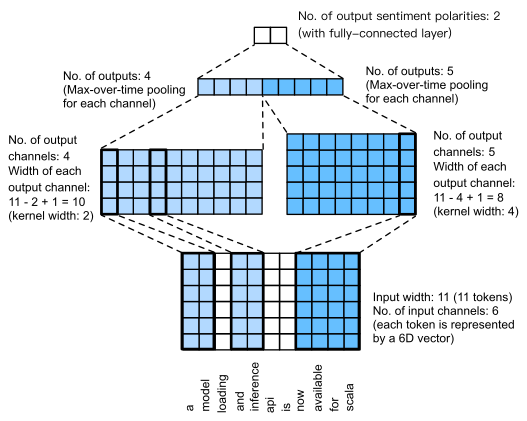
0.4 Deep Learning Basics 0.4.5 Recurrent Neural Networks
0.4 Deep Learning Basics 0.4.5 Recurrent Neural Networks
Sequential Data
Sequential Data
Neuron/Electron Signal;
Sound and voice;
Language;
Multi-step Action Procedure;
Coping with the Sequential Data (I)
Coping with the Sequential Data (I)
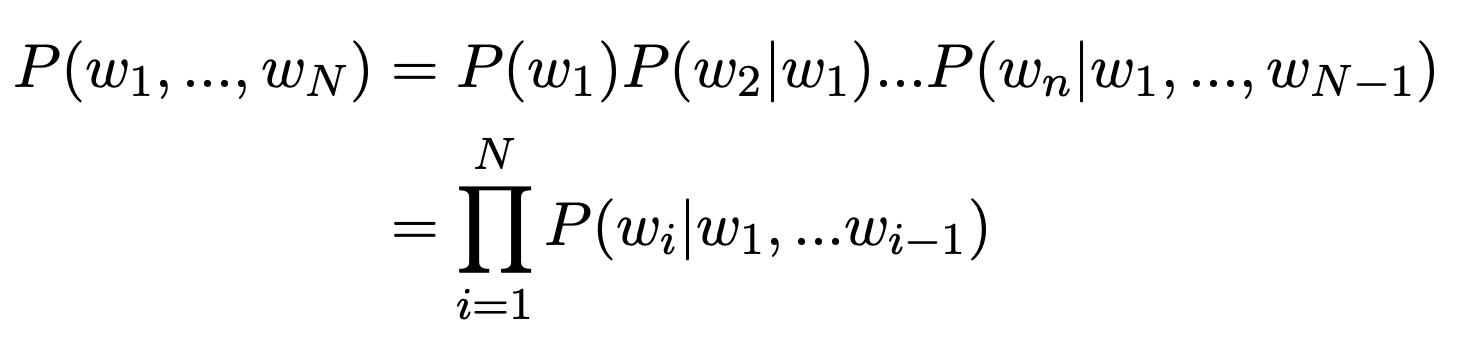
Probabilistic Sequence Model:
Variant number of input tokens: .
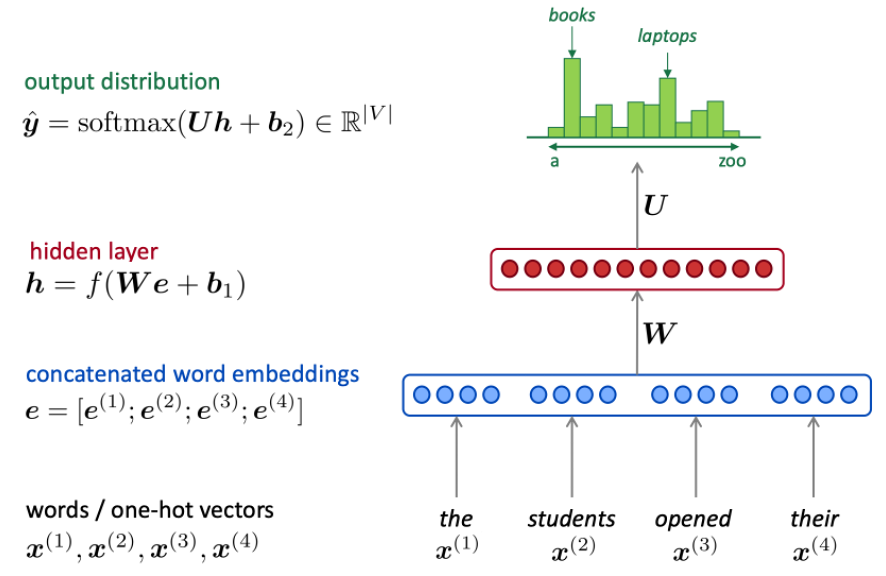
To employee a feedforward neural model, we need a fix-size window;

Coping with the Sequential Data (II)
Coping with the Sequential Data (II)
Simple and efficient;
But window cannot be arbitrarily large;
Forget any thing before the window;
We need new neural architecture.
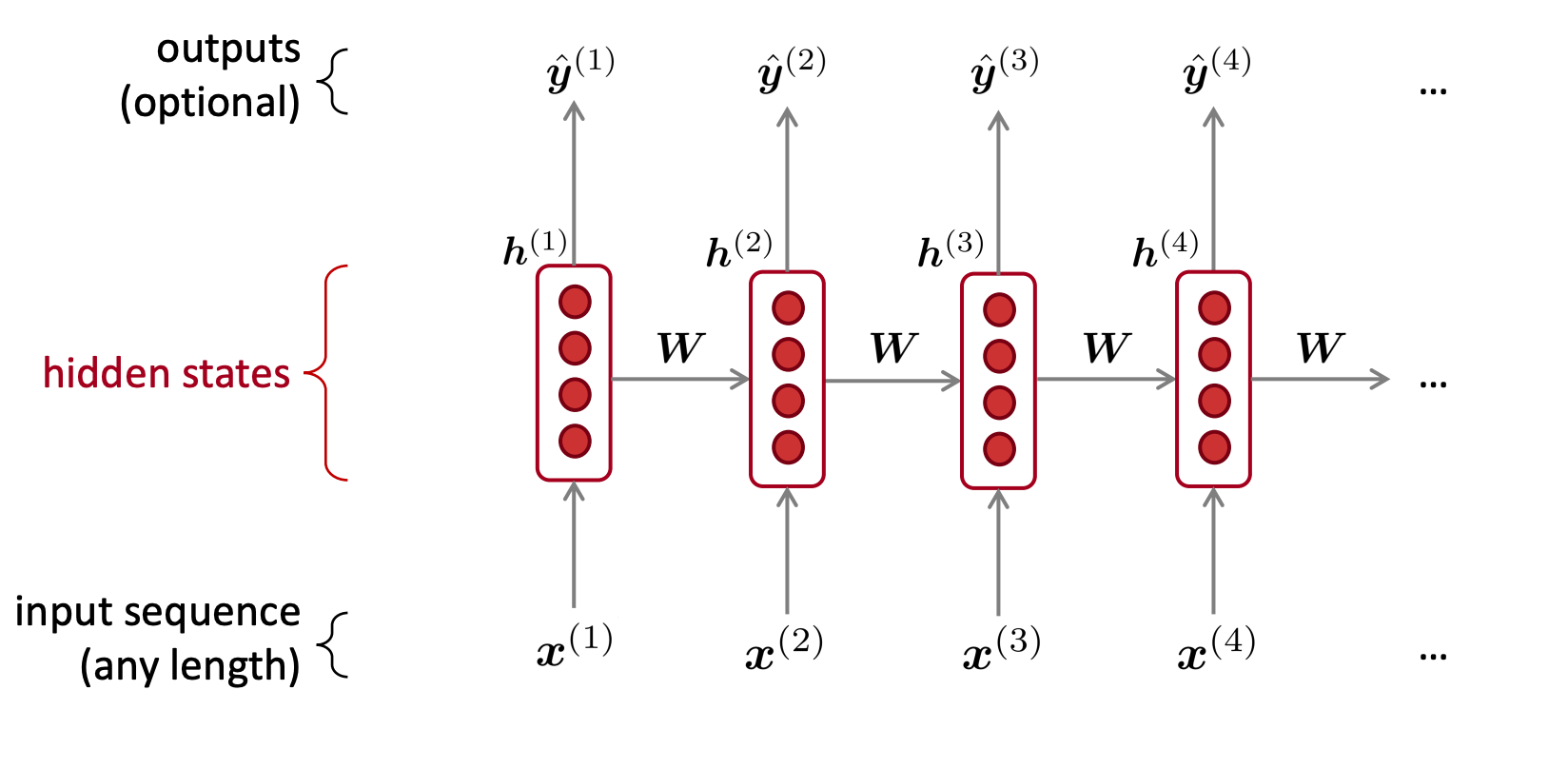
Recurrent Architecture
Recurrent Architecture
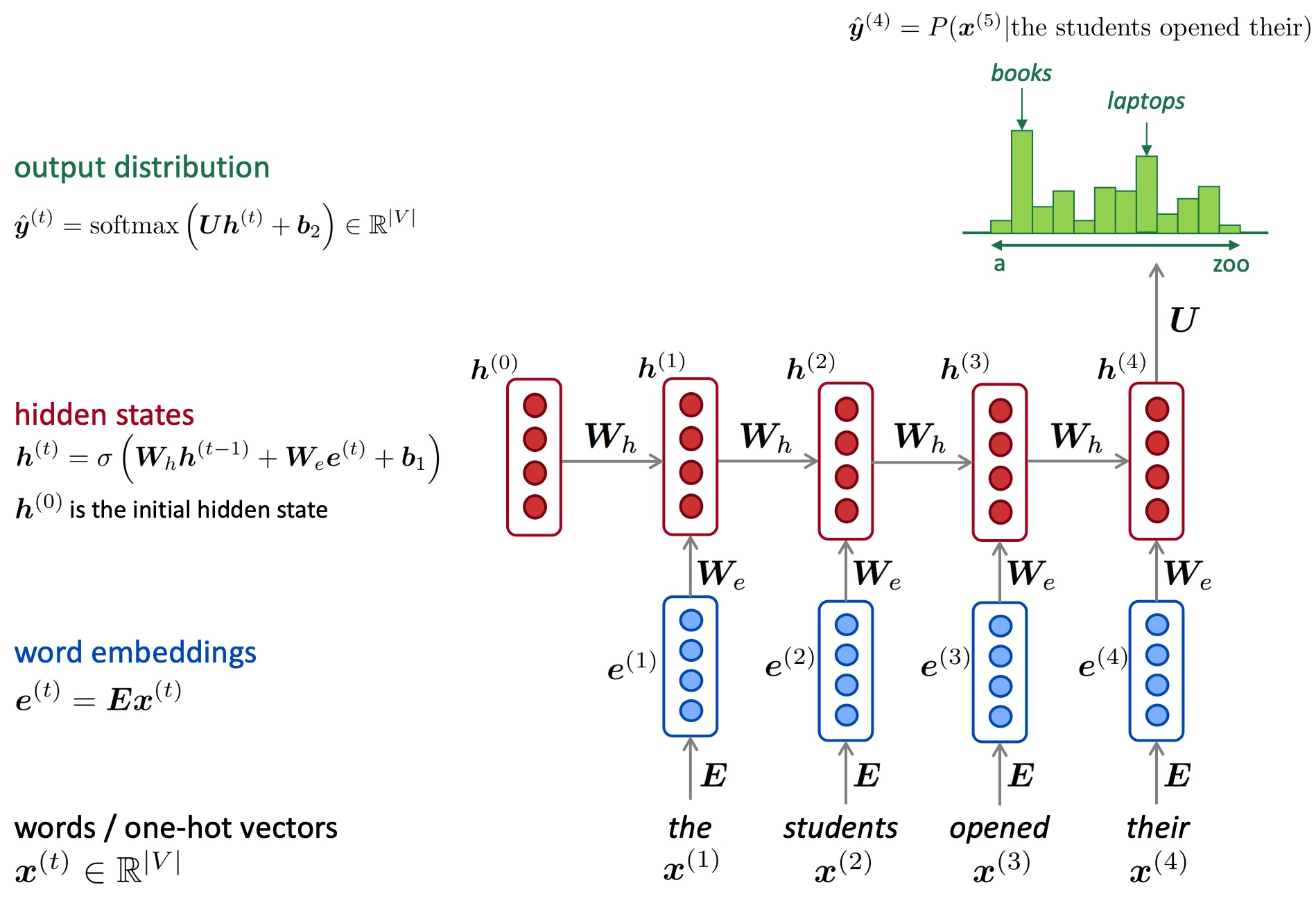
Introduce inner-state to memorize history;
Update the inner-state when meet new token;
Make decision based on newest inner-state.

Language as an example
Language as an example
Capacity
Capacity
If training vanilla neural nets is optimization over functions, training recurrent nets is optimization over programs.
RNNs are Turing-Complete in the sense that they can simulate arbitrary programs (with proper weights).
Training
Training
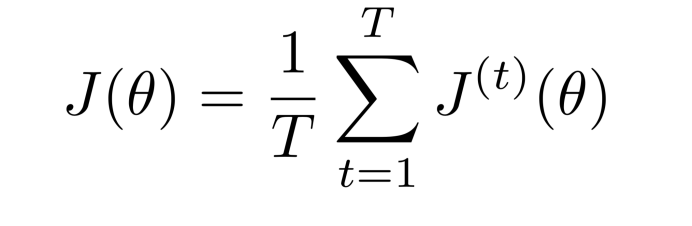
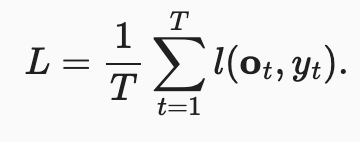
Calculate the loss of output to the ground truth;
For sequence generation task, calculate loss at each generation and sum up;
Apply gradient-descend to optimize the parameters using BPTT;
For large dataset, stochastic gradient descend (SGD) should be applied;
Time consuming since the dependencies between hidden-state (cannot parallelize along generation step T);
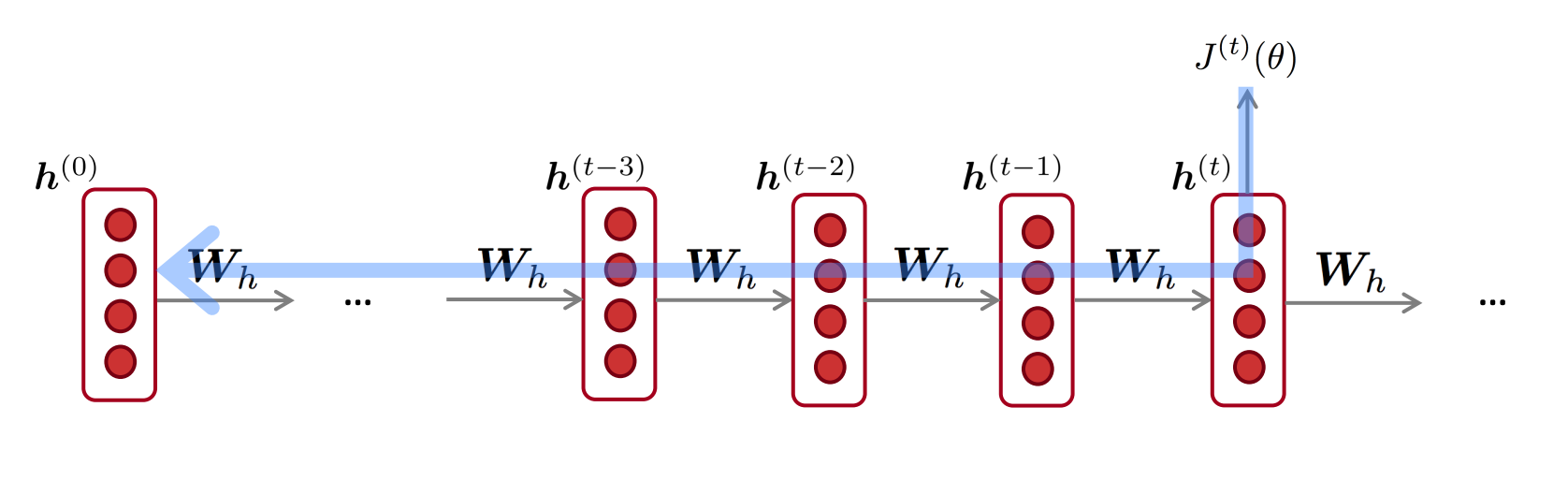
Backpropagation Through Time
Backpropagation Through Time
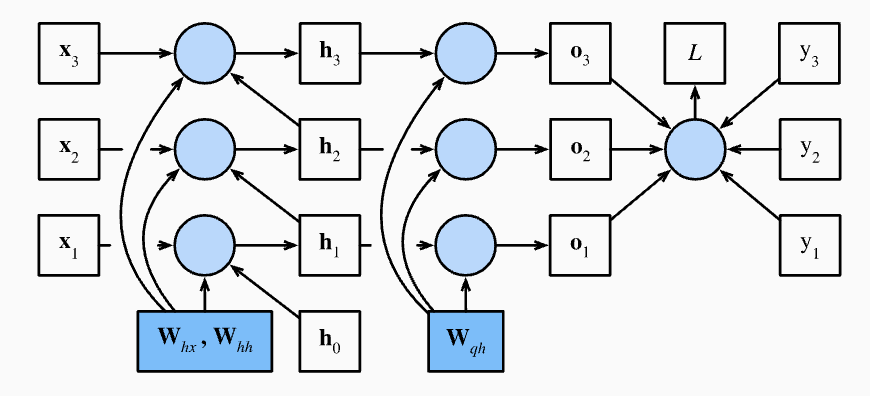
Apply the Backpropagation along the sequence (time dimension).
The error of each output step should be backpropagated through the sequence.
Details will be discussed later.
Vanila RNN
Vanila RNN
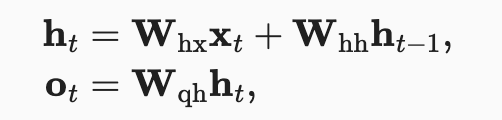
Inner-State: a fix-dimensional vector;
State-Update: Activation of linear combination of inner-state and new input;
Details in Gradient Computing
Details in Gradient Computing
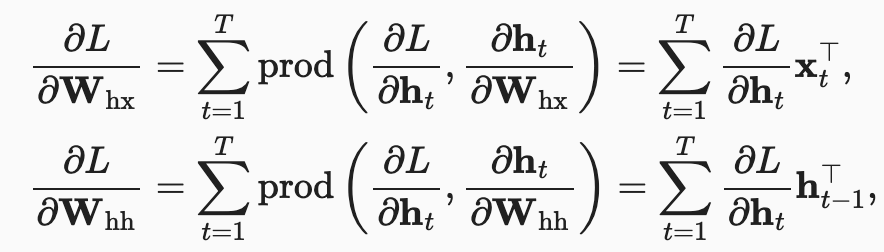

Gradient Vanish/Exploding
Gradient Vanish/Exploding
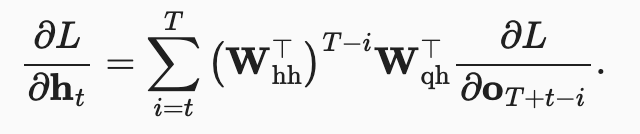
The gradient involves potentially very large powers of .
If its eigenvalues smaller than 1, the gradient vanishes;
If its eigenvalues larger than 1, the gradient explodes/diverges.
The essential problem of vanilla RNN: numerically unstable.
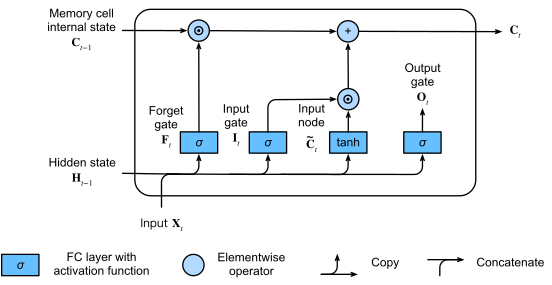
Long Short-Term Memory (LSTM)
Long Short-Term Memory (LSTM)
Intuition: Control the long-term dependency:
when the hidden state should be updated and when it should be reset;
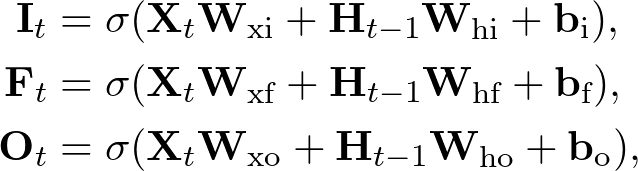
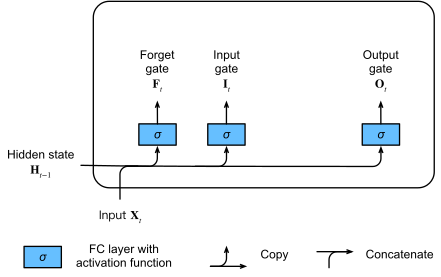
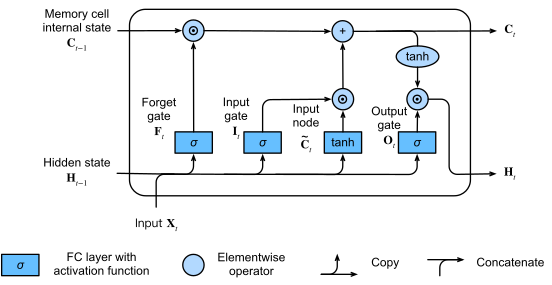
Gated Memory Cell: with an internal state and a number of multiplicative gates that determine whether:
a given input should impact the internal state (the input gate);
the internal state should be flushed to 0 (the forget gate);
the internal state should be allowed to impact the cell’s output (the output gate).
LSTM: (1) The Gates
LSTM: (1) The Gates
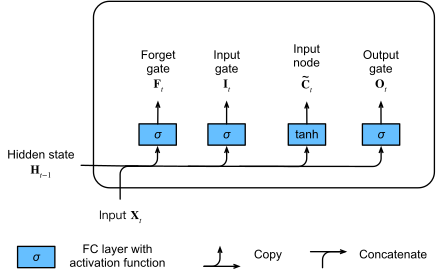
LSTM: (2) The Input Node
LSTM: (2) The Input Node

LSTM: (3) Memory Cell Internal State
LSTM: (3) Memory Cell Internal State

LSTM : (4) Hidden State
LSTM : (4) Hidden State

Gated Recurrent Unit (GRU)
Gated Recurrent Unit (GRU)
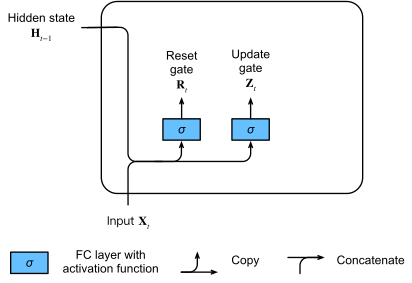
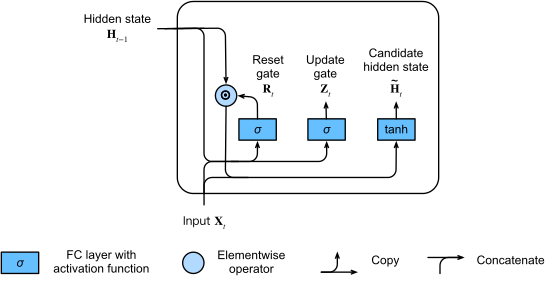
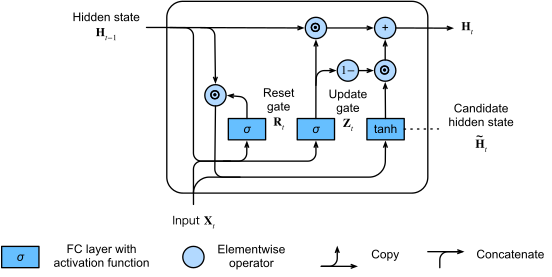
GRU: A simplified LSTM with faster computation.
Two Gates: reset gate, and update gate;
Only one state;
GRU: (1) Gates
GRU: (1) Gates

GRU: (2) Candidate Hidden State
GRU: (2) Candidate Hidden State

GRU: (3) Hidden State
GRU: (3) Hidden State

Summary
Summary
What should we do to make the gates works as expected?
Nothing. We just design the mechanism, enlarge the capacity, then feed the data. Machine will learn how to behave well.
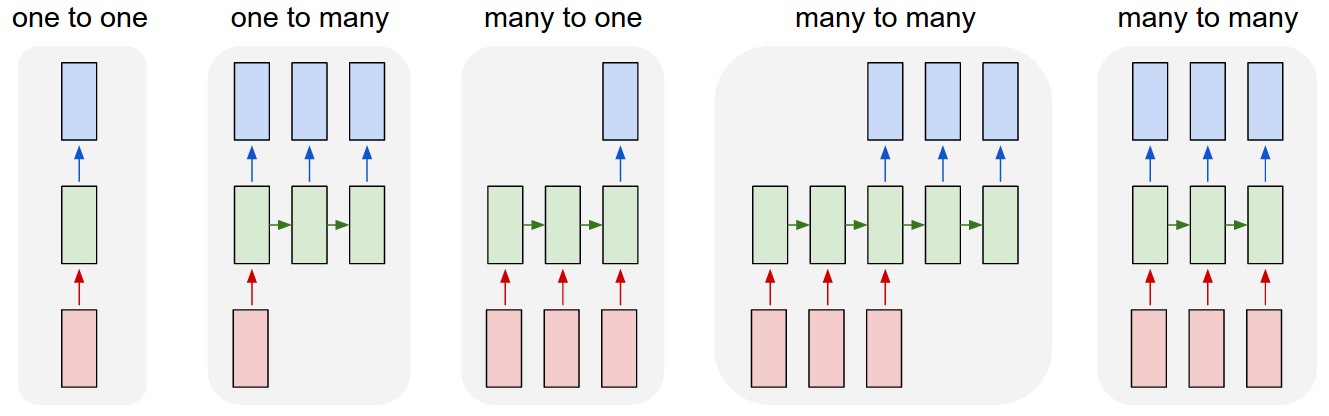
Input-Output Paradigms
Input-Output Paradigms
Deep RNN
Deep RNN
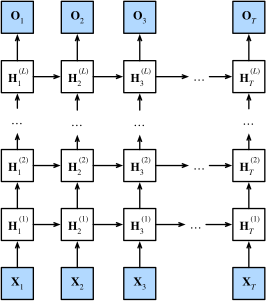
Stack RNN layers;
Each layer take hidden-states of previous-layer as input;
Can memorize a lot, analyze deeply, and accomplish difficult task:
Large amount of hidden-states;
Deep hidden-states;
Bidirectional RNN
Bidirectional RNN
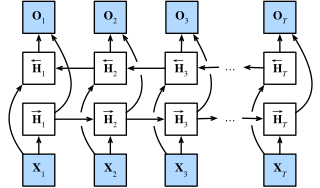
Uni-directional RNN know history and generate future;
Bidirectional RNN know both history and future and finish tasks:
Fill the blank;
Tagging the items of the sequence;
Predict attributes of the sequence.
Encoder-Decoder
Encoder-Decoder
Based on Representation Learning: anything can be represented by embedding vectors;
Encoder: takes a variable-length sequence as input produce embedding vectors as the representations of that sequence;
Decoder generate the output from the representative embedding vectors.

Sequence Generation
Sequence Generation
Given input representative embeddings , consider the problem of generating a sequence of items from a vocabulary .
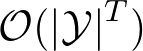
Finding the sequence maximizing above probability would have a unacceptable cost .
We must fall back on an efficient solution.

Greedy Search
Greedy Search
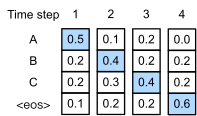
At each step, select the token with the highest conditional probability;
Simple but sub-optimal;

Beam Search
Beam Search
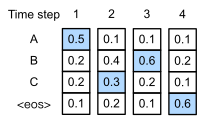
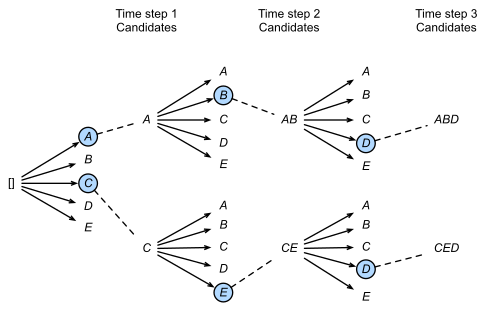
At each step, consider candidates with the top conditional sequence probability;
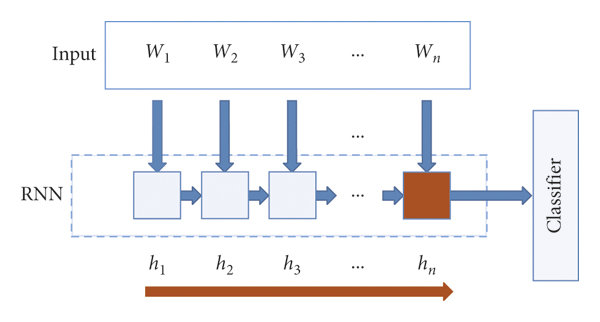
Applications: Sequence Classification
Applications: Sequence Classification
Feed the last hidden-state to the classifier;
Widely used in NLP task such as text classification;
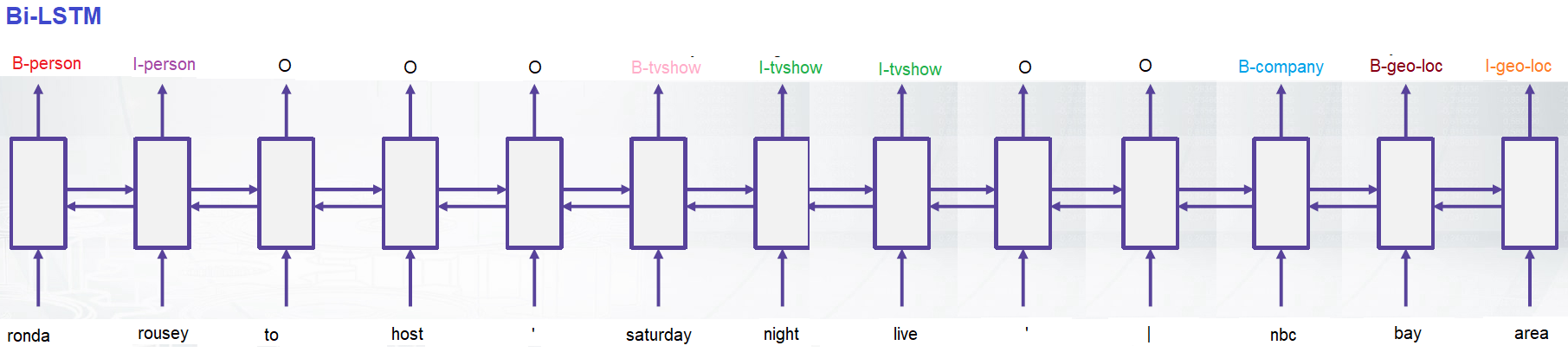
Applications: Sequence Labeling
Applications: Sequence Labeling
Predict a label for each item of input sequence.
Widely used in NLP task like NER;
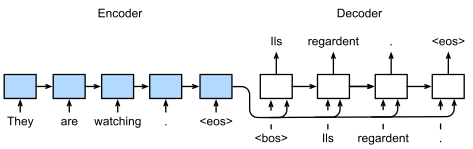
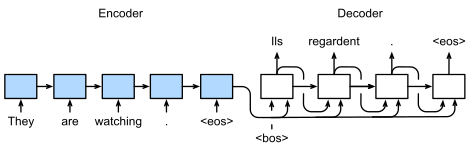
Applications: Sequence Prediction
Applications: Sequence Prediction
Modeling the problem as a sequence prediction task;
Typical application: Machine Translation, AGI LLM;
0.4 Deep Learning Basics 0.4.6 Suggested Readings
0.4 Deep Learning Basics 0.4.6 Suggested Readings
Books
Books
Deep Learning, Ian Goodfellow and Yoshua Bengio and Aaron Courville https://www.deeplearningbook.org/
Any Questions?
Any Questions?