Natural Language UnderstandingLanguage Understanding Tasks

Natural Language
Understanding
Language Understanding Tasks
Understanding
Language Understanding Tasks
Mingming Sun
BIMSA
Outline

Outline
Word Sense Disambiguation
Sentiment Analysis
Semantic Textual Similarity
Text Summarization
Information Retrieval
Question Answering
Dialogue Systems
2.4 Language Understanding Tasks 2.4.1 Word Sense Disambiguation
2.4 Language Understanding Tasks 2.4.1 Word Sense Disambiguation
Recall: Word Sense and Contextual Embedding
Recall: Word Sense and Contextual Embedding
World has different Sense in different environment;
Bat (noun) — Animal
Bat (noun) — Sports equipment
Bat (verb) — To hit with a bat
Bat (verb) — To flutter or blink quickly
World has different contextual Embedding in different environment;
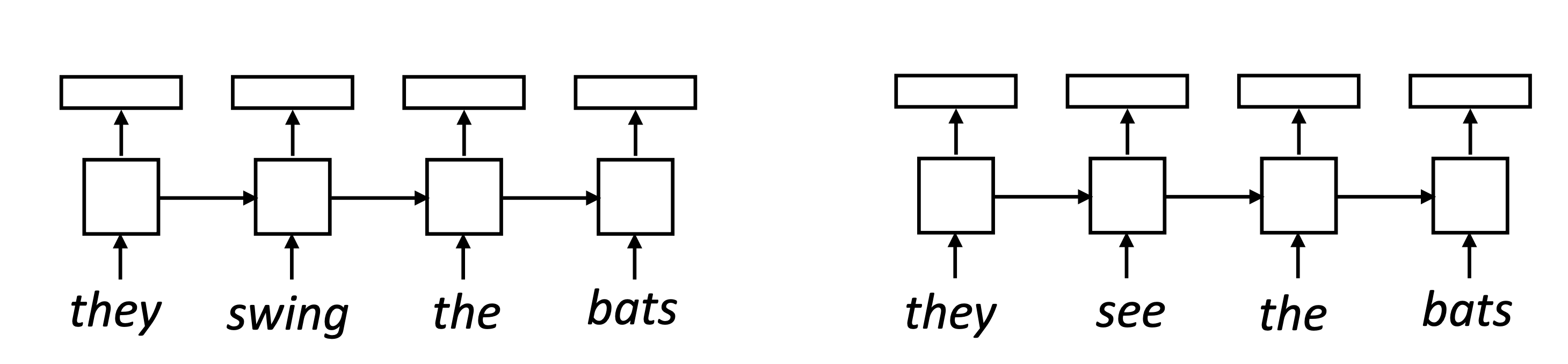
https://www.cs.utexas.edu/~gdurrett/courses/fa2022/lectures/lec20-1pp.pdf
Recall: Word Sense and Contextual Embedding
Recall: Word Sense and Contextual Embedding
https://web.stanford.edu/~jurafsky/slp3/11.pdf
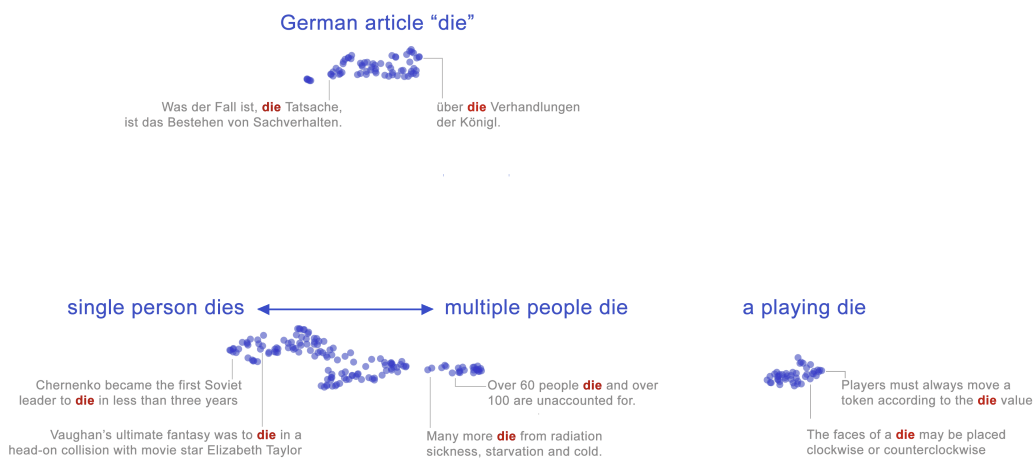
Word Sense Disambiguation (WSD)
Word Sense Disambiguation (WSD)
Given:
a word in context;
a set of fixed potential word senses;
Output:
Identify the correct sense of the word in the context.
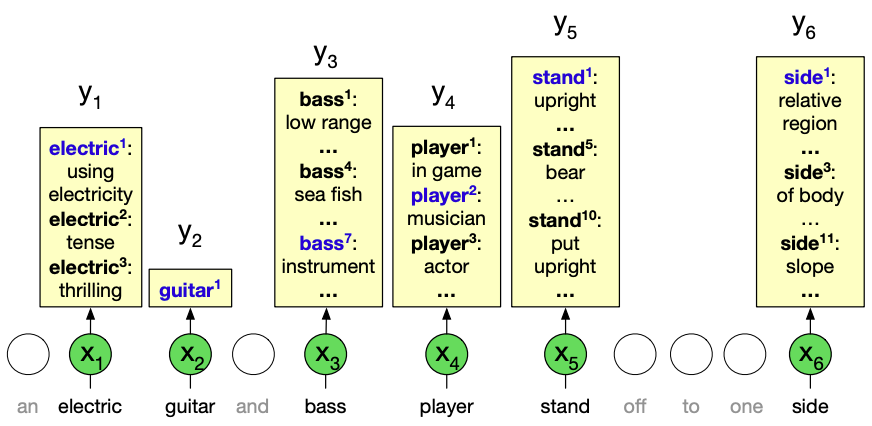
https://web.stanford.edu/~jurafsky/slp3/11.pdf
Problem Modeling
Problem Modeling
Target: Matching a word in context to a set of sense;
What we have:
We can get contextual embedding of the word given context through a pre-trained BERT;
But we have no embedding of senses.
How to get the embedding of senses?
A sentence embedding from its definition?
Other method?
How to compute the Sense Embedding
How to compute the Sense Embedding
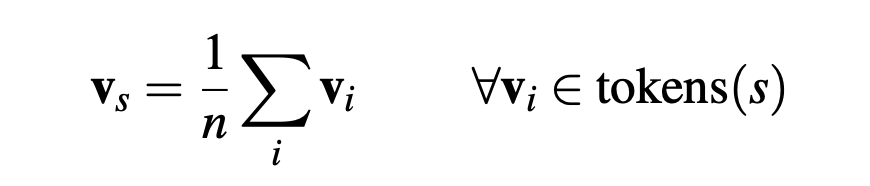
Sense embedding from its definition:
Plan I: Use sentence-BERT to compute the phrase/sentence embedding.
Plan II: Average embedding of words in definition (using the same Bert of computing the contextual embedding of the target word)
Pros and Cons?
How to compute the Sense Embedding
How to compute the Sense Embedding
If we have a sense-labeled dataset (SemCore or SenseEval):
The words in each sentence are labeled with it correct sense in the context.
When applying BERT in each sentence, we obtain the corresponding contextual embedding of that word, hence the corresponding sense.
So, for each sense, we gather a collection of contextual embeddings.
In Inference Time
In Inference Time
Just apply the nearest neighbor classification:
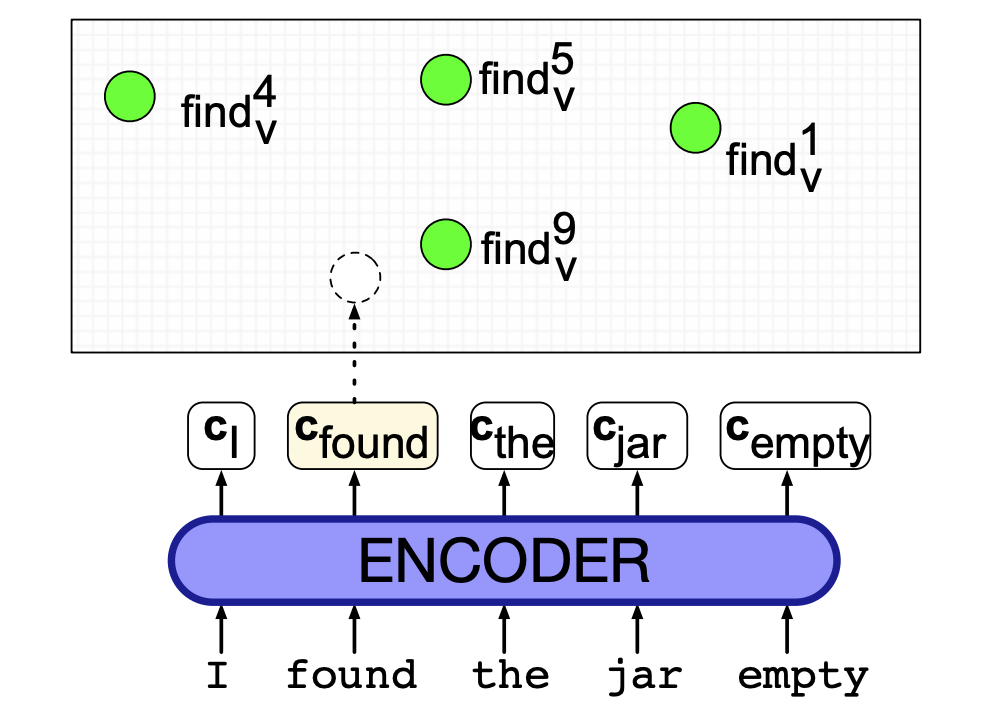

https://web.stanford.edu/~jurafsky/slp3/11.pdf
2.4 Language Understanding Tasks 2.4.2 Sentiment Analysis
2.4 Language Understanding Tasks 2.4.2 Sentiment Analysis
Sentiment Analysis
Sentiment Analysis
Movie reviews
Product comments
Online Twitter and Weibo
News
Financial report
unbelievably disappointing
Full of zany characters and richly applied satire, and some great plot twists
this is the greatest screwball comedy ever filmed
It was pathetic. The worst part about it was the boxing scenes.
Why Sentiment Analysis
Why Sentiment Analysis
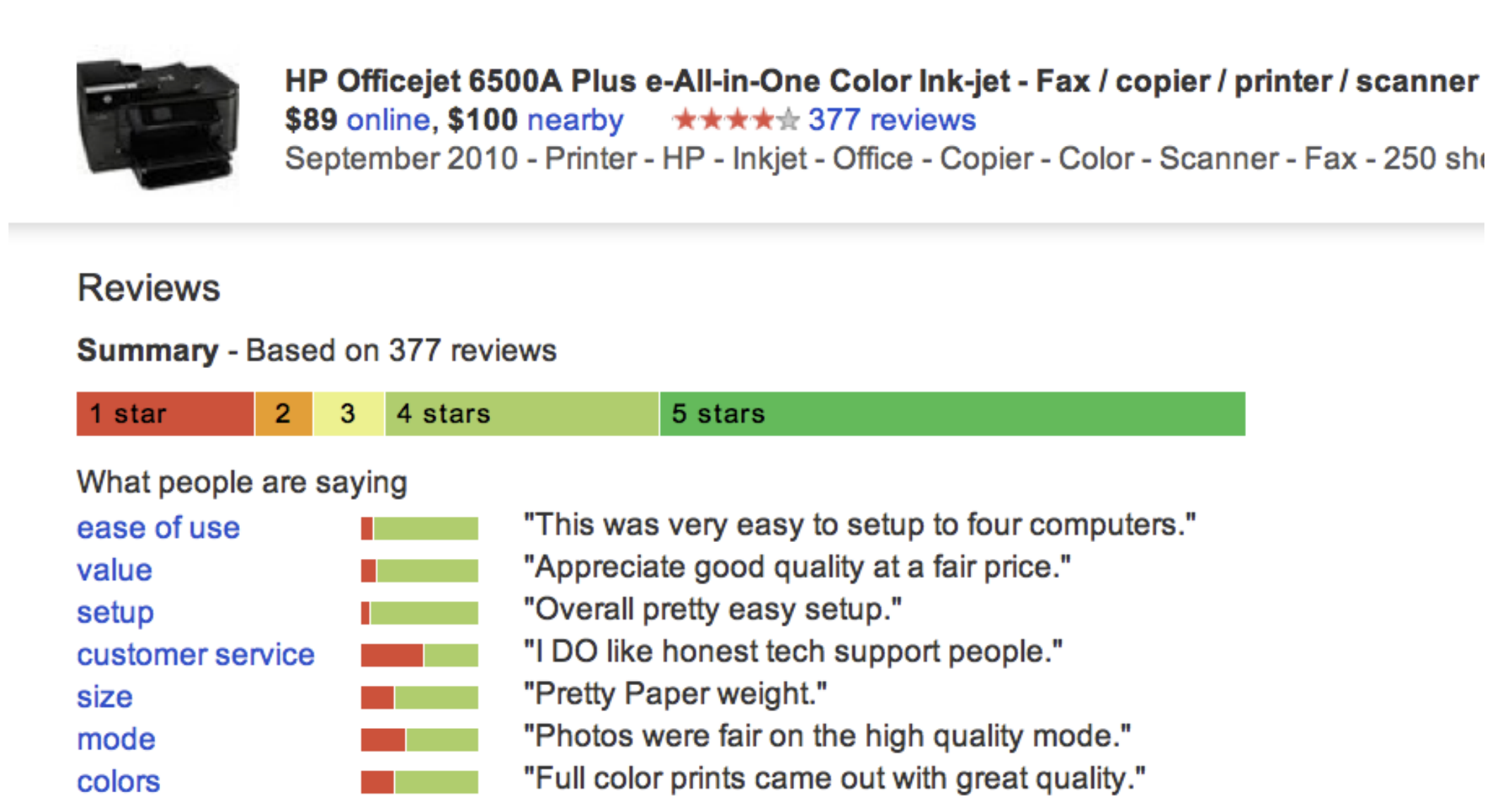
https://web.stanford.edu/~jurafsky/slp3/slides/7_Sent.pdf
Why Sentiment Analysis
Why Sentiment Analysis
https://web.stanford.edu/~jurafsky/slp3/slides/7_Sent.pdf
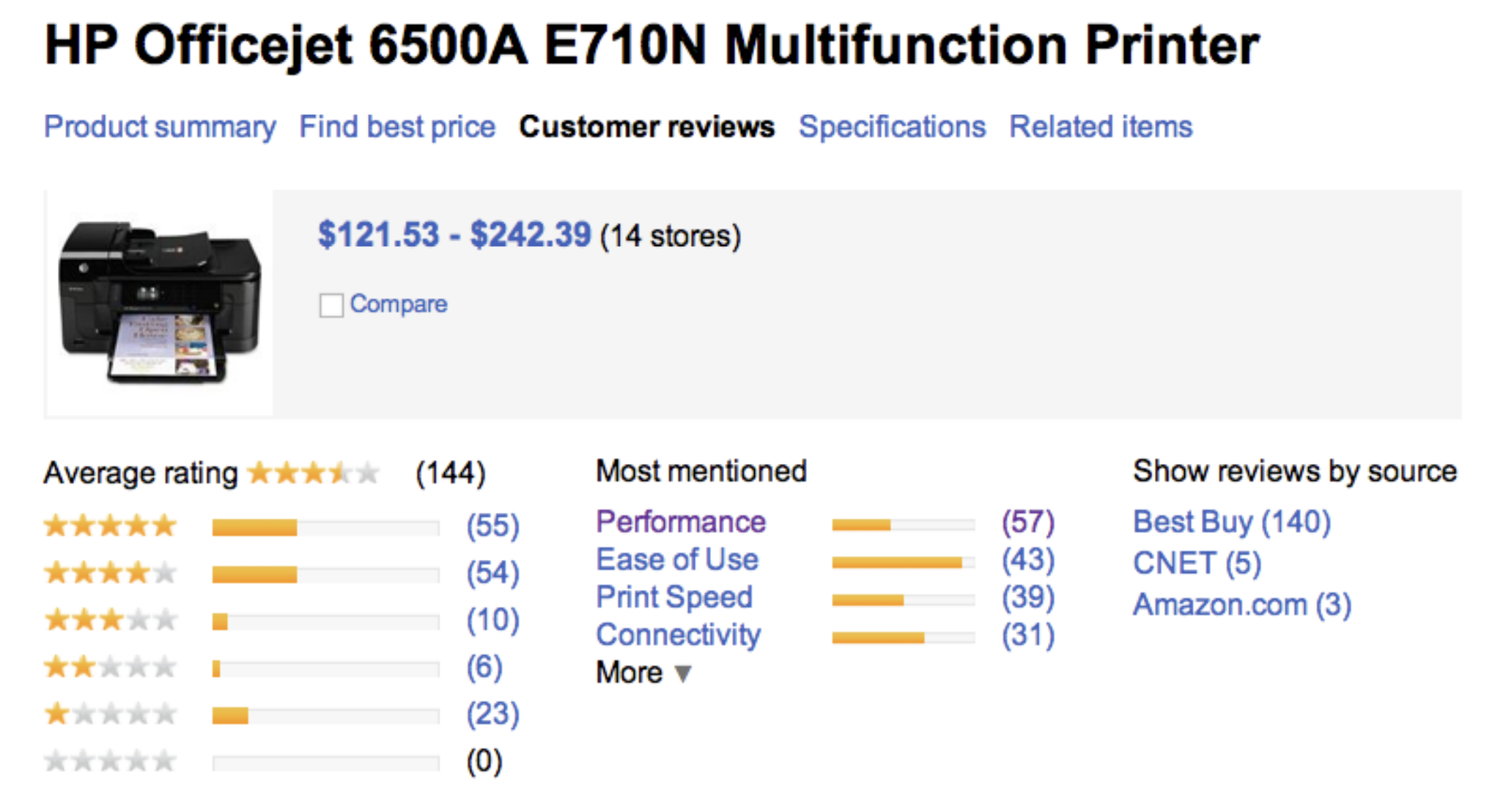
Why Sentiment Analysis
Why Sentiment Analysis
From Tweets to Polls: Linking Text Sentiment to Public Opinion Time Series. In ICWSM-2010
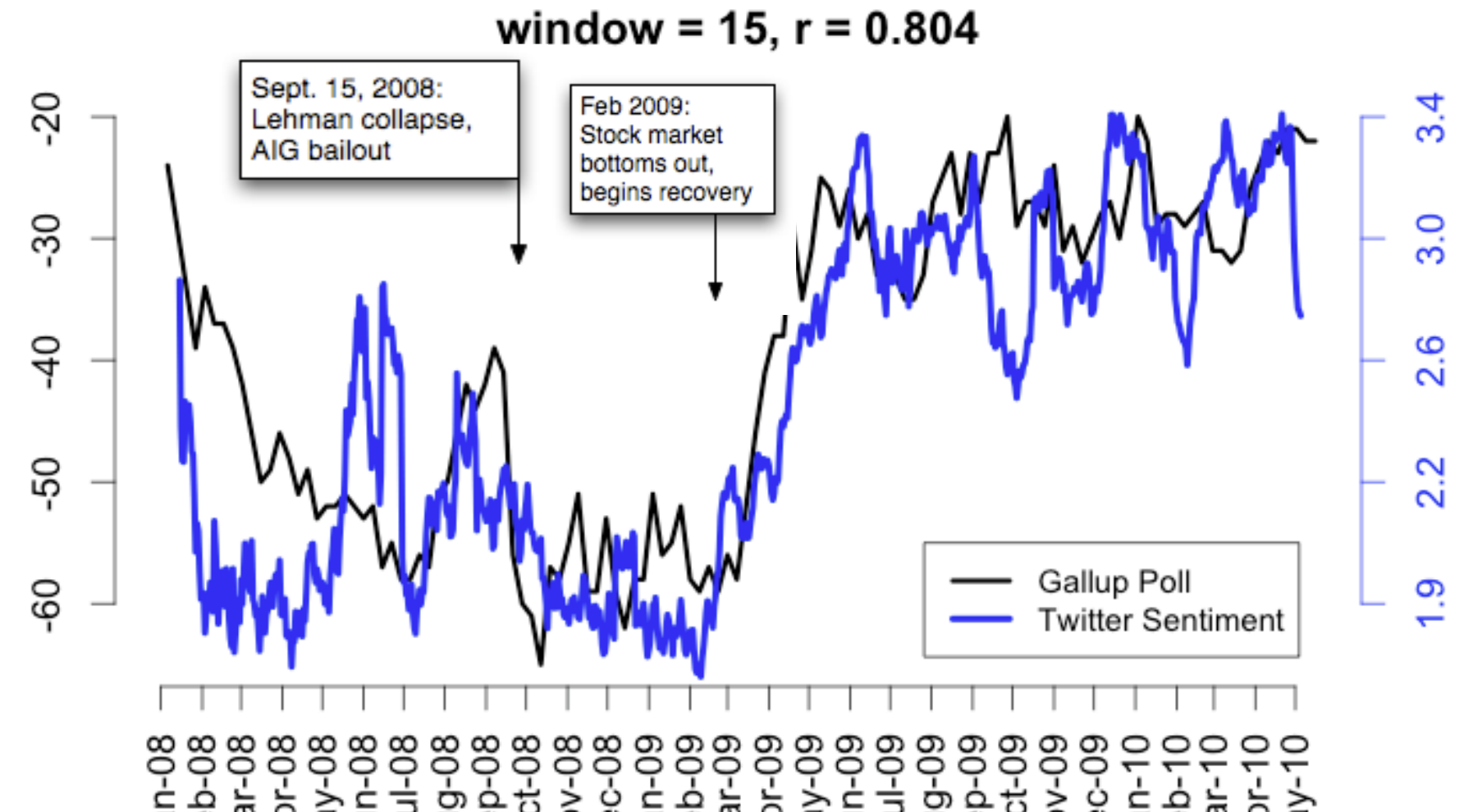
Why Sentiment Analysis
Why Sentiment Analysis
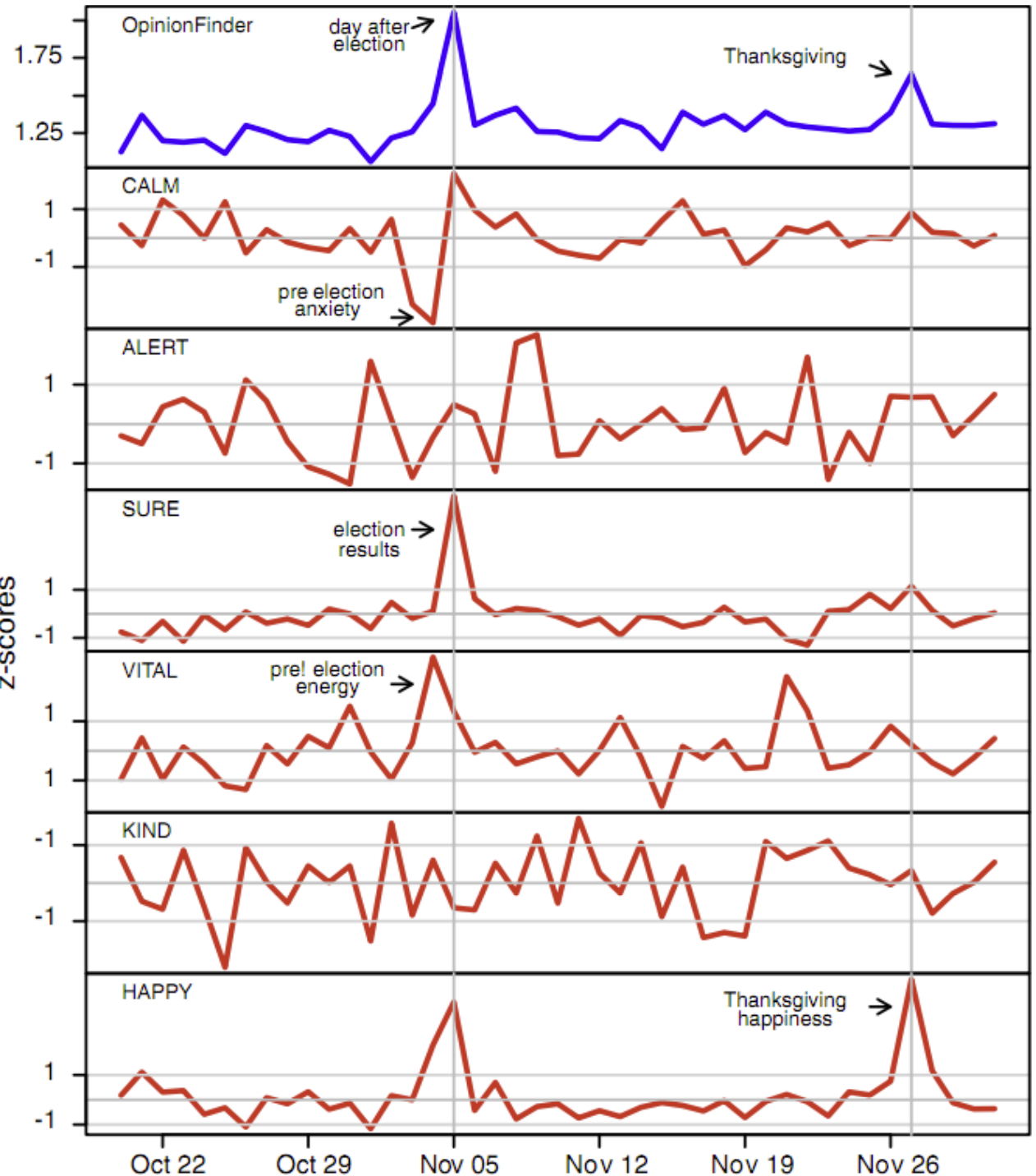
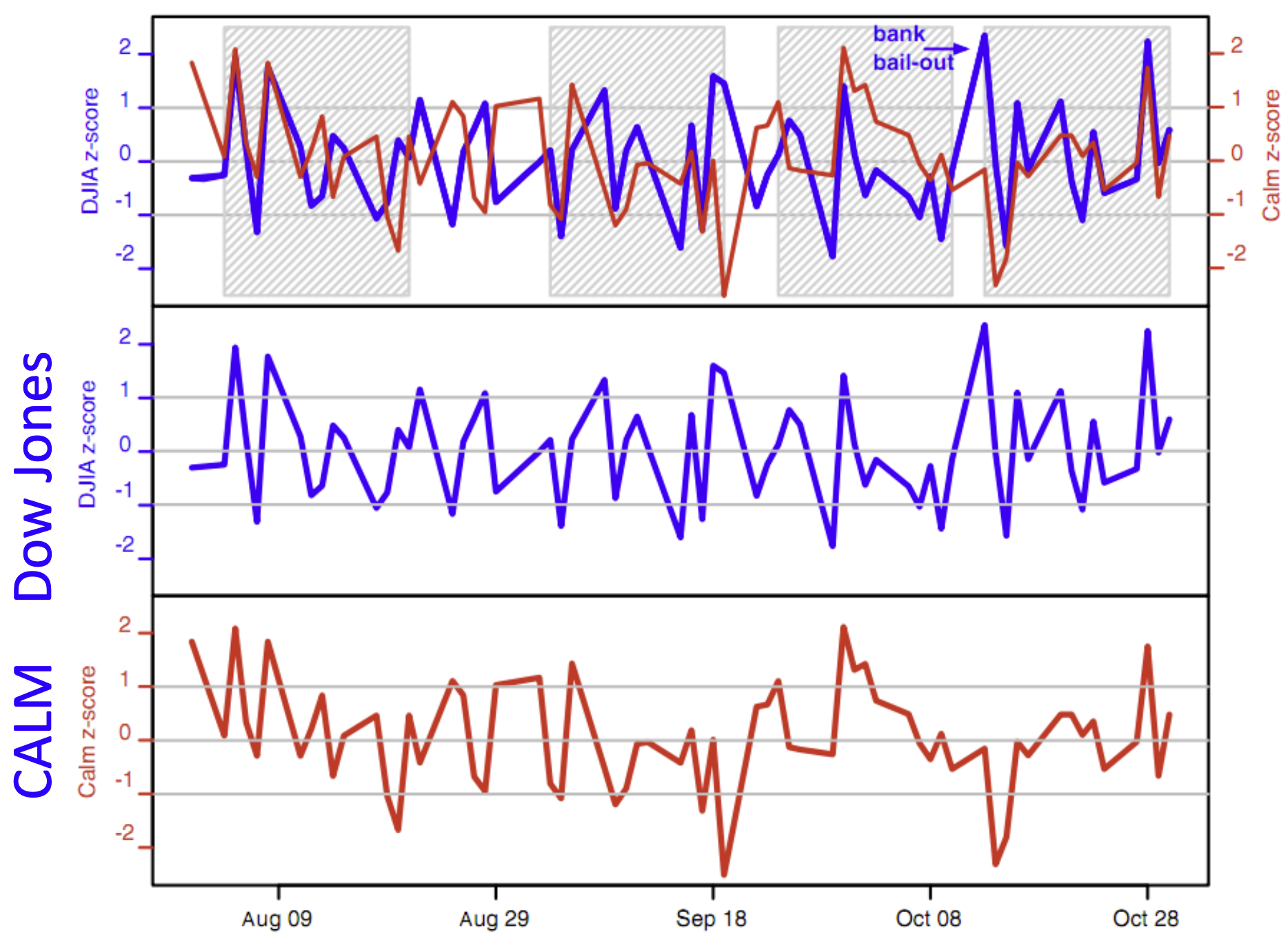
Bollen et al. (2011)
Twitter mood predicts the stock market, 2011
Other names of Sentiment Analysis
Other names of Sentiment Analysis
Opinion extraction
Opinion mining
Sentiment mining
Subjectivity analysis
Sentiment Analysis Task
Sentiment Analysis Task
Sentiment analysis is the detection of attitudes:
“enduring, affectively colored beliefs, dispositions towards objects or persons”
Holder (source) of attitude
Target (aspect) of attitude
Type of attitude
From a set of types: Like, love, hate, value, desire, etc.
Or (more commonly) simple weighted polarity: positive, negative, neutral, together with strength
Text containing the attitude: Sentence or entire document
Sentiment Analysis Task
Sentiment Analysis Task
Simple task
Is the attitude of this text positive or negative?
Rank the attitude of this text from 1 to 5
Advanced:
Aspect based sentiment analysis
Aspect based Sentiment Analysis
Aspect based Sentiment Analysis
Phrase 1: Aspect Term Extraction: extract explicit aspect expressions on which users express opinions in the given text.
The pizza is delicious, but the service is terrible. → “pizza”, “service”
Phrase 2: Aspect Sentiment Classification: predict the sentiment polarity for a specific aspect within a sentence
The pizza is delicious, but the service is terrible.
Aspect: pizza → Positive
Aspect: service → Negative
Algorithm: Simple Task
Algorithm: Simple Task
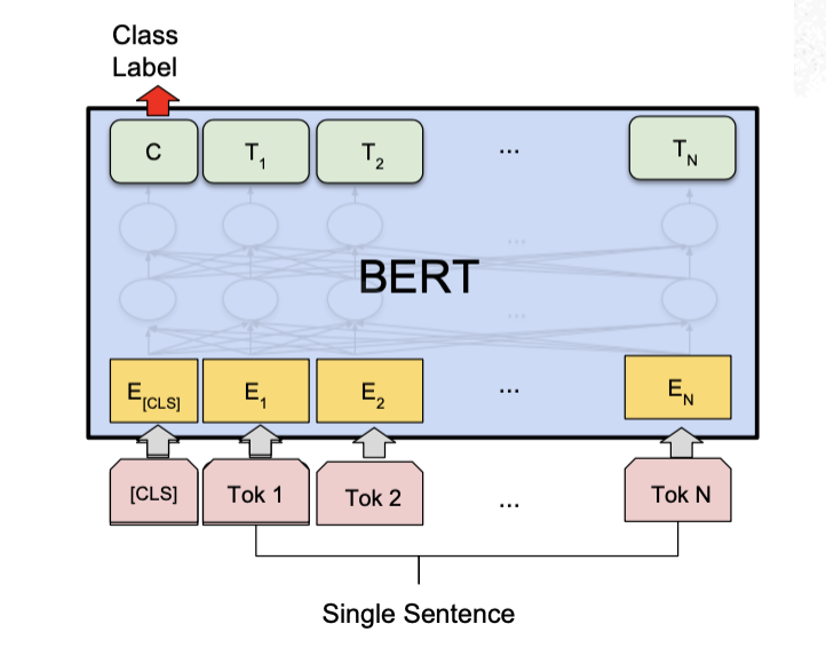
Global classification problem.
Fine-tuning BERT with the right paradigm.
Algorithm: Aspect based Sentiment Analysis
Algorithm: Aspect based Sentiment Analysis
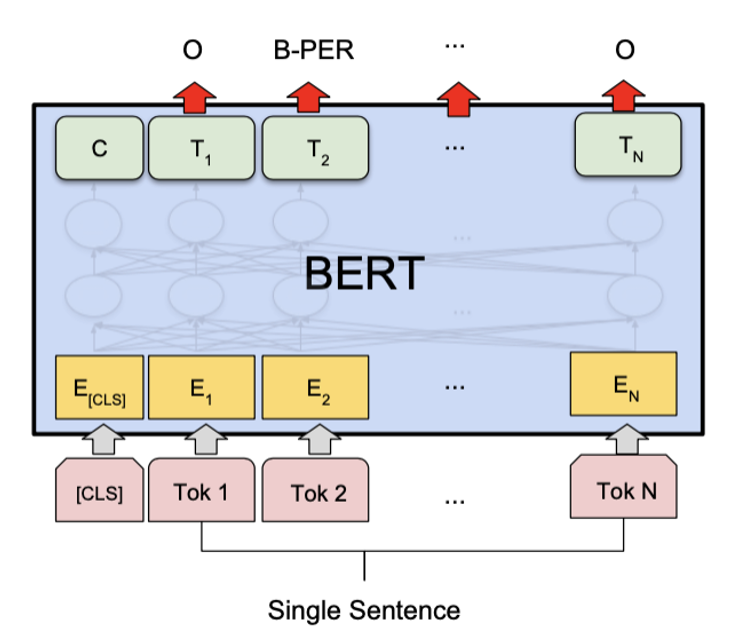
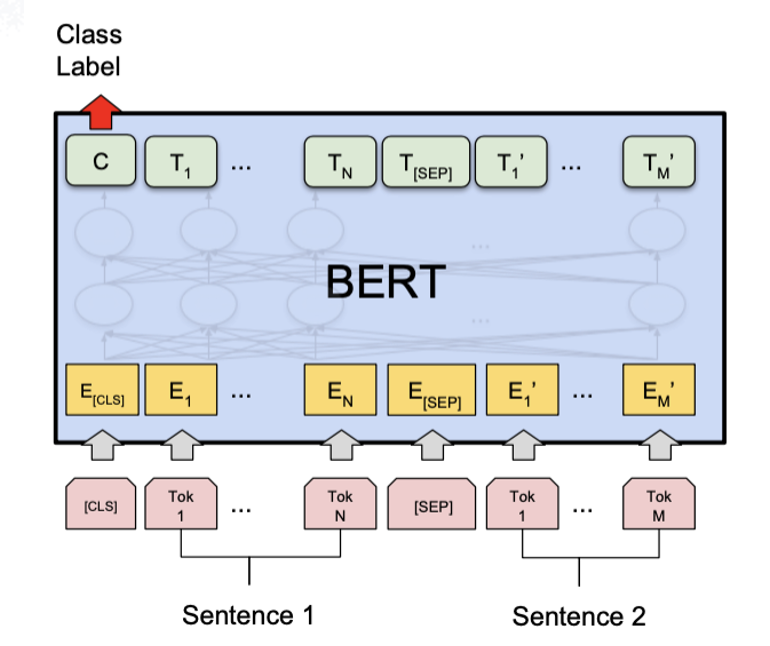
Aspect Term Extraction
Aspect Sentiment Classification
Aspect Term, left and right context
2.4 Language Understanding Tasks 2.4.3 Semantic Textual Similarity
2.4 Language Understanding Tasks 2.4.3 Semantic Textual Similarity
Semantic Textual Similarity (STS)
Semantic Textual Similarity (STS)
Definition: STS measures the degree of semantic equivalence between two text snippets.
Input: A pair of sentences.
Output: A similarity score (typically on a scale from 0 to 5).
Example:
Sentence A: “A man is playing a guitar.”
Sentence B: “A person is performing music.”
Similarity Score: 4.5
Why STS Matters
Why STS Matters
Core NLP task for understanding meaning.
Used in:
Duplicate question detection
Semantic search
Paraphrase identification
Dialogue understanding
Helps systems move beyond surface matching to deeper meaning comparison.
STS vs. Related Tasks
STS vs. Related Tasks
Task | Goal | Difference from STS |
Paraphrase Detection | Are the sentences semantically equivalent? | Binary decision (yes/no) |
NLI / Textual Entailment | Does one sentence entail another? | Focuses on logical inference |
Text Matching | Do the texts match in form/content? | Often used in retrieval |
But their solutions may share the same framework.
Candidate Solution
Candidate Solution
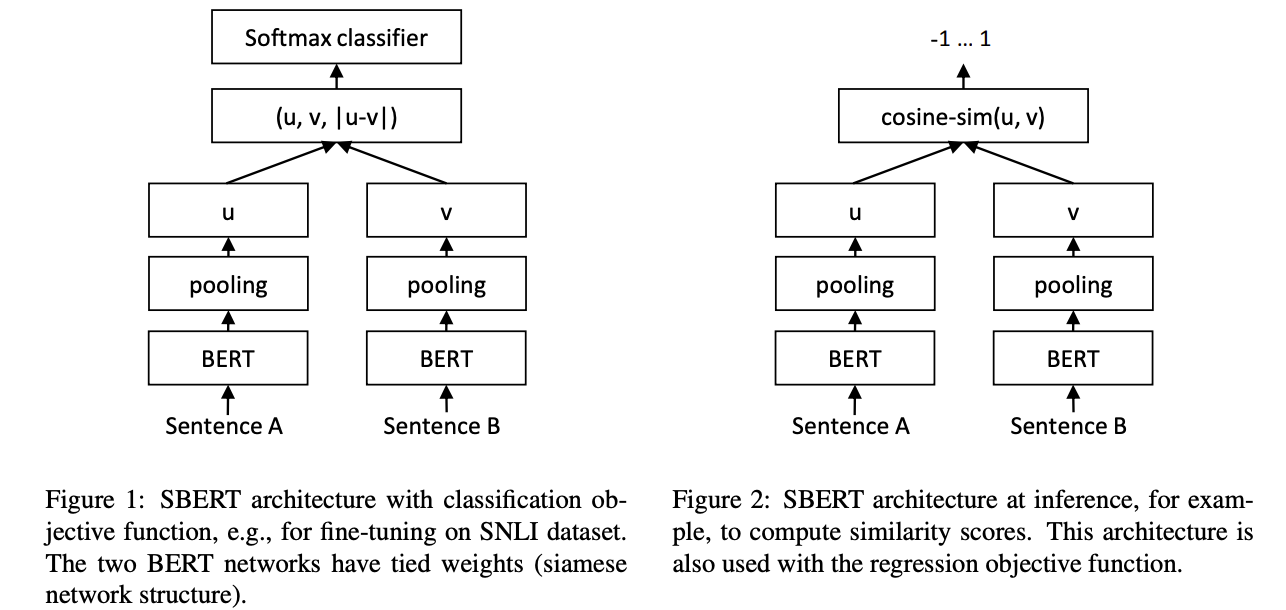
Pairwise sentence relation identification using BERT.
But if we want to cluster a set of sentences, we need to run times of BERT.
How to do it efficiently?
Make complex decision via embedding computation!
Make complex decision via embedding computation!
Sentence-BERT(SBERT) : embed each sentence into a vector!
https://arxiv.org/pdf/1908.10084
Training
Training
Trained on 1M sentence pairs of NLI task of three classes: contradiction, eintailment, and neutral.
Finetuned with a 3-way softmax classifier objective function for one epoch.
The default pooling strategy is MEAN.
Performances
Performances
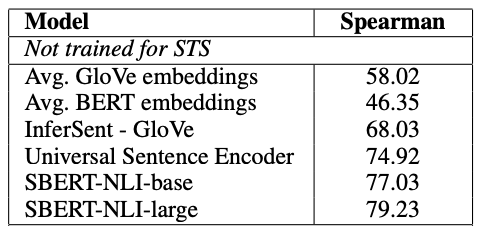
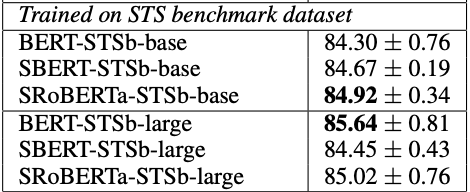
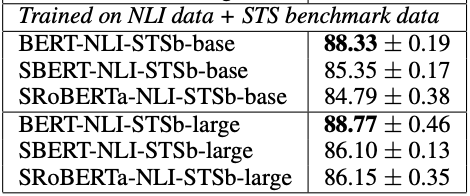
The performances answers following questions:
Why not just average the BERT embedding?
Why use NLI dataset?

2.4 Language Understanding Tasks 2.4.4 Text Summarization
2.4 Language Understanding Tasks 2.4.4 Text Summarization
Text Summarization
Text Summarization
Definition: Automatically generating a shorter version of a text that preserves its key information.
Input: Long document or passage
Output: Concise summary
Goal: Retain the most important ideas in fewer words
Input: "Artificial Intelligence is transforming industries such as healthcare, finance, and education..."
Summary: "AI is revolutionizing major industries."
Road Map
Road Map
Type | Description | Example |
Extractive | Selects and combines important sentences from the original text | Sentence selection |
Abstractive | Generates new sentences using understanding and rephrasing | Paraphrased summary |
Abstractive Approach
Abstractive Approach
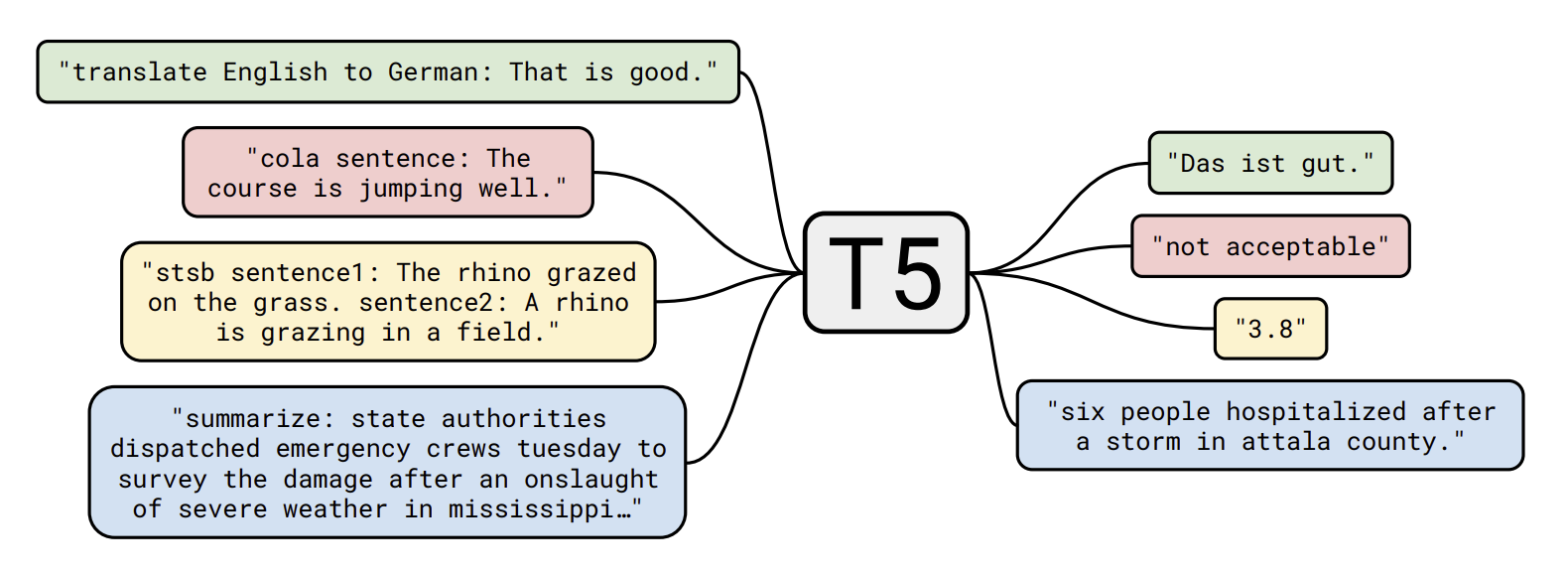
We can apply Encoder-Decoder Pretrained Model + Fine tuning to do the task – BART or T5;
But we will introduce two more interesting models:
Summarization-Focused Pretrained Model: PEGASUS by Google;
Copy or Generation? CopyNet
PEGASUS
PEGASUS
Mask and Predicting Important Sentences:
Important Sentences: Most similar with other part of the document measured by metric ROUGE;
Pretrained on large amount of data, finetuned on summarization tasks;

https://research.google/blog/pegasus-a-state-of-the-art-model-for-abstractive-text-summarization/
PEGASUS: Performance
PEGASUS: Performance
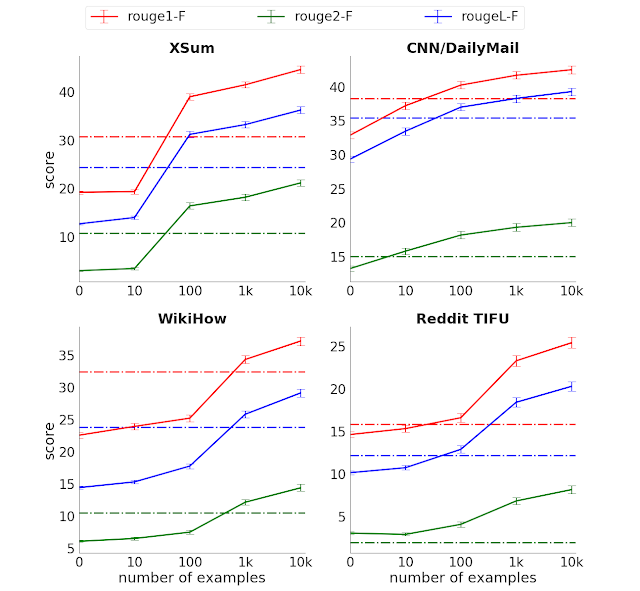
New state-of-the-art results as measured by automatic metrics, while using only 5% of the number of parameters of T5.
Strong performance with 1000 finetuning samples;
Copy Net
Copy Net
In ancient times:
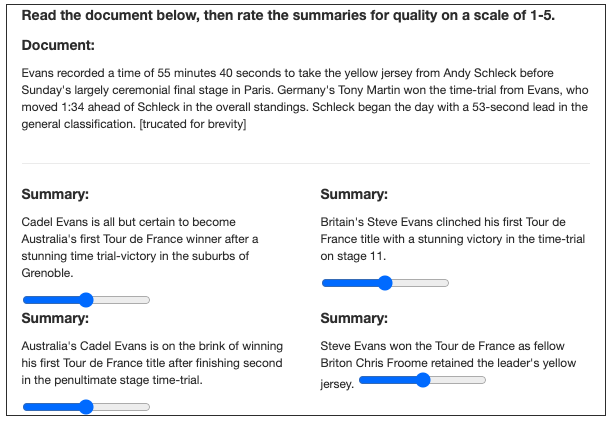
Model cannot honestly repeat details of source document;
The algorithm still suffers from the Out-of-Vocabulary problem.
Abstractive Summarization is not reliable.
https://arxiv.org/pdf/1603.06393
Copy Net
Copy Net
Hybrid Generation + Copying:
At each decoding step, the model decides whether to generate a word from the vocabulary or copy a word from the input
Unified probability:
Final output probability is a combination of generation and copy probabilities:

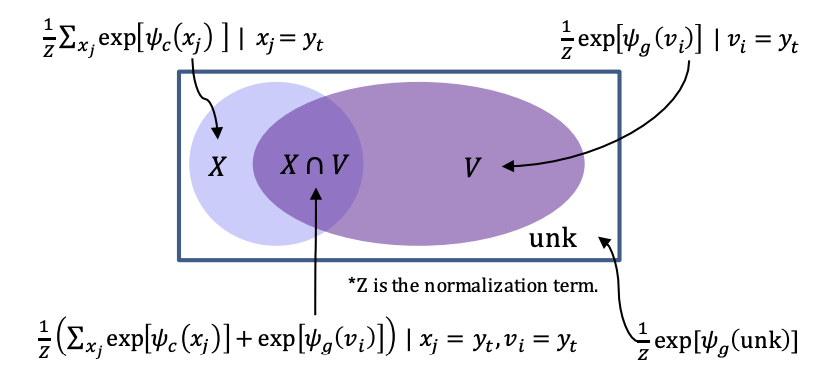
https://arxiv.org/pdf/1603.06393
Copy Net
Copy Net
Model | Copy Ability | Generate New Words | OOV Handling | Use Case Examples |
Seq2Seq + Attn | ❌ | ✅ | Poor | General NLG |
Pointer Network | ✅ (positions) | ❌ | Good | Span selection, TSP |
CopyNet | ✅ (tokens) | ✅ | Excellent | Summarization, QA, NLG |
Evaluation Metric
Evaluation Metric
Text Generation Task generally measured by the n-gram overlapping ratio of the generated text to the reference/ground truth text.
BLEU: Precision, better for Machine Translation
ROUGE: Recall, better for For Summarization
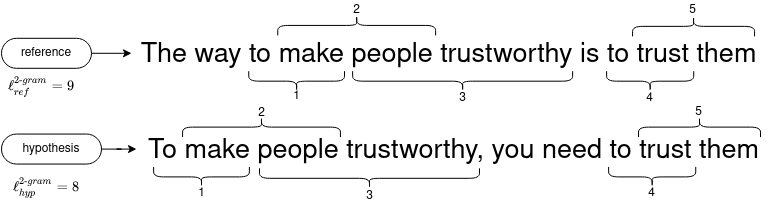
https://clementbm.github.io/theory/2021/12/23/rouge-bleu-scores.html
2.4 Language Understanding Tasks 2.4.5 Information Retrieval
2.4 Language Understanding Tasks 2.4.5 Information Retrieval
Recall: The Bert Paradigm for QA
Recall: The Bert Paradigm for QA
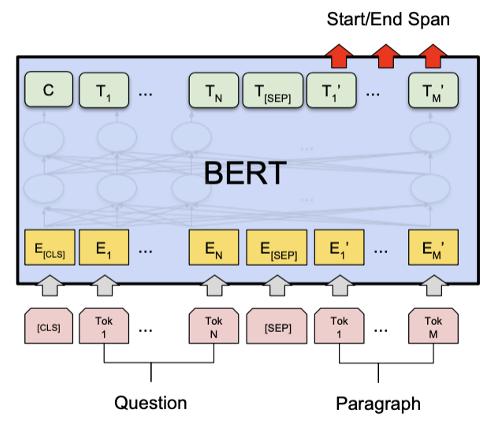
Why Information Retrieval
Why Information Retrieval
What if the paragraphs is not available?
T5 (and current LLM) can answer the question with their own memory.
But the memory is outdated and not reliable.
We need to retrieve the relevant paragraphs!
Information Retrieval
Information Retrieval
Information Retrieval (IR) is the process of obtaining relevant information from a large repository based on a user’s query.
Examples:
Web search (e.g., Google, Baidu)
Searching a digital library
Product search on e-commerce platforms
Core Objective:
Find documents relevant to a user’s information need.
Key Concepts
Key Concepts
Document Collection: The database of information (e.g., webpages, articles).
Query: A user-issued question or phrase.
Relevance: How well a document meets the user’s information need.
Indexing: Efficient organization of documents for fast retrieval.
Ranking: Ordering search results by relevance.
System Overview
System Overview
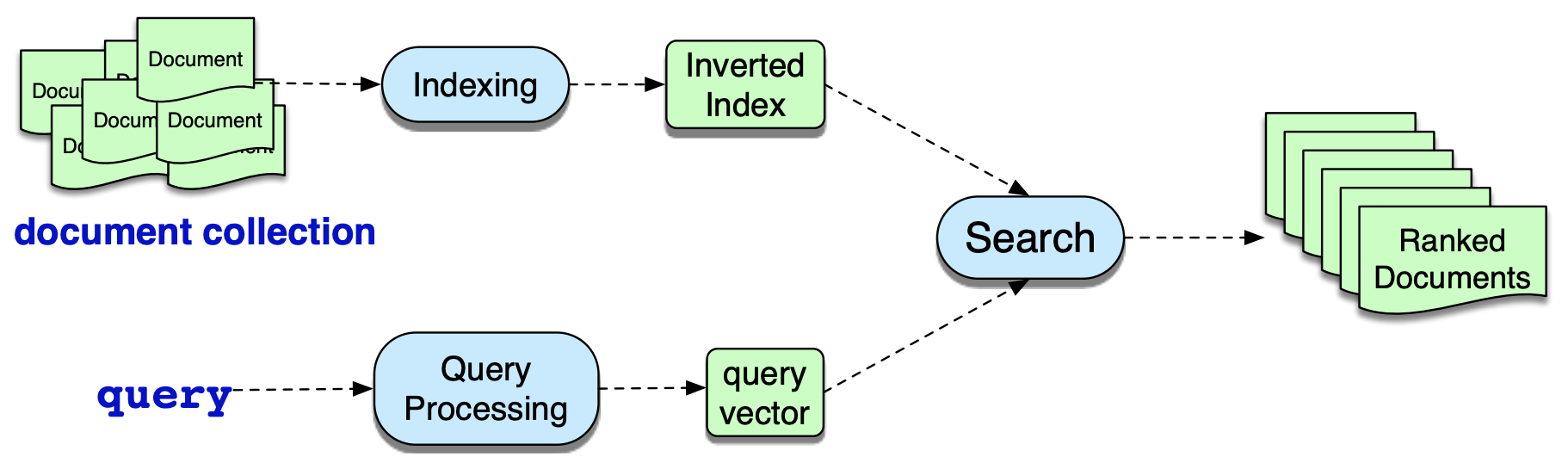
Retrieval vs Ranking
Retrieval vs Ranking
Modern large scale system generally involve two stage:
Retrieval Stage: For Efficiency:
Narrow down the massive document collection to a small candidate set (e.g., top 1000 docs) that are potentially relevant.
Fast and scalable
Ranking Stage: For Quality:
Take the small set of candidates from the retrieval stage and finely rank them using more sophisticated and computationally expensive methods.
Precision over speed.
How to Retrieve
How to Retrieve
Inverted index + BM25
Embedding Vector + ANN Search
Invert Index + BM25 Retrieve
Invert Index + BM25 Retrieve
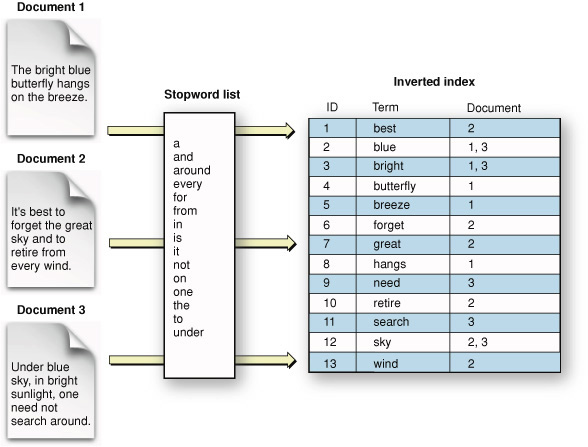
https://github.com/Noureldin2303/Inverted-index-python
Query has a set of terms ;
A large amount of documents can be filtered by invert index;
Compute BM25 between query and each remaining document;
Most of the component can be pre-computed and cached.
BM25 (Best Matching 25): Improved TFIDF
BM25 (Best Matching 25): Improved TFIDF





→
→
Widely used in industry level retrieval system, like elastic search.
Embedding Vector + ANN Search
Embedding Vector + ANN Search
Documents/Chunks are embedded into vectors using Embedding Language Models (like SBERT);
When a query is coming, embed it into an embedding vector;
Find the k-nearest neighbors of query-embedding from the collection of document embeddings.
How to find the 1000 nearest neighbors out of 1 billion document embeddings in 0.2 seconds?
We need Approximate Nearest Neighbor (ANN) Search
ANN Search: Local Sensitive Hash
ANN Search: Local Sensitive Hash
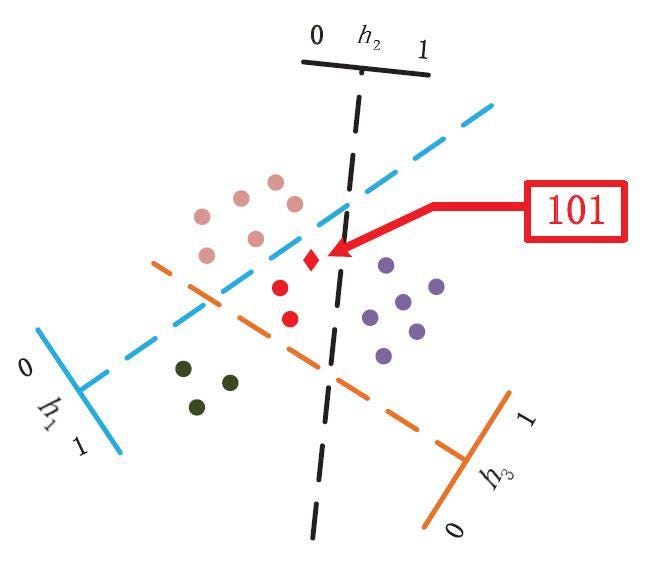
https://medium.com/@LightOnIO/efficient-neural-networks-training-through-locality-sensitive-hashing-93dc37077a89
ANN Search: KD-Tree
ANN Search: KD-Tree
https://www.baeldung.com/cs/k-d-trees
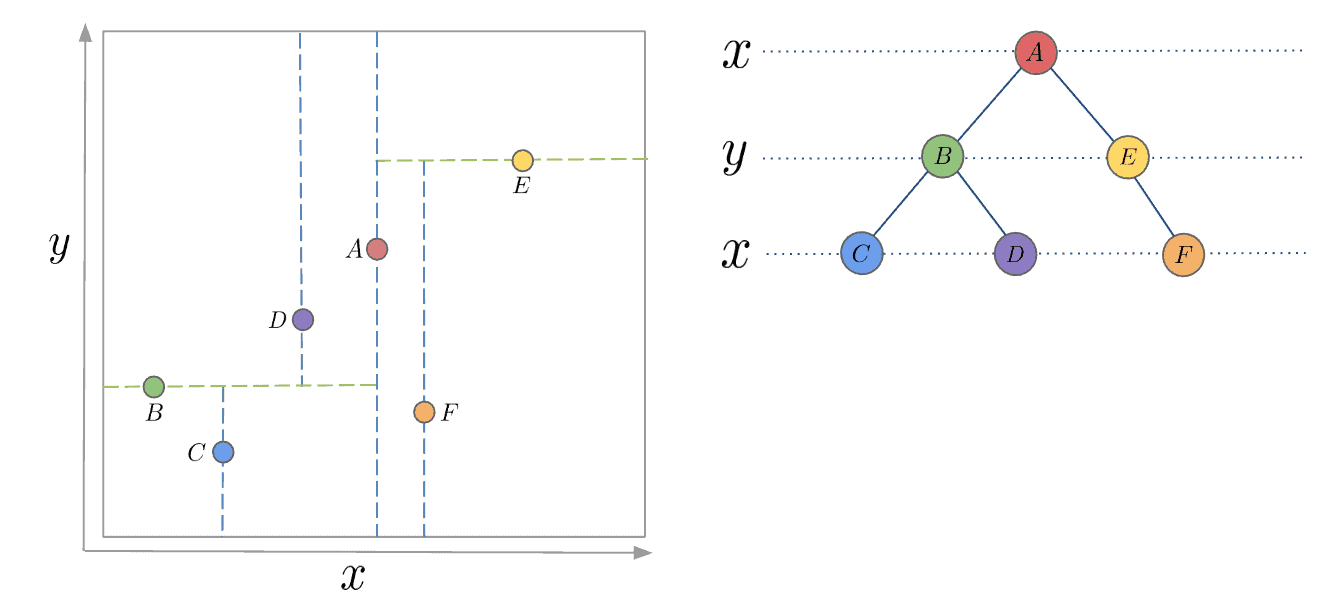
Error In this Graph?
ANN Search: HNSW (Hierarchical Navigable Small Worlds )
ANN Search: HNSW (Hierarchical Navigable Small Worlds )
https://www.pinecone.io/learn/series/faiss/hnsw/
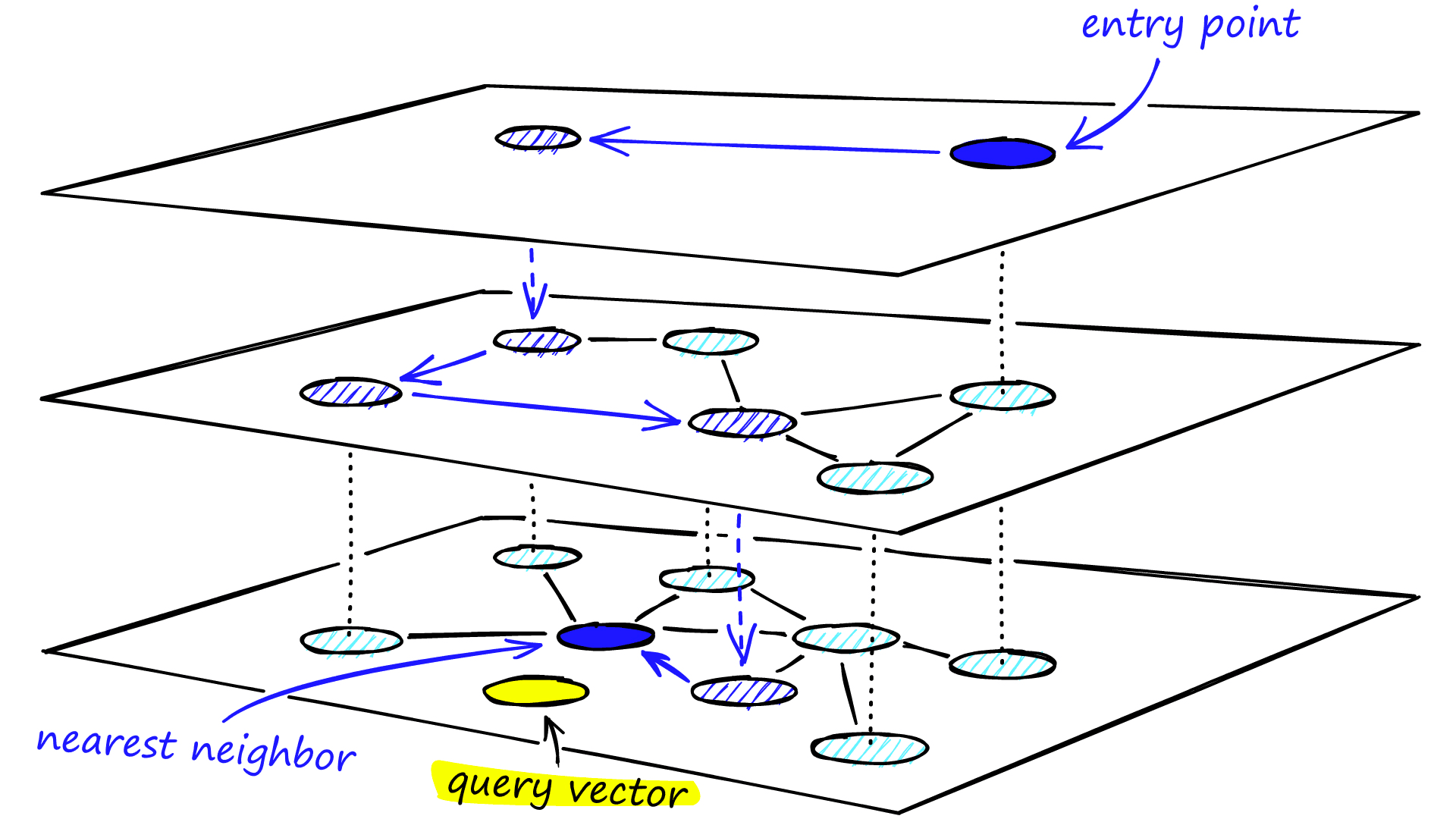
How to Rank
How to Rank
After initial retrieval, a dense re-ranker takes the query and candidate documents and computes a more accurate relevance score, usually with deep neural networks.
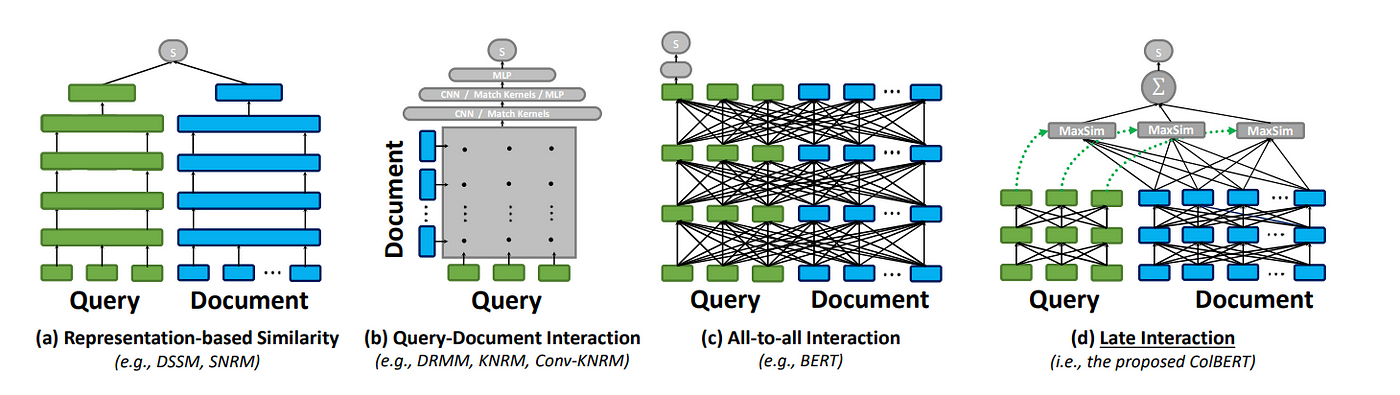
https://medium.com/@mhammadkhan/neural-re-ranking-models-c0a67278f626
2.4 Language Understanding Tasks 2.4.6 Question Answering
2.4 Language Understanding Tasks 2.4.6 Question Answering
Question Answering Task
Question Answering Task
Classification by Questions:
Factoid (e.g., “Who is the president of France?”)
Descriptive (e.g., “Why is the sky blue?”)
Procedural (e.g., “How to reset a router?”)
Classification by Resources:
Open-Domain QA:
No context is given; system must retrieve relevant docs then answer
Two-step pipeline: retrieval + reading
Closed-Book QA:
Model answers from its internal knowledge only
Road Maps
Road Maps
Extractive QA:
Answer is a span in the provided context
Example datasets: SQuAD
Abstractive/Generative QA:
Answer is generated in free-form language
Example datasets: MS MARCO
Extractive QA
Extractive QA
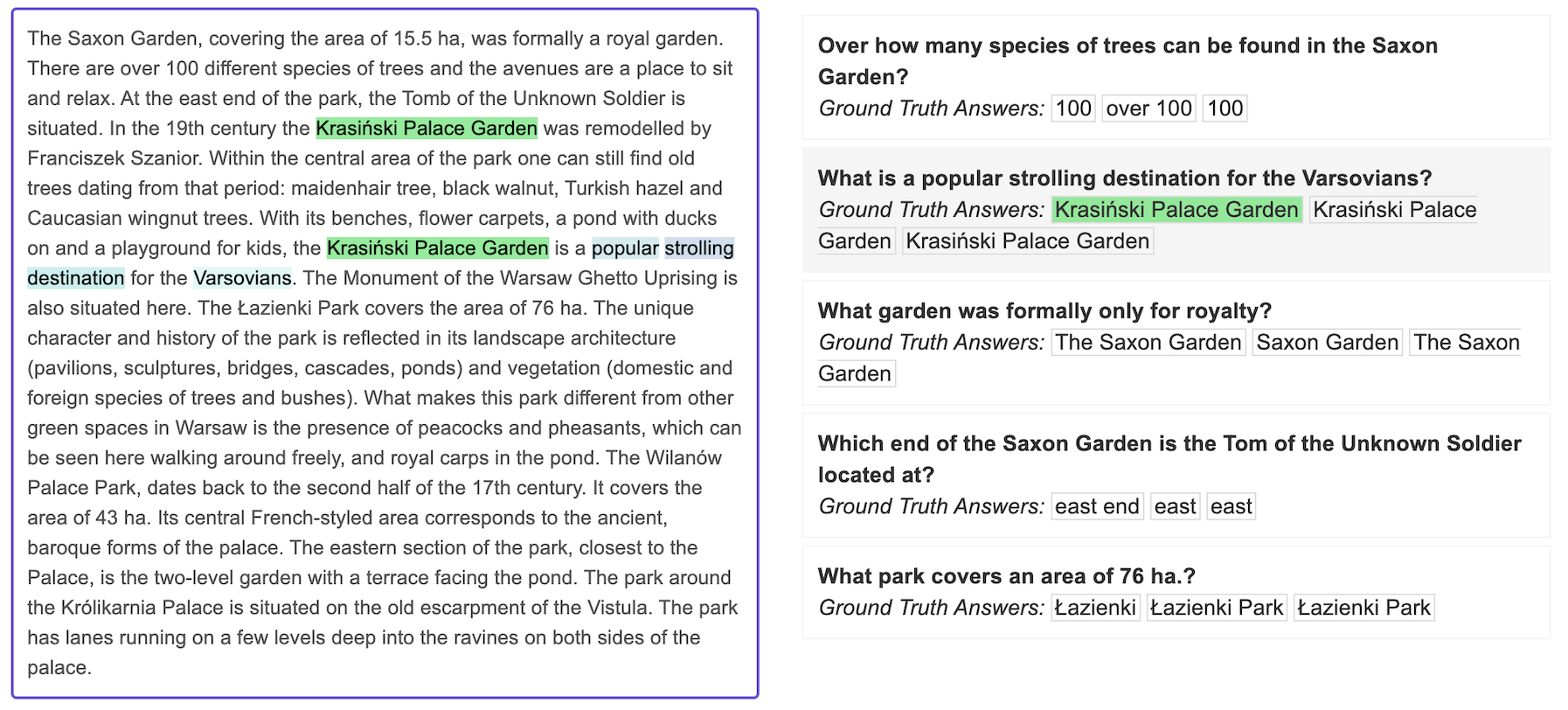
https://rajpurkar.github.io/SQuAD-explorer/explore/1.1/dev/Warsaw.html
Model for Extractive QA: DeBERTa
Model for Extractive QA: DeBERTa
https://towardsdatascience.com/large-language-models-deberta-decoding-enhanced-bert-with-disentangled-attention-90016668db4b/
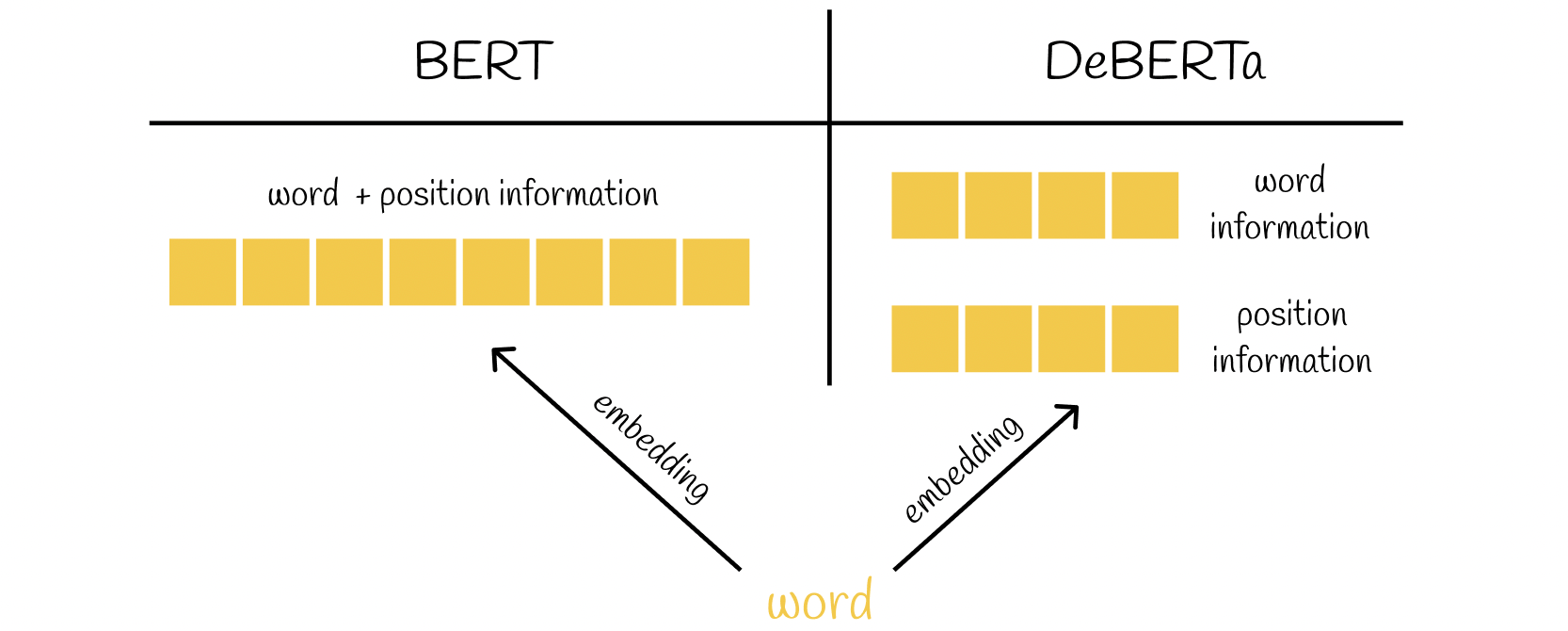
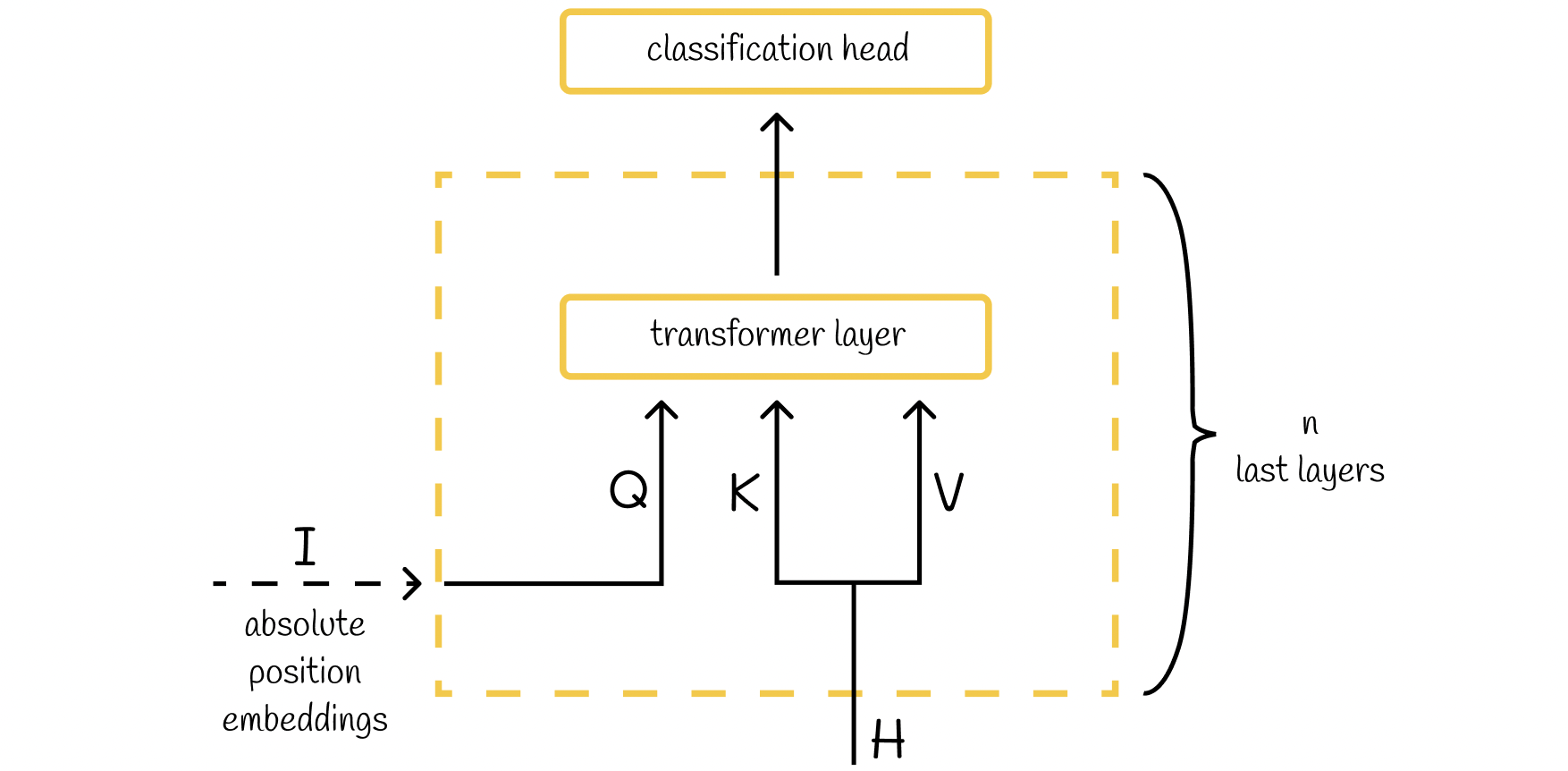
Abstractive/Generative QA
Abstractive/Generative QA
{
"query":". what is a corporation?",
"passages":[
{"url":"http:\/\/www.wisegeek.com\/what-is-a-corporation.htm",
“passage_text”:“A company is incorporated in a specific nation, often within the bounds of a smaller subset of that nation, such as a state or province. The corporation is then governed by the laws of incorporation in that state. A corporation may issue stock, either private or public, or may be classified as a non-stock corporation. If stock is issued, the corporation will usually be governed by its shareholders, either directly or indirectly.”},
…],
"answers":["A corporation is a company or group of people authorized to act as a single entity and recognized as such in law."],
}
Model for Abstractive QA: T5
Model for Abstractive QA: T5
Exploring the Limits of Transfer Learning with a Unified Text-to-Text Transformer, JMLR, 2020
Evaluation Metrics
Evaluation Metrics
Extractive QA:
Exact Match (EM): Measures whether the prediction exactly matches any one ground truth answer.
F1 Score: Measures overlap at the token level between prediction and ground truth.
Abstractive/Generative QA:
ROUGE: Measures n-gram overlap between prediction and reference.
2.4 Language Understanding Tasks 2.4.7 Dialogue Systems
2.4 Language Understanding Tasks 2.4.7 Dialogue Systems
Types of Dialogue
Types of Dialogue
Task-oriented: Help users achieve specific goals (e.g., book flights, tech support)
Open-domain (chit-chat): Free-form conversation on any topic.
Dialogue System Components
Dialogue System Components
Requirement Understanding:
Intent detection
Slot filling
Dialogue Management:
Keeps track of dialogue state
Determines next action (e.g., via rules or policy learning)
Natural Language Generation:
Converts system actions into human-readable text
Dialogue System Components
Dialogue System Components
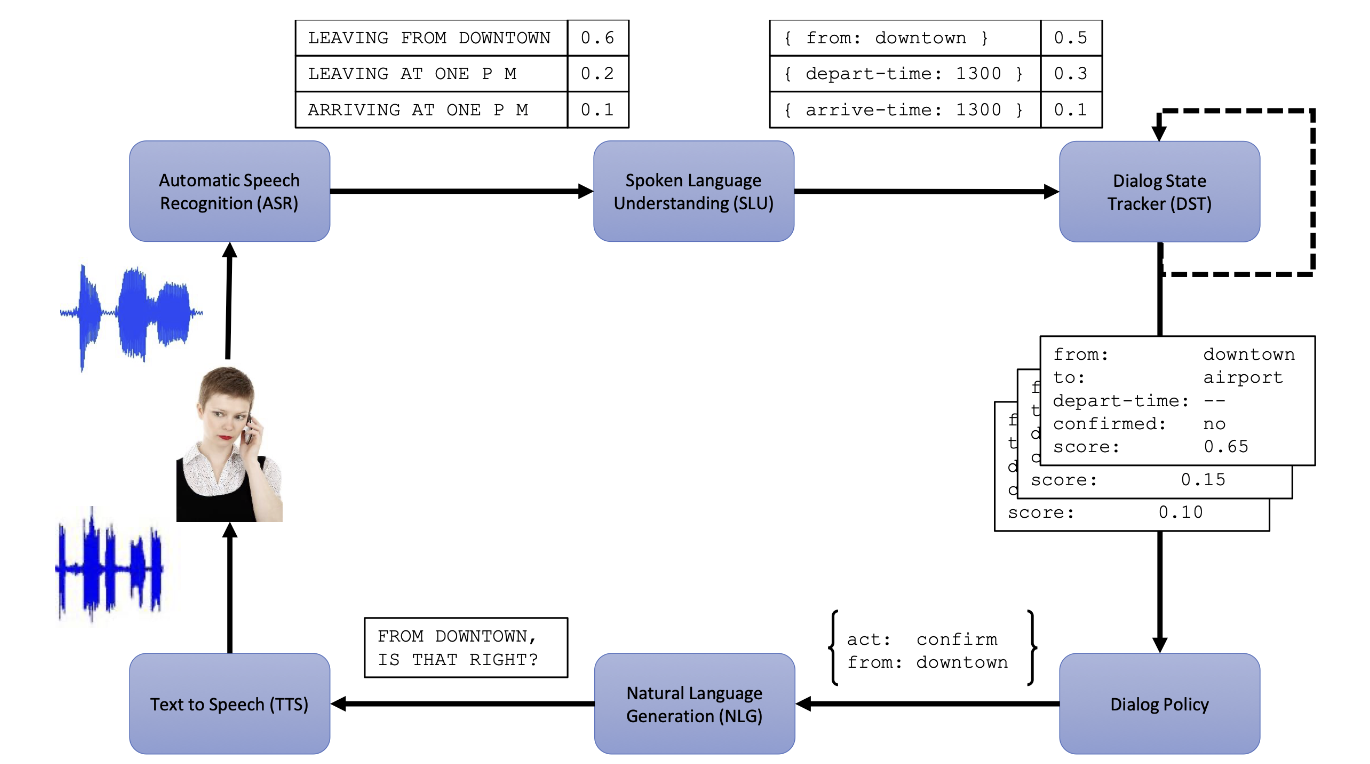
https://web.stanford.edu/~jurafsky/slp3/15.pdf
Requirement Understanding
Requirement Understanding
Task Domains: Design ontology for each domain via a set of Frame.
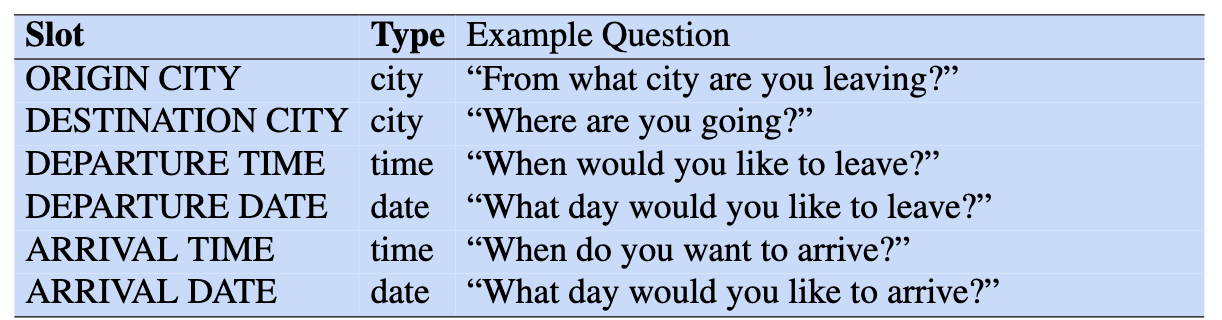
https://web.stanford.edu/~jurafsky/slp3/15.pdf
Requirement Understanding
Requirement Understanding
Domain Classification: What is the domain of the user‘s domain?
Detect the domain;
Example: “Book me a flight” → travel
Intent/Frame Detection: What does the user want to do?
Detect the Frame type;
Example: “Book me a flight” → BookFlight
Slot Filling: Extract arguments or parameters.
Fill the Frame
Example: “from New York to London tomorrow” → ORIG CITY=NYC, DEST CITY=London, DEPA TIME=tomorrow
Requirement Understanding
Requirement Understanding
Show me morning flights from Boston to San Francisco on Tuesday
Wake me tomorrow at 6

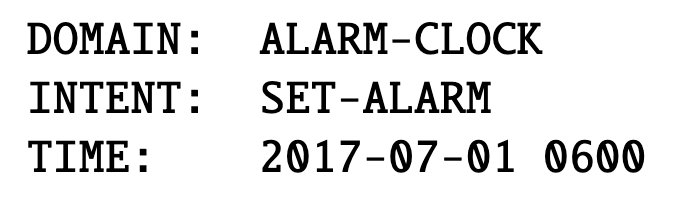
Requirement Understanding
Requirement Understanding
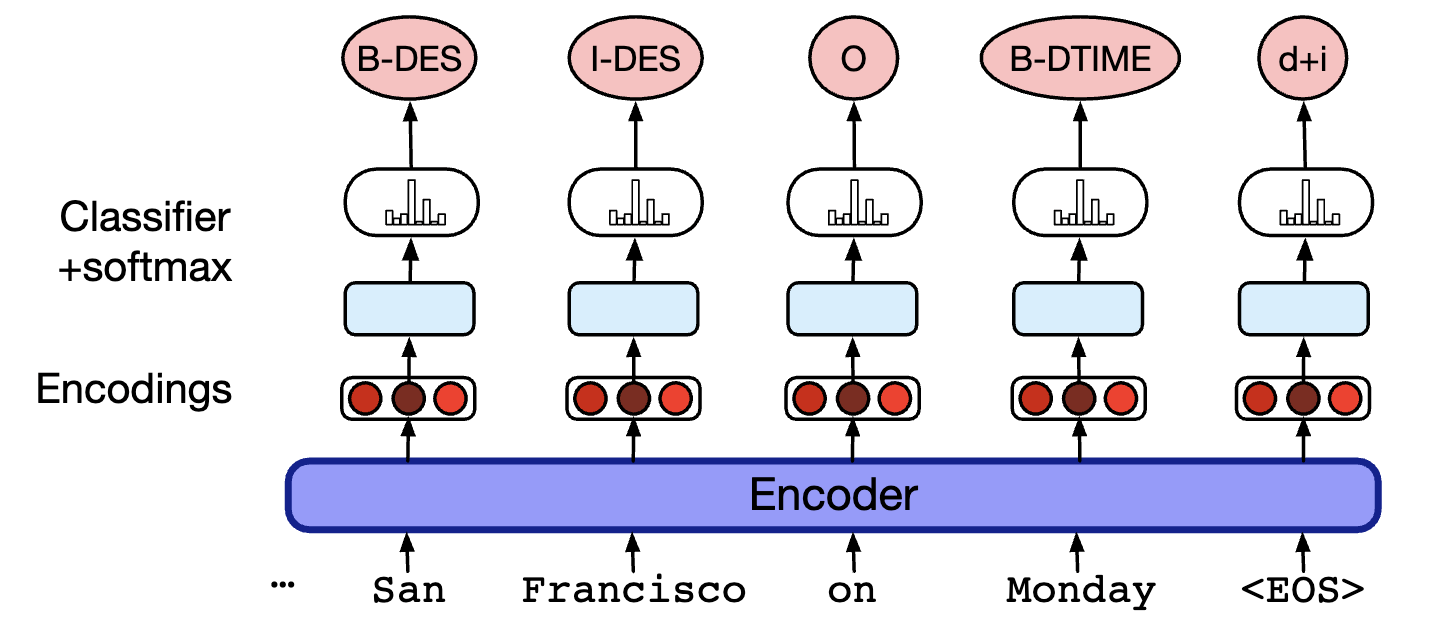
https://web.stanford.edu/~jurafsky/slp3/15.pdf
Dialogue Management
Dialogue Management
Define Dialog Acts
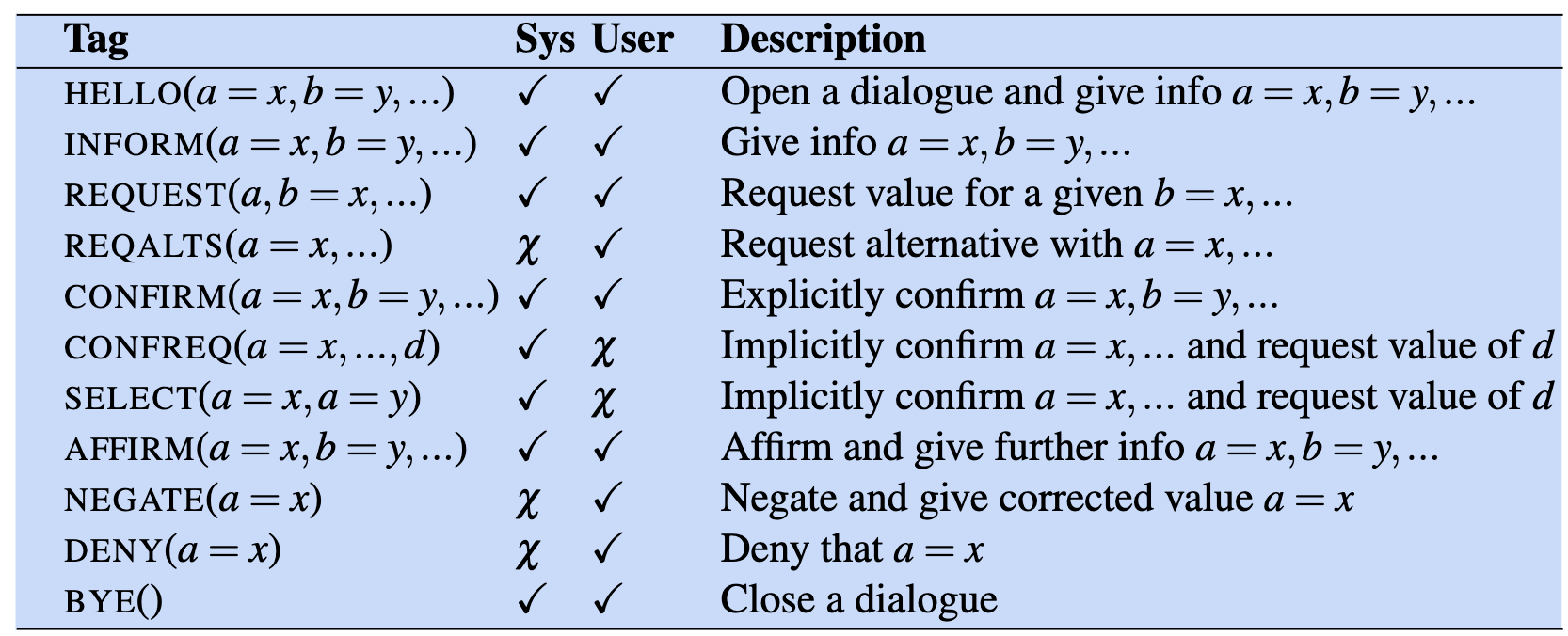
https://web.stanford.edu/~jurafsky/slp3/15.pdf
Dialogue Management
Dialogue Management
Label examples of Dialog Acts
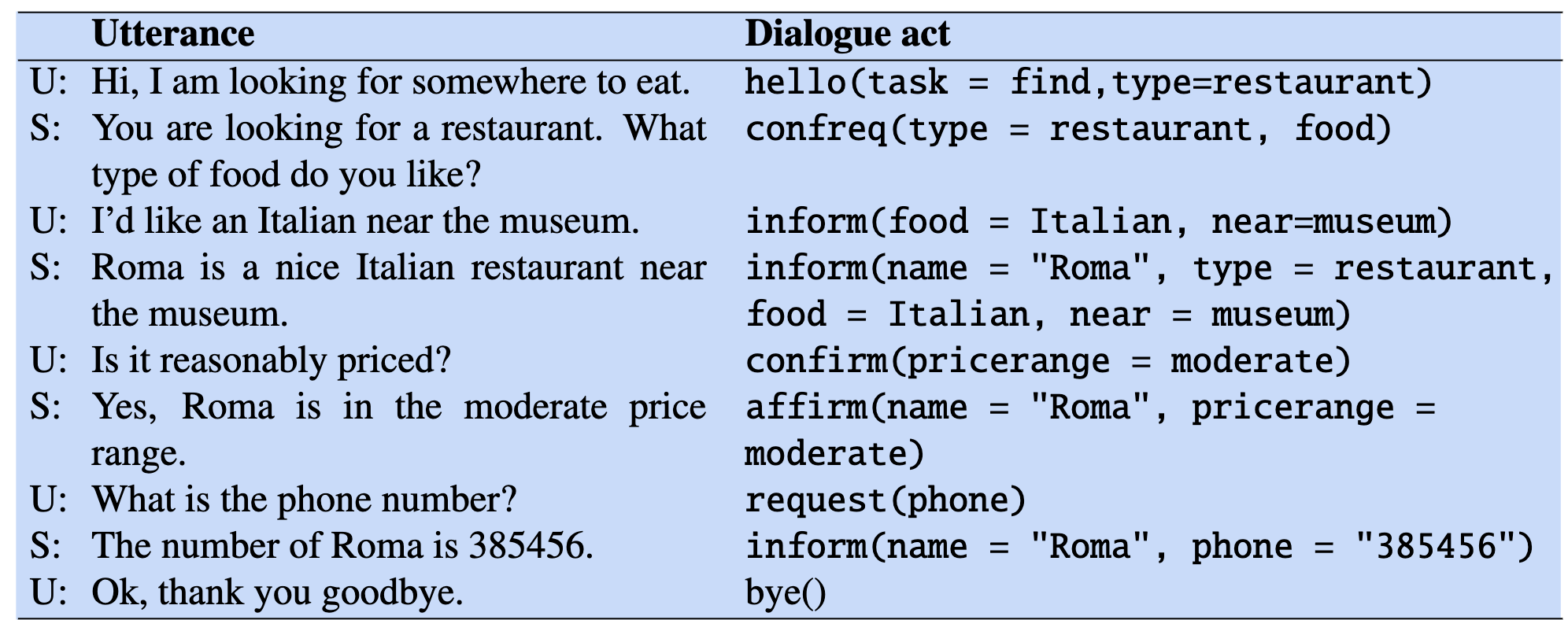
https://web.stanford.edu/~jurafsky/slp3/15.pdf
Dialogue Management
Dialogue Management
Dialog State Tracking: Maintain memory of the dialogue so far.
https://web.stanford.edu/~jurafsky/slp3/15.pdf
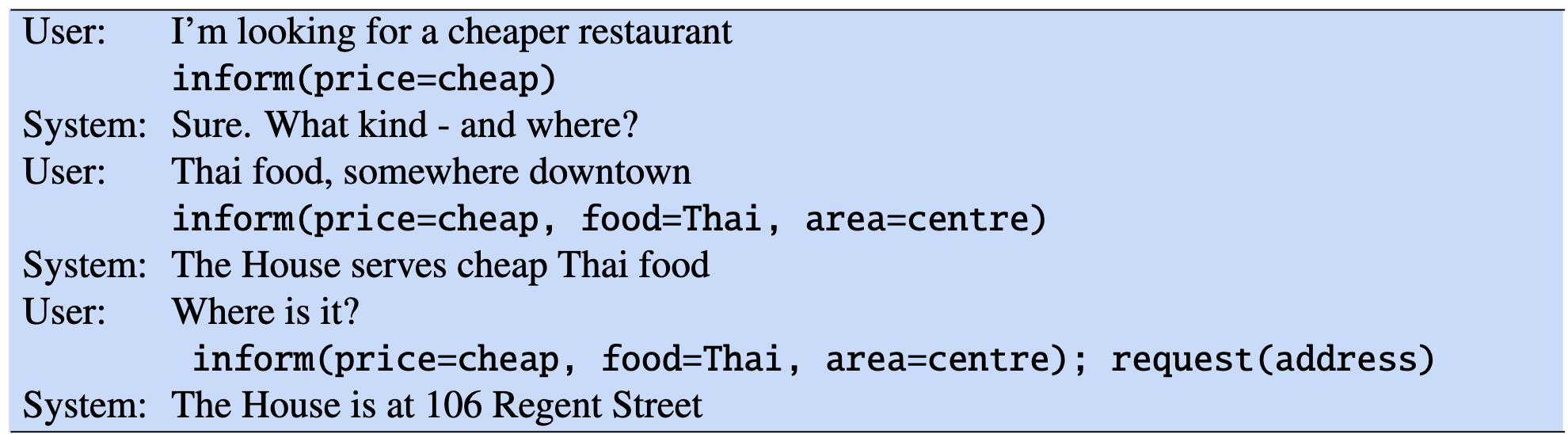
Dialogue Management
Dialogue Management
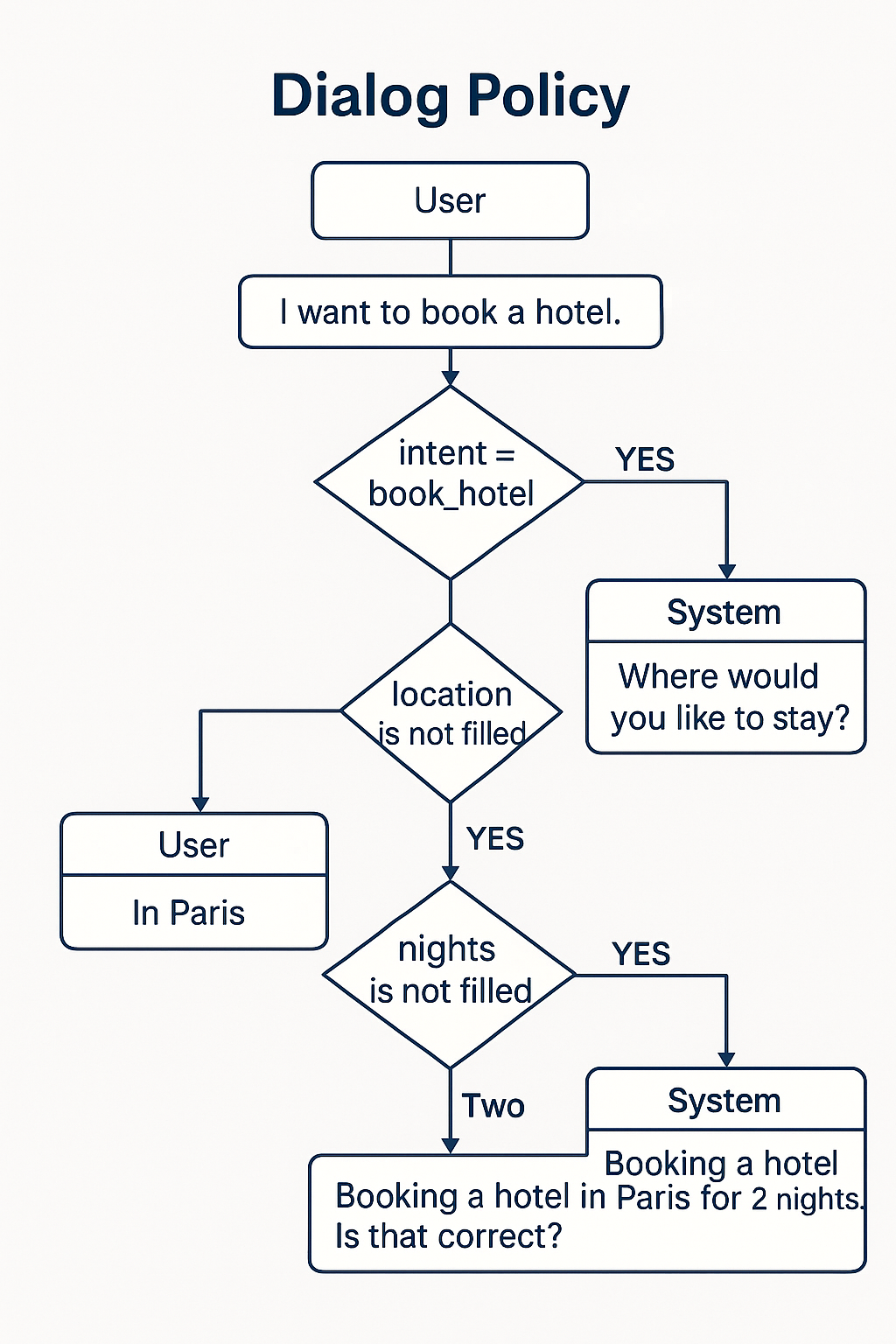
Dialogue Policy: Which act to generate
Decide when to answer user’s questions, when to instead ask the user a clarification question, and so on
Dialogue Management
Dialogue Management
Rule based Policy
Book a hotel in Paris for 2 nights starting April 20.
IF "intent" = "book_hotel" AND "location" IS NOT filled
THEN system action = Ask for location
ELSE IF "location" IS filled AND "nights" IS NOT filled
THEN system action = Ask for number of nights
ELSE IF all slots are filled
THEN system action = Confirm booking
Dialogue Management
Dialogue Management
Learning based Policy
Book a hotel in Paris for 2 nights starting April 20.
The policy is represented as a function:
where is the current dialogue state, and a is the next system action.
Example:
The agent learns this mapping by receiving rewards (e.g., +1 for task success, -1 for confusion or errors).
Natural Language Generation
Natural Language Generation
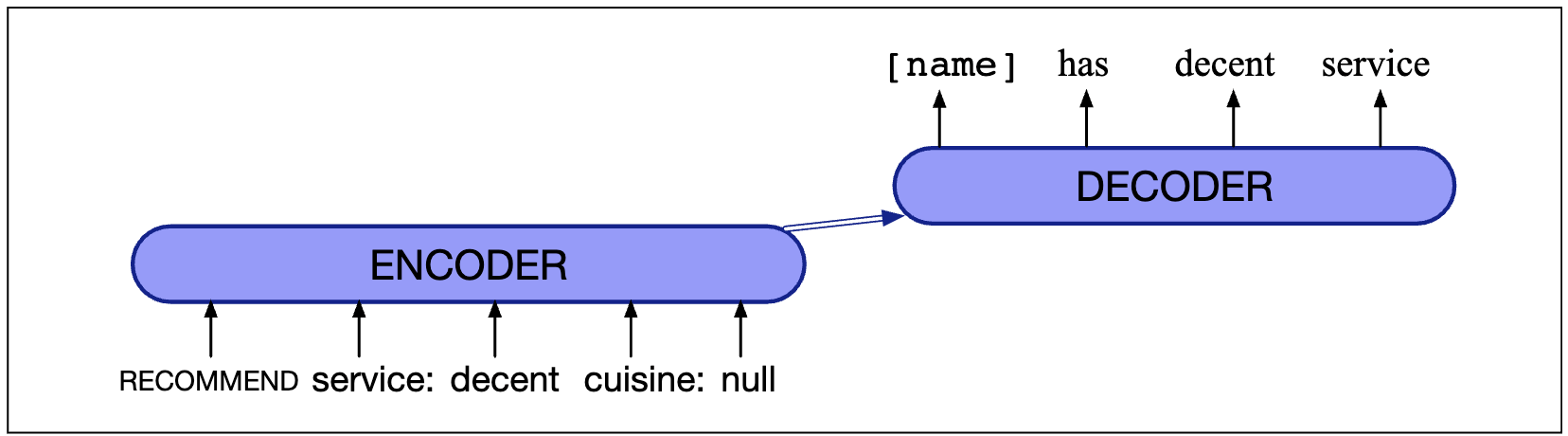
Once a dialogue act has been chosen, we need to generate the text of the response to the user.
https://web.stanford.edu/~jurafsky/slp3/15.pdf

Natural Language Generation
Natural Language Generation
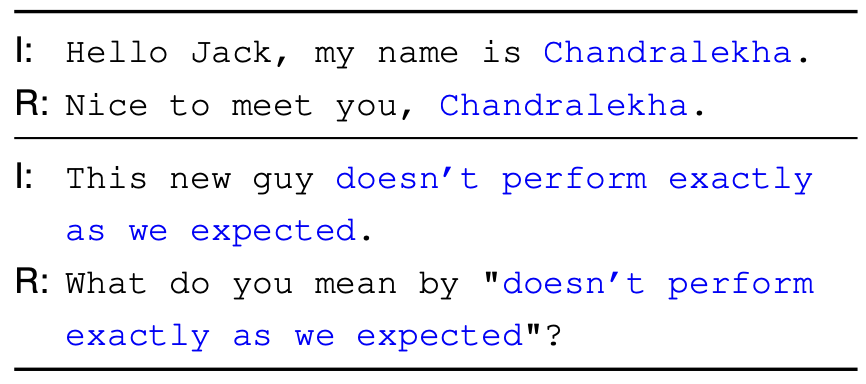
Generation with Placeholders
https://web.stanford.edu/~jurafsky/slp3/15.pdf

Any Questions?
Any Questions?