Large Reasoning Model

Natural Language
Understanding
Large Reasoning Model
Understanding
Large Reasoning Model
Mingming Sun
BIMSA
Part III: Course Map

Part III: Course Map
3.1 Reasoning Processes and Search
3.2 Learning and Scaling Reasoning
3.3 Logic and Uncertainty
3.1 Reasoning Processes and Search 3.1.1 Explicit Reasoning and Decomposition
3.1 Reasoning Processes and Search 3.1.1 Explicit Reasoning and Decomposition
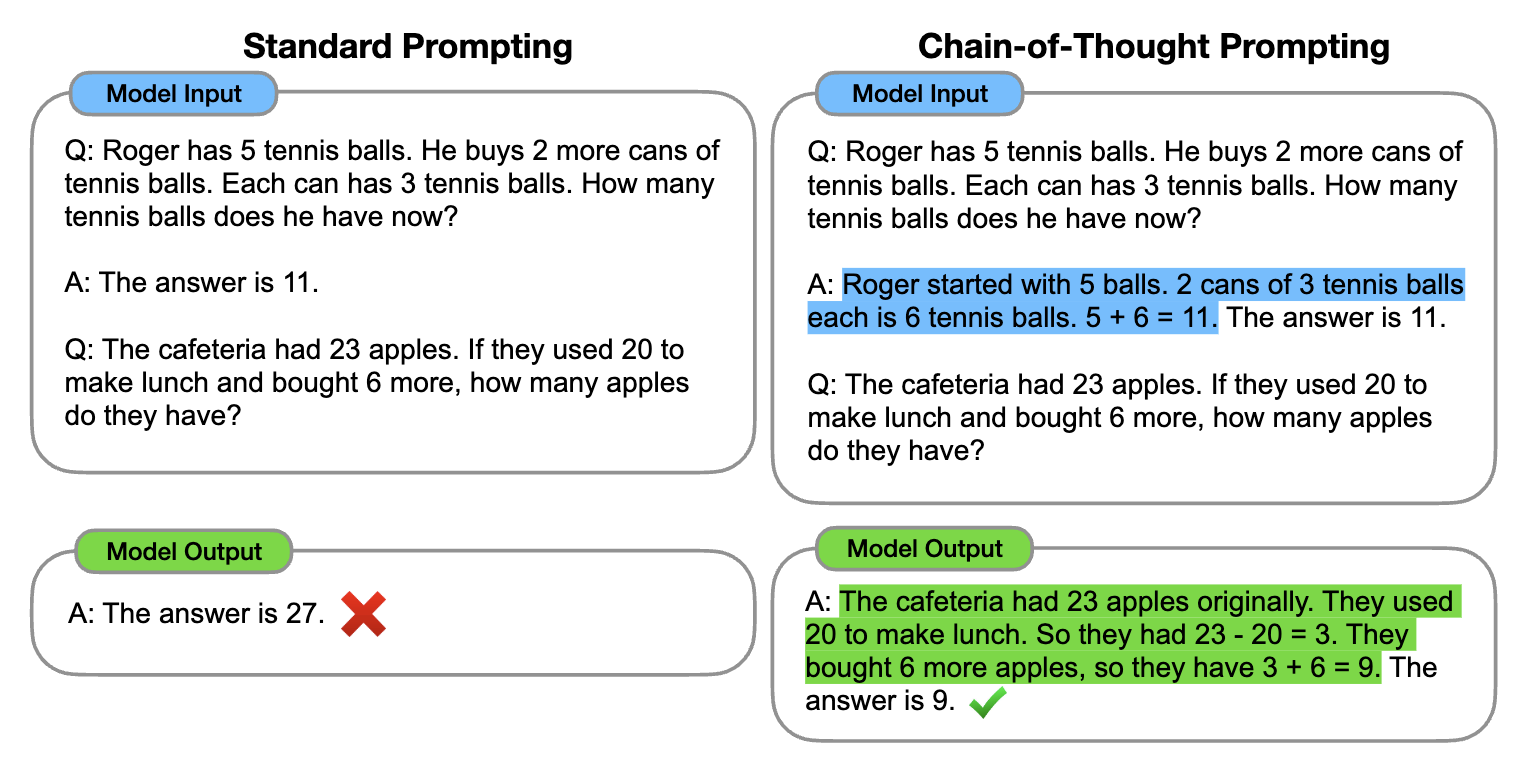
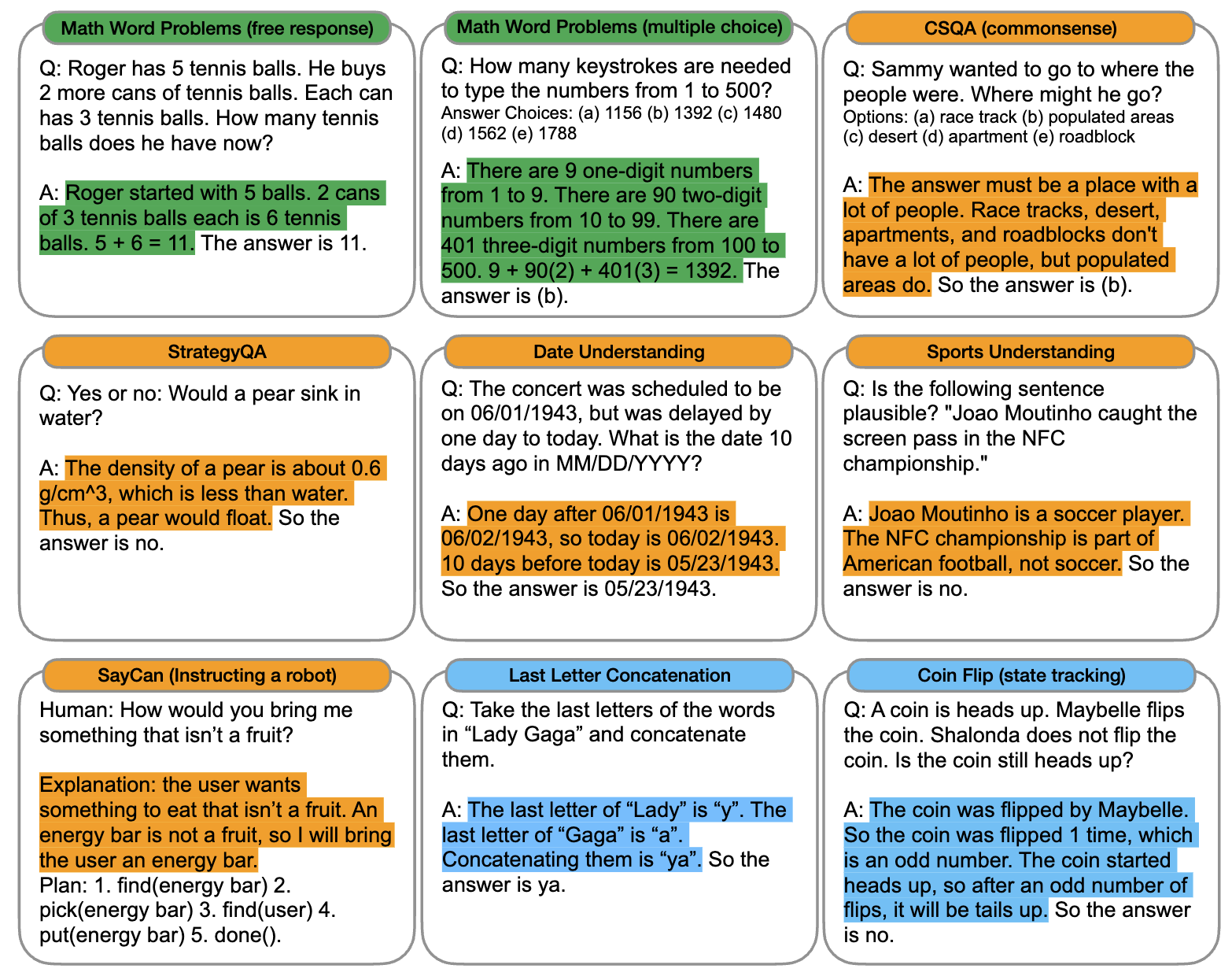
Chain of Thought: Worked Example
Chain of Thought: Worked Example
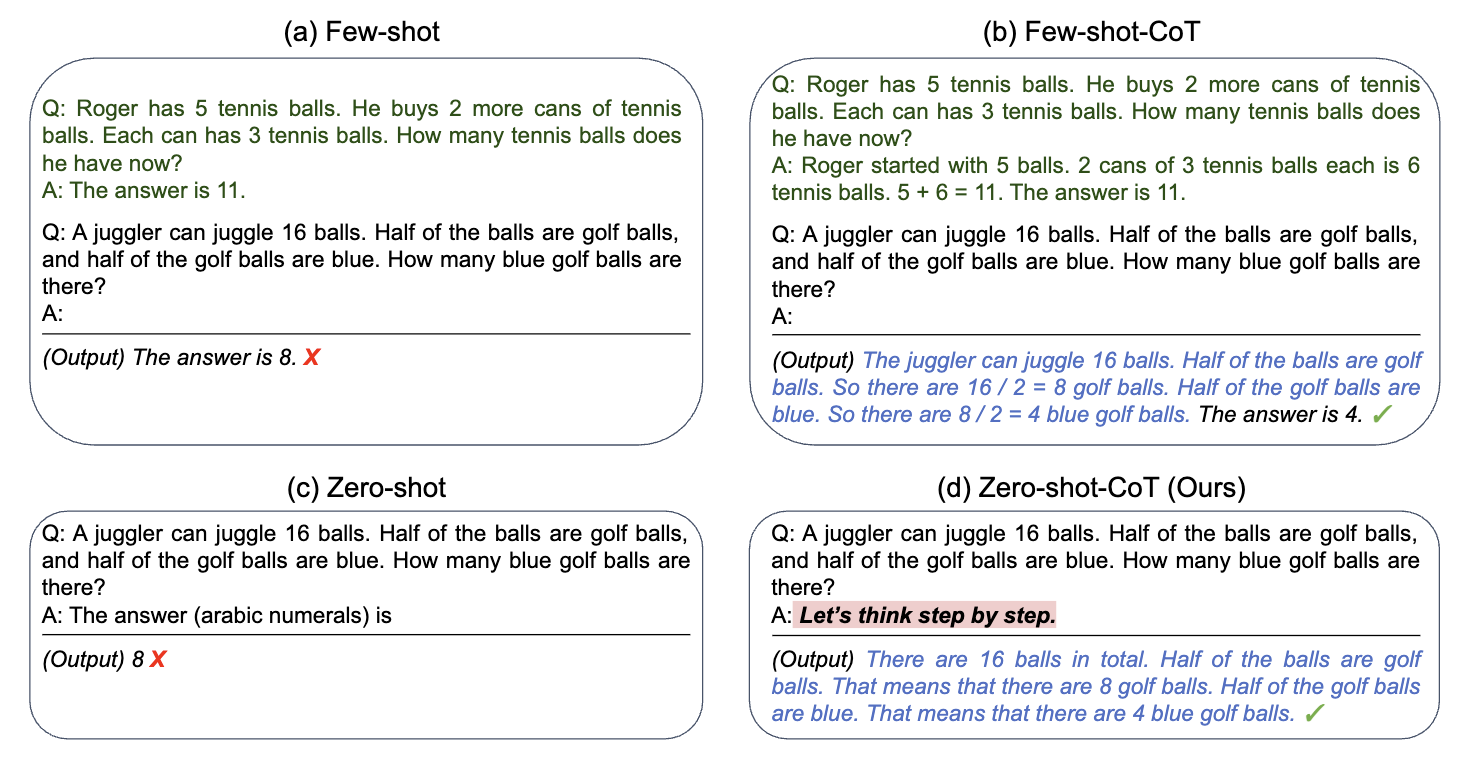
An interesting phenomenon in few shot learning on Pretrained LLM
https://arxiv.org/pdf/2201.11903
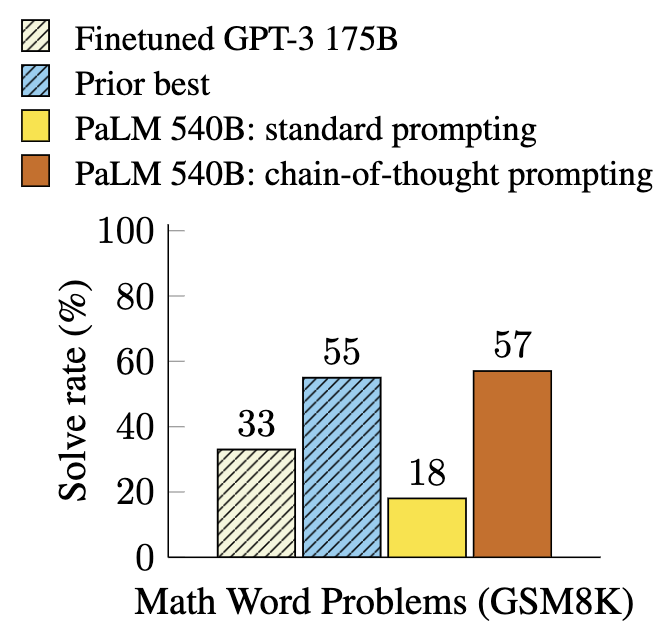
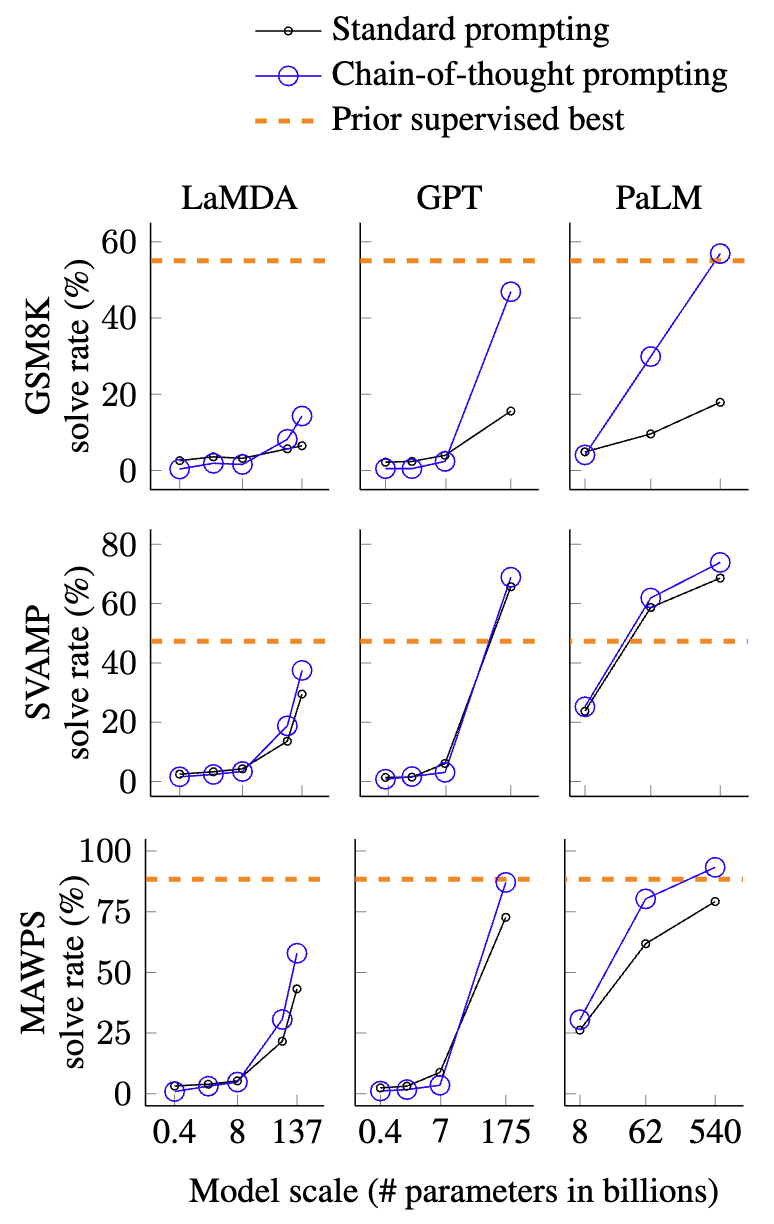
Chain of Thought: Results
Chain of Thought: Results
https://arxiv.org/pdf/2201.11903
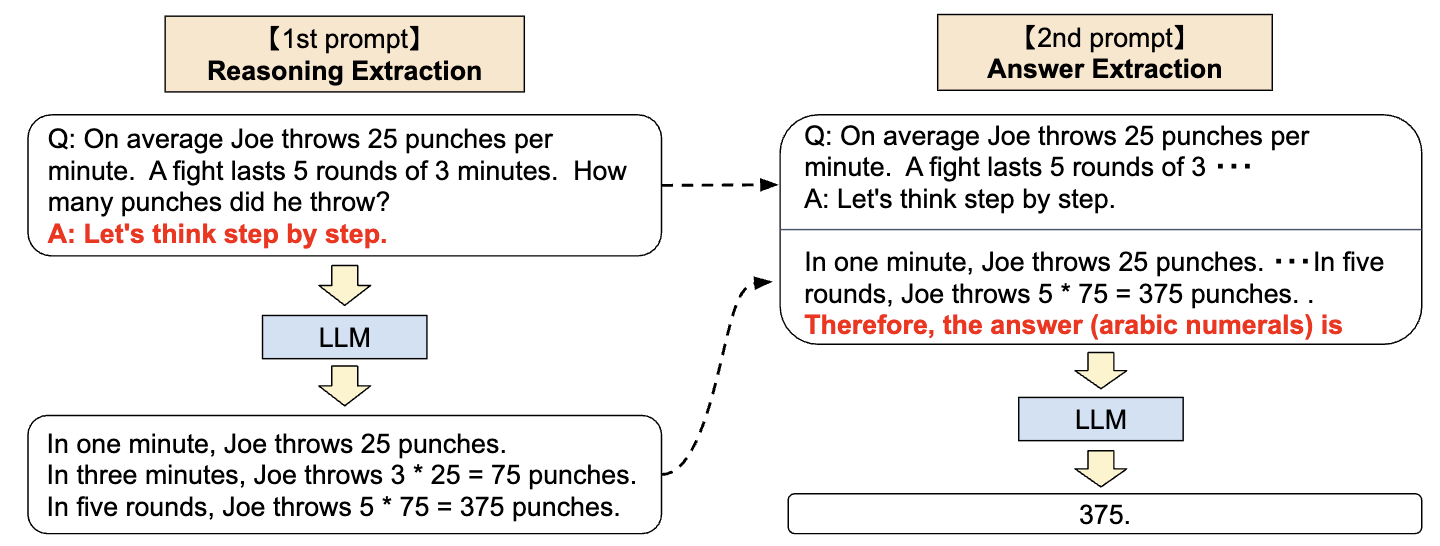
Zero-shot CoT: Method
Zero-shot CoT: Method
https://arxiv.org/pdf/2205.11916
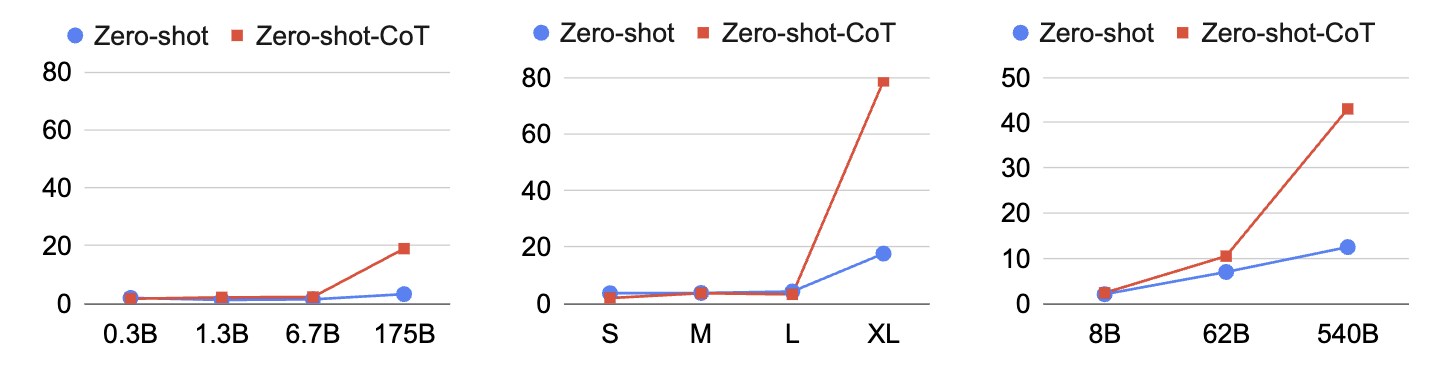
Zero-shot CoT: Results
Zero-shot CoT: Results
https://arxiv.org/pdf/2205.11916
Least-to-Most Prompting
Plan subproblems; reuse their answers
- Decompose: identify the smaller questions needed to solve the original task.
- Solve in order: include earlier question–answer pairs in each later prompt.
- Compose: use those intermediate answers to solve the original question.
Amy’s slide
One trip: 4+1=5 minutes.
15\,\text{minutes}\div5=3 complete trips.
One trip: 4+1=5 minutes.
15\,\text{minutes}\div5=3 complete trips.
A missing dependency or wrong sub-answer can propagate. No interpreter is required.
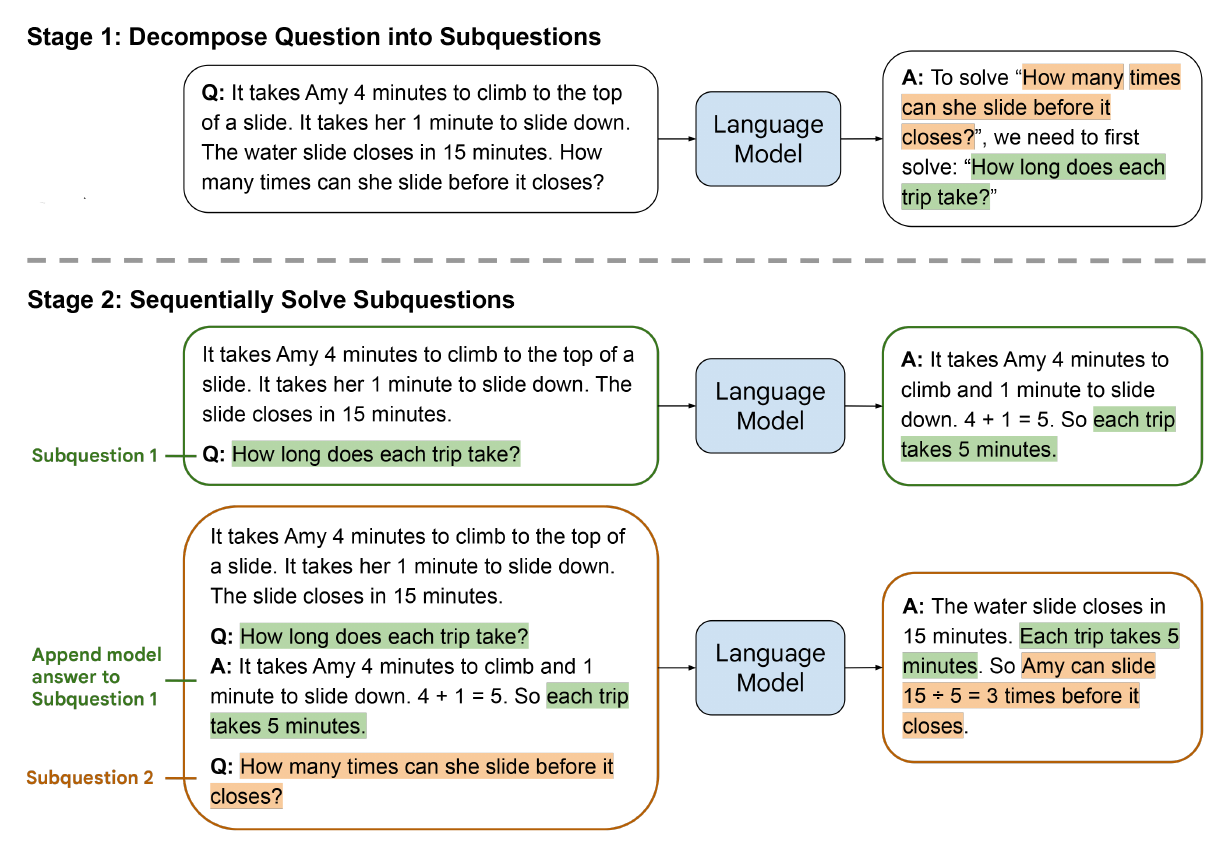
Original figure; click to enlarge. Few-shot demonstrations are omitted in the paper figure.
Longer action instructions (SCAN)
“run and look twice” → RUN LOOK LOOK
CoT 16.2% → Least-to-Most 99.7%
Length split · code-davinci-002 · Table 8.
“run and look twice” → RUN LOOK LOOK
CoT 16.2% → Least-to-Most 99.7%
Length split · code-davinci-002 · Table 8.
PAL: Program-aided Language Models
Generate a program; execute the calculation
Language model: map the story to variables, operations and executable Python.
Interpreter: run the generated program and return its computed answer.
baked = 200
sold = 93 + 39
returned = 6
answer = baked - sold + returned  # 74
“Returned” means +6 here. An interpreter also executes the wrong translation (-6) faithfully.
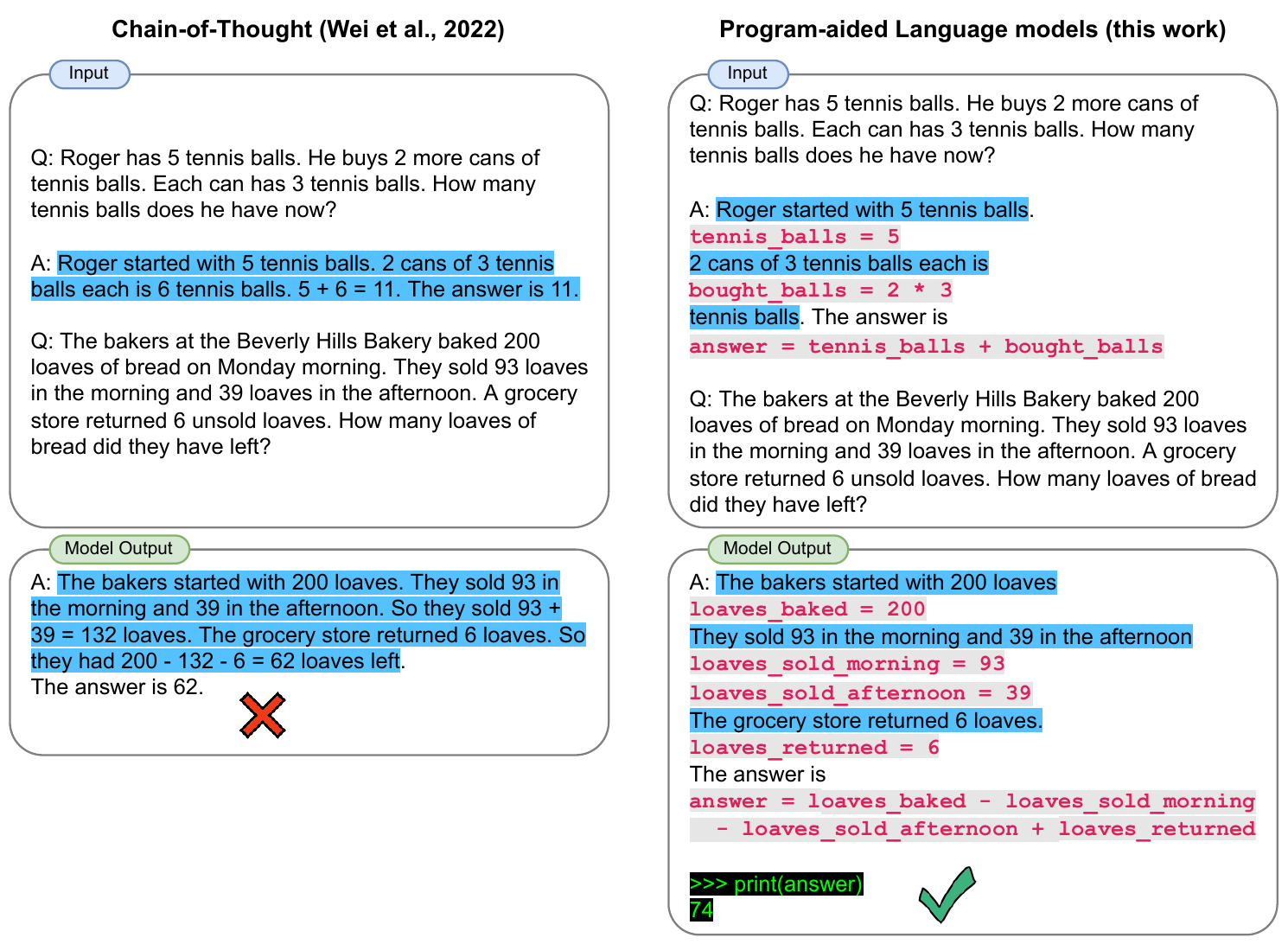
Paper screenshot, lower-right panel. Click for the full CoT / PAL comparison.
When the arithmetic gets harder
GSM-Hard: CoT 23.1% → PAL 61.2%
Word-problem quantities replaced by large numbers.
code-davinci-002 · Table 1; three prompt orders.
GSM-Hard: CoT 23.1% → PAL 61.2%
Word-problem quantities replaced by large numbers.
code-davinci-002 · Table 1; three prompt orders.
PoT: Program of Thoughts
Prompt supplied to the model
Write Python. Store the result in ans.
# Example: 5 balls + 2 cans, 3 per can.
balls = 5
new_balls = 2 * 3
ans = balls + new_balls

# New question: 23 apples; use 20
# for lunch, then buy 6. How many remain?
# Python:
Few-shot: question–program examples, then a new question with its program left blank.
Zero-shot: instruction + new question, without the worked examples.
Model continuation → execution
apples = 23
remaining = apples - 20
ans = remaining + 6
Python executes the code: ans = 9.
Illustrative prompt and continuation; one demonstration shown.
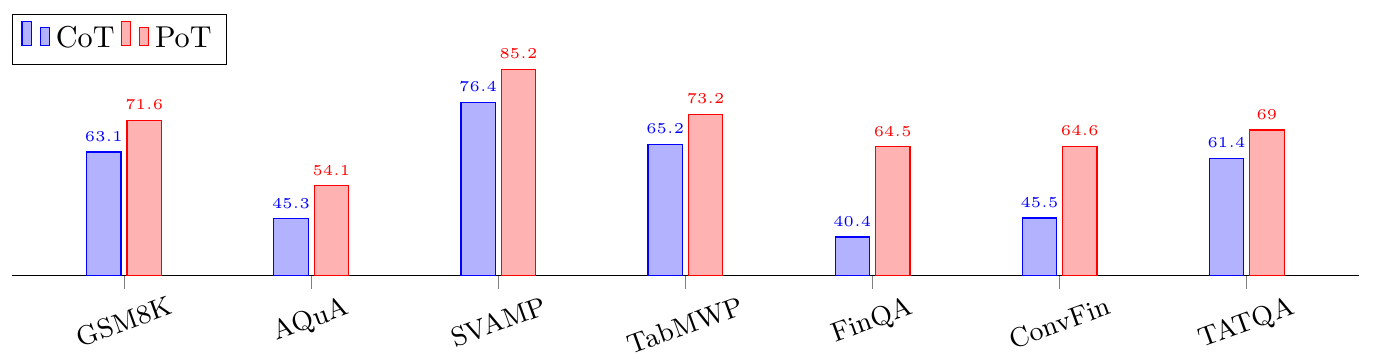
Upper panel: few-shot Codex. GSM8K: CoT 63.1% → PoT 71.6%. Historical results under the paper’s evaluation protocol.
3.1 Reasoning Processes and Search 3.1.2 Test-Time Scaling I: Search and Feedback
3.1 Reasoning Processes and Search 3.1.2 Test-Time Scaling I: Search and Feedback
Reasoning Paths as a Search Space
Reasoning Paths as a Search Space
The decoding space is huge!
It may contain the correct answer for complex problems.
The problem is: How to find them in the huge decoding space?
We’ve learned to activate the COT using carefully designed prompt;
Can we do better without controlling prompt?
Explore in the decoding phase to find logical path to the correct answer ! – Testing Time Scaling
CoT-decoding: Candidate Generation
CoT-decoding: Candidate Generation
Pre-trained LLMs have had responses with step-by-step reasoning among the generations started with the top-k tokens;
But how can we extract the correct reasoning answers?
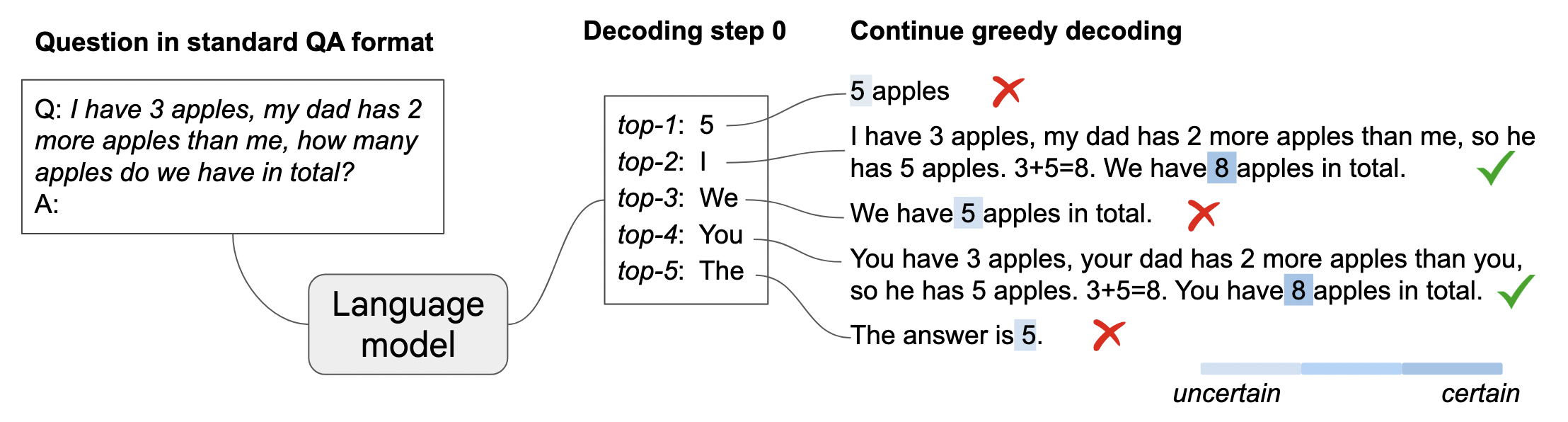
Image Source: Xuezhi Wang, et. al, Chain-of-Thought Reasoning Without Prompting, arXiv, 2024
CoT-decoding: Answer Selection
CoT-decoding: Answer Selection
When a step-by-step reasoning path is present, the final answer will have higher confidence;
Extracting the final answer and then compare the confidence, we get COT sequence with good performance.
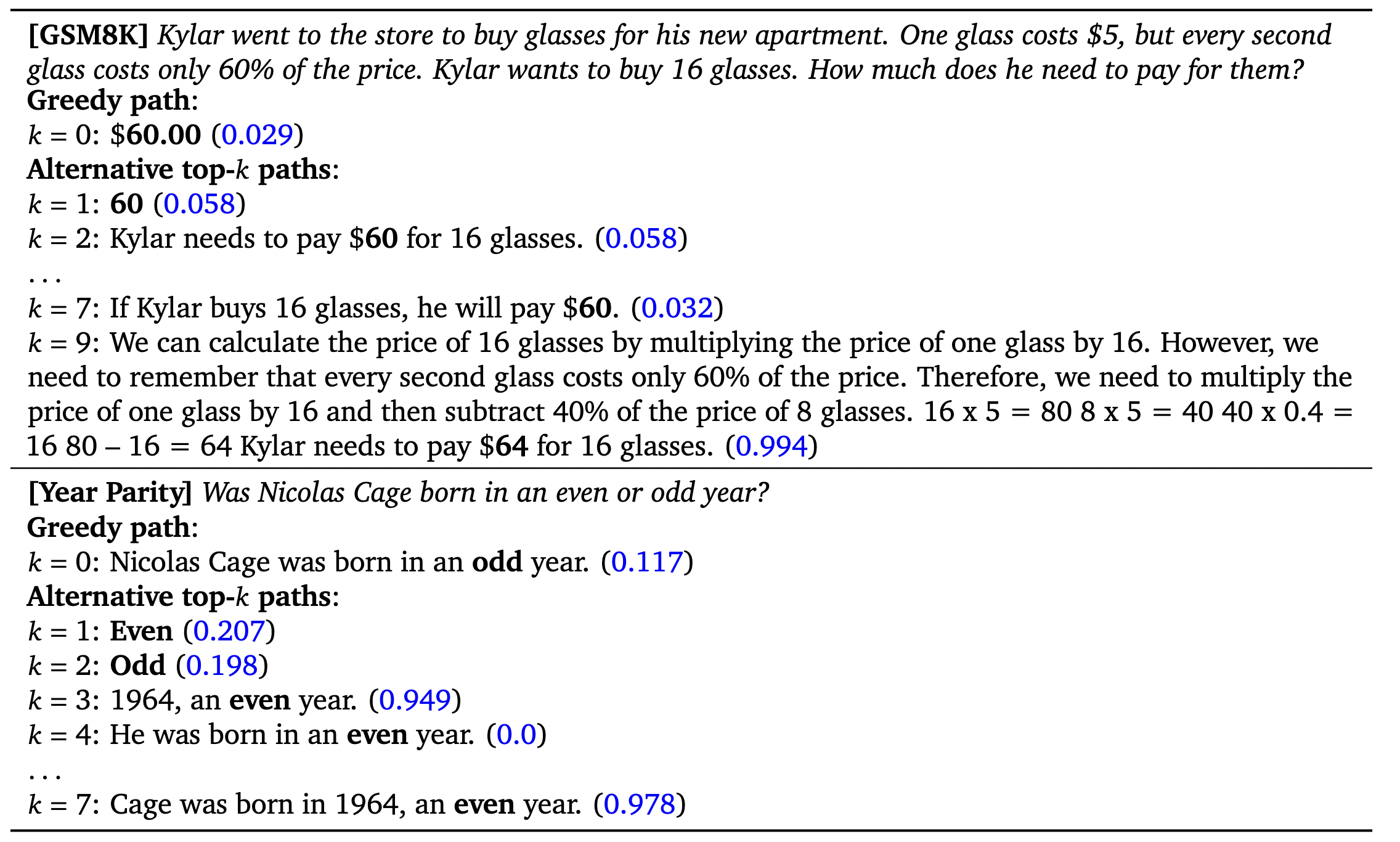
Image Source: Xuezhi Wang, et. al, Chain-of-Thought Reasoning Without Prompting, arXiv, 2024
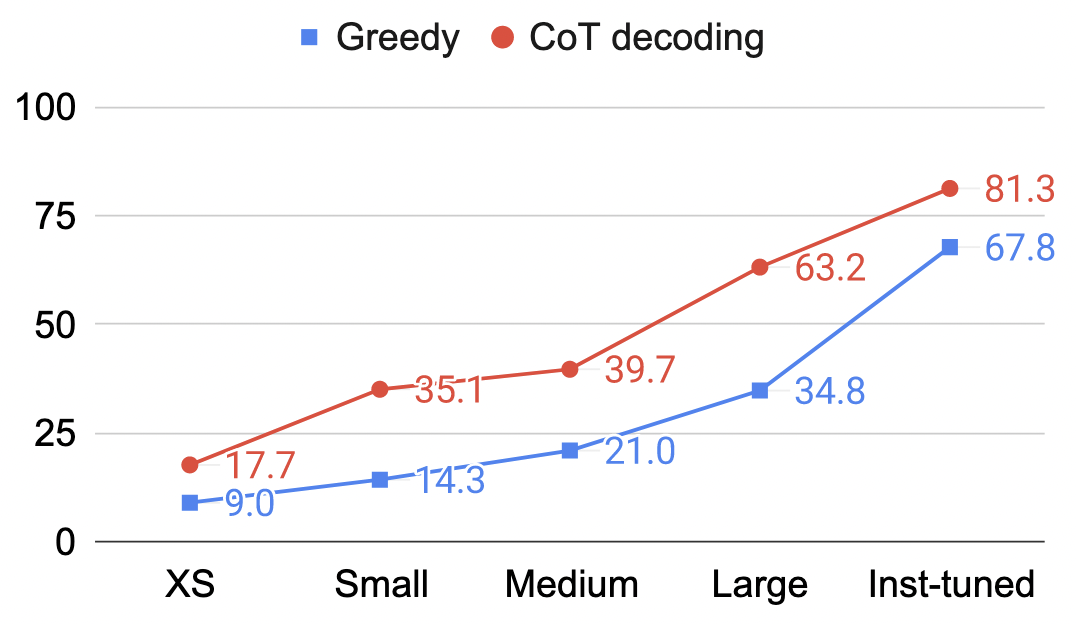
CoT-decoding: Results
CoT-decoding: Results
When a step-by-step reasoning path is present, the final answer will have higher confidence;
Extracting the final answer and then compare the confidence, we get COT sequence with good performance.
Image Source: Xuezhi Wang, et. al, Chain-of-Thought Reasoning Without Prompting, arXiv, 2024

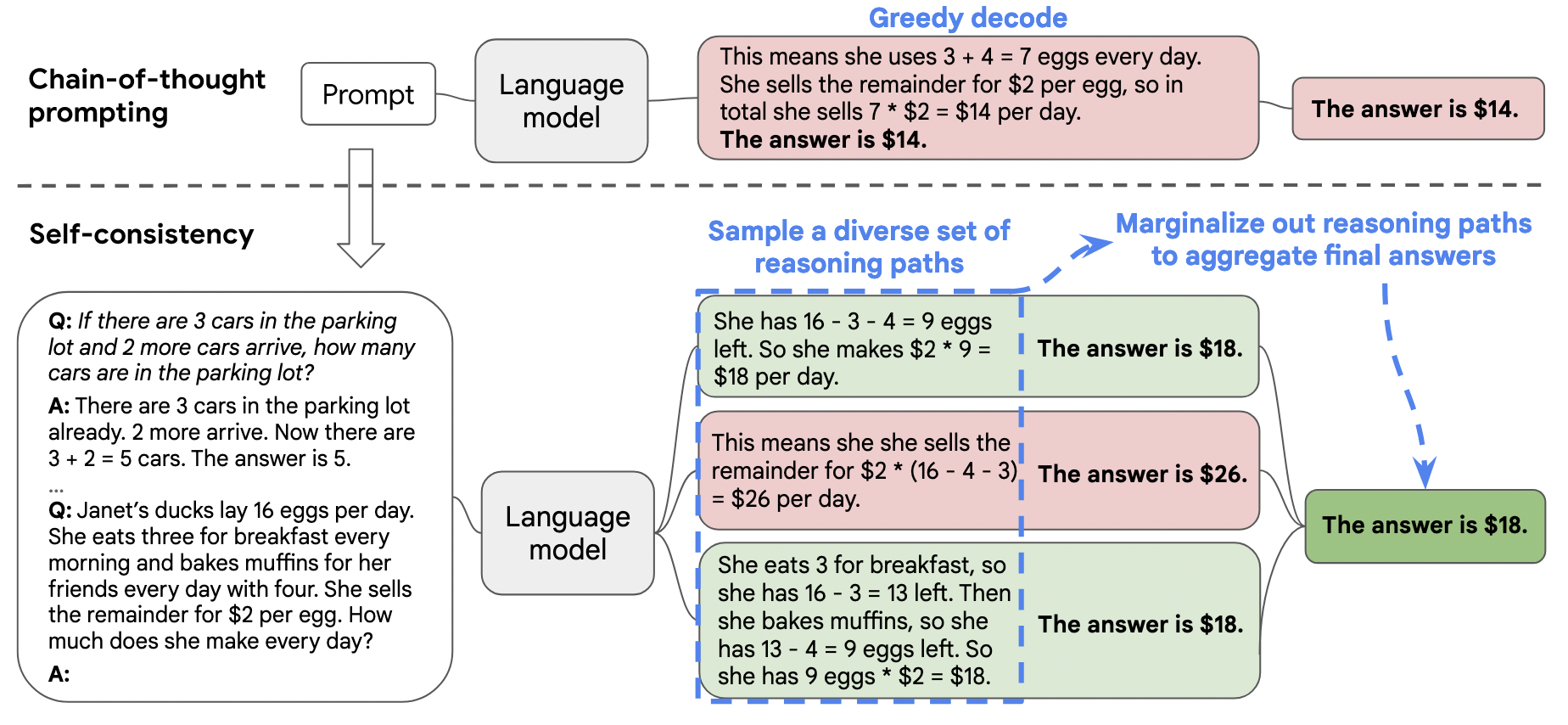
Self-Consistency: Answer Marginalization
Self-Consistency: Answer Marginalization
With COT, LLM does following in decoding:
But we want:
We can do this by sampling:
Xuezhi Wang, et, al. Self-Consistency Improves Chain of Thought Reasoning in Language Models. ICLR 2023.
Self-Consistency: Sampling and Aggregation
Self-Consistency: Sampling and Aggregation
Xuezhi Wang, et, al. Self-Consistency Improves Chain of Thought Reasoning in Language Models. ICLR 2023.
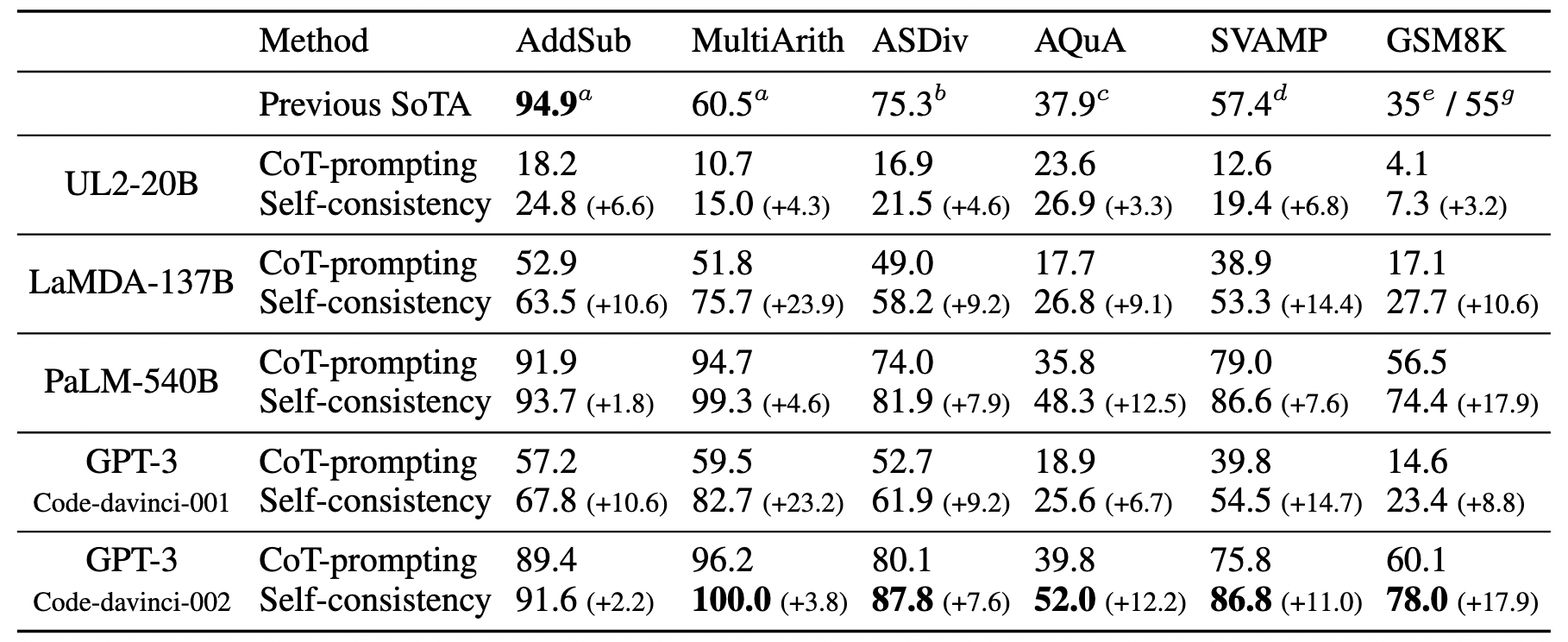
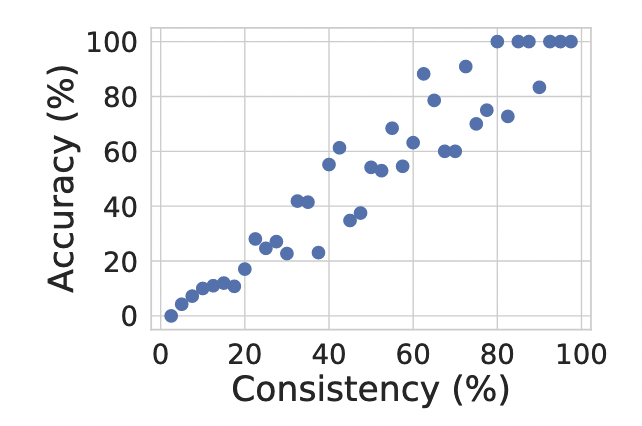
Self-Consistency: Results and Agreement
Self-Consistency: Results and Agreement
Xuezhi Wang, et, al. Self-Consistency Improves Chain of Thought Reasoning in Language Models. ICLR 2023.
Tree of Thoughts: Search and Pruning
Tree of Thoughts: Search and Pruning
In each state, generate several next thought, then evaluate and prune.
Just like tree search.
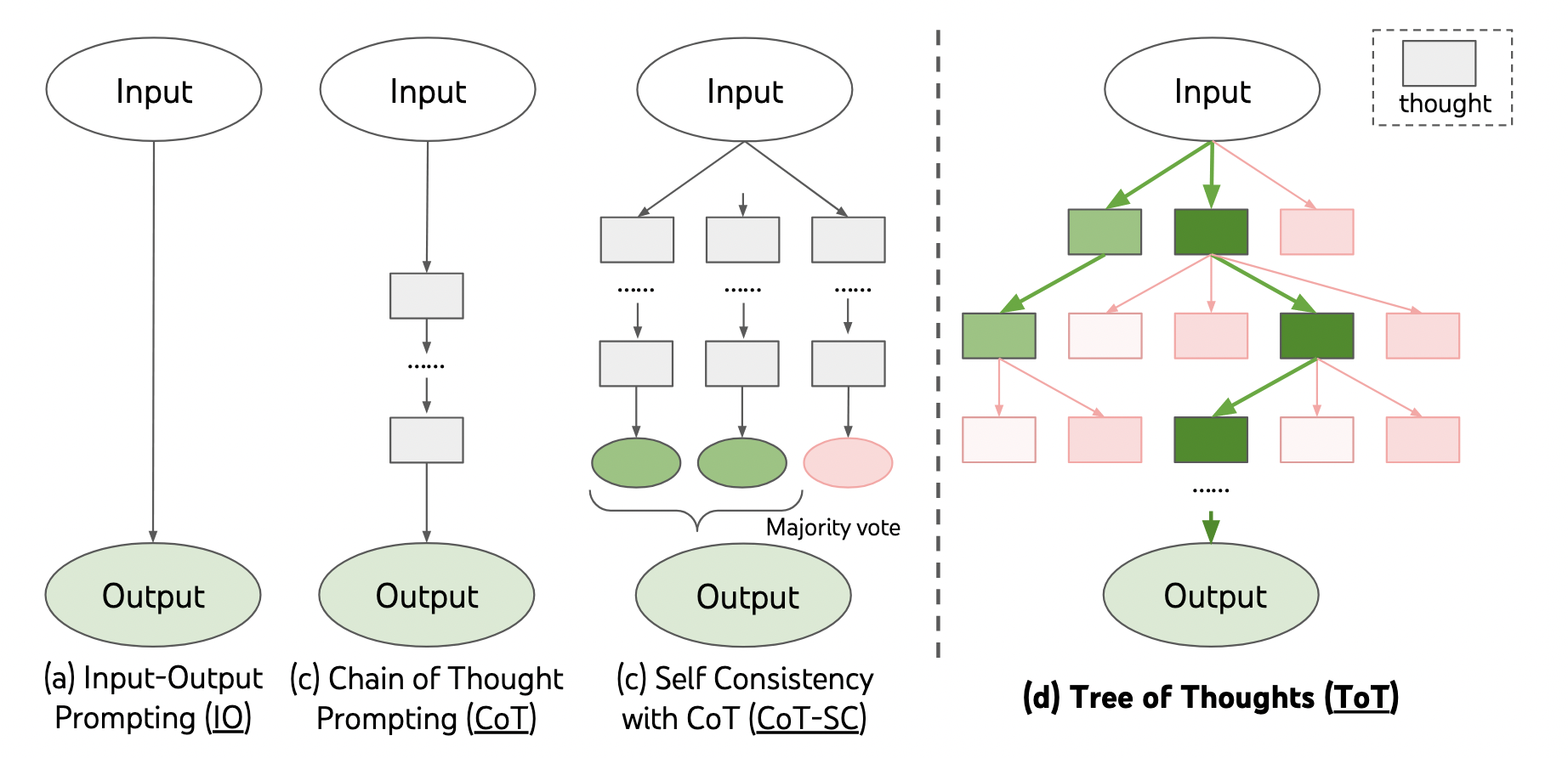
Shunyu Yao, et, al. Tree of Thoughts: Deliberate Problem Solving with Large Language Models, Arxiv, 2023
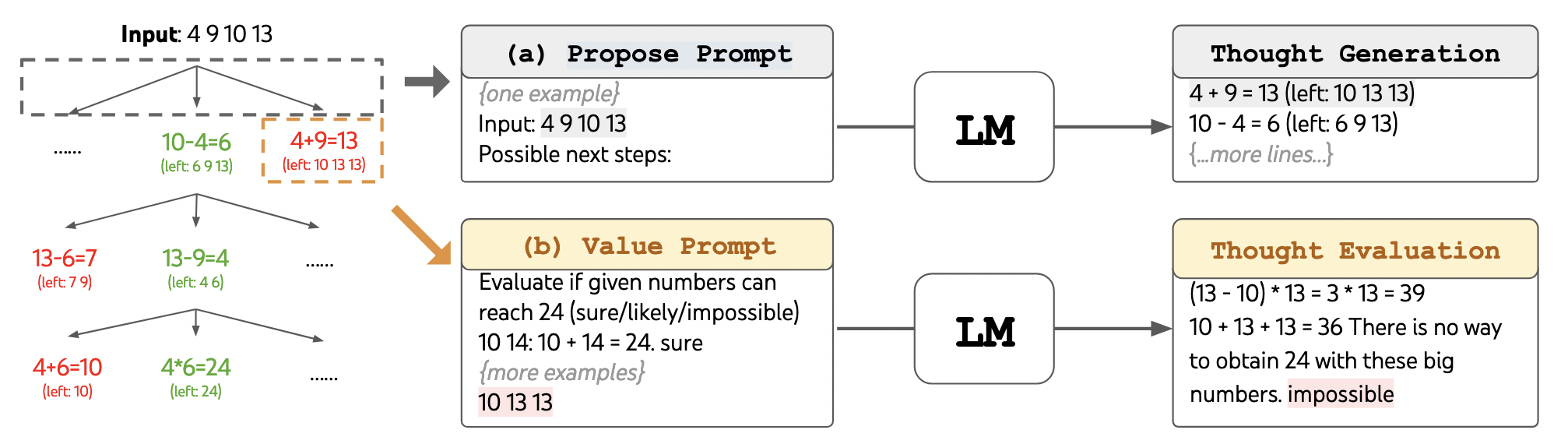
Tree of Thoughts: Game of 24
Tree of Thoughts: Game of 24
Shunyu Yao, et, al. Tree of Thoughts: Deliberate Problem Solving with Large Language Models, Arxiv, 2023
Self-Refine: Feedback and Revision
Self-Refine: Feedback and Revision

Image Source: https://selfrefine.info/
Self-Refine: A Revision Example
Self-Refine: A Revision Example
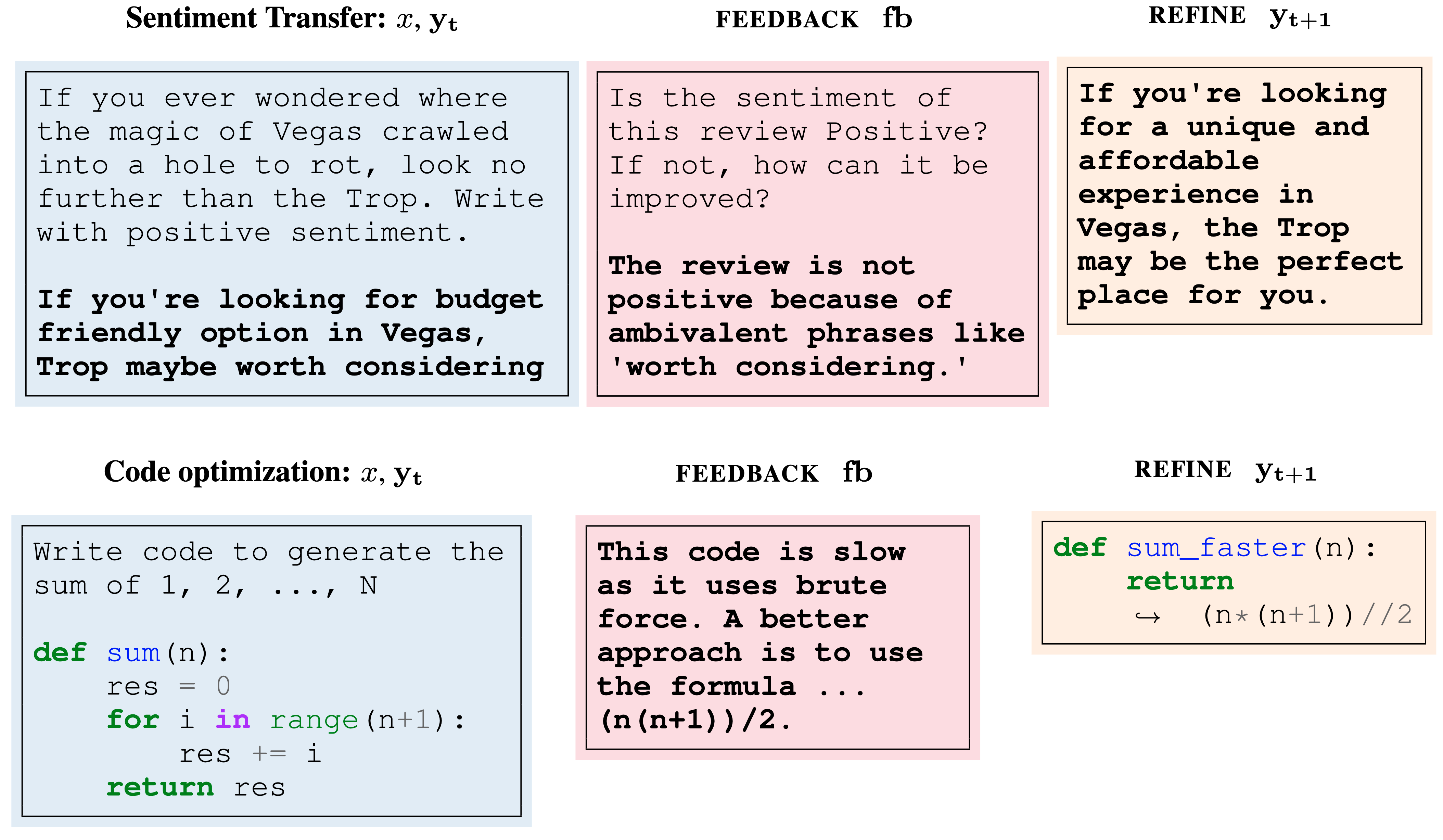
Image Source: https://selfrefine.info/
Self-Correction: Limits without External Feedback
Self-Correction: Limits without External Feedback
Jie Huang, et.al, Large language models cannot self-correct reasoning yet, ICLR 2024
“Large language models cannot self-correct reasoning yet”
Question: If an LLM possesses the ability to self-correct, why doesn’t it simply offer the correct answer in its initial attempt?
The promising results of previous research is misleading;
LLMs cannot properly judge the correctness of their reasoning -- the feedback is misleading.

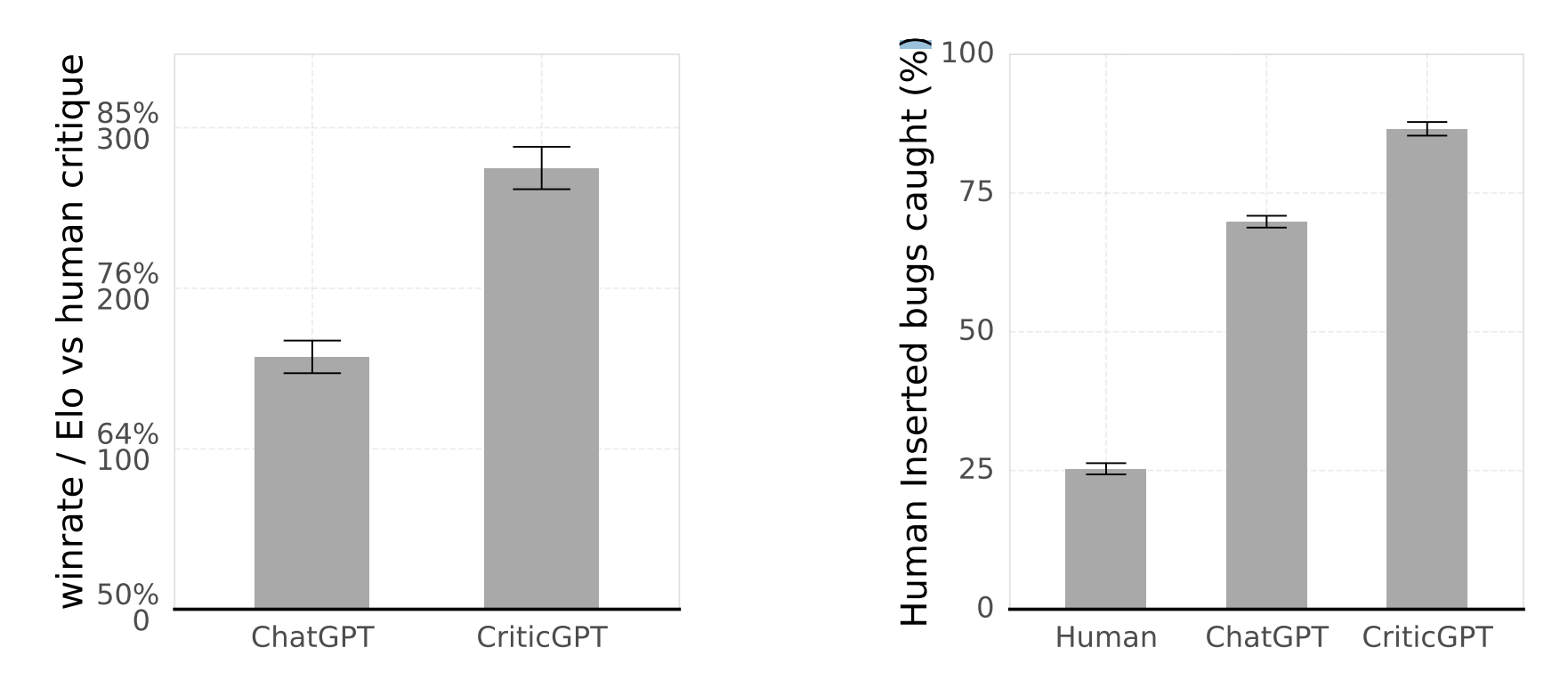
Learned Feedback: Critic GPT
Learned Feedback: Critic GPT
Nat McAleese, et.al, LLM Critics Help Catch LLM Bugs, arxiv 2024
Useful critiques still need independent checks.
Test-Time Compute: When Is It More Efficient?
Test-Time Compute: When Is It More Efficient?
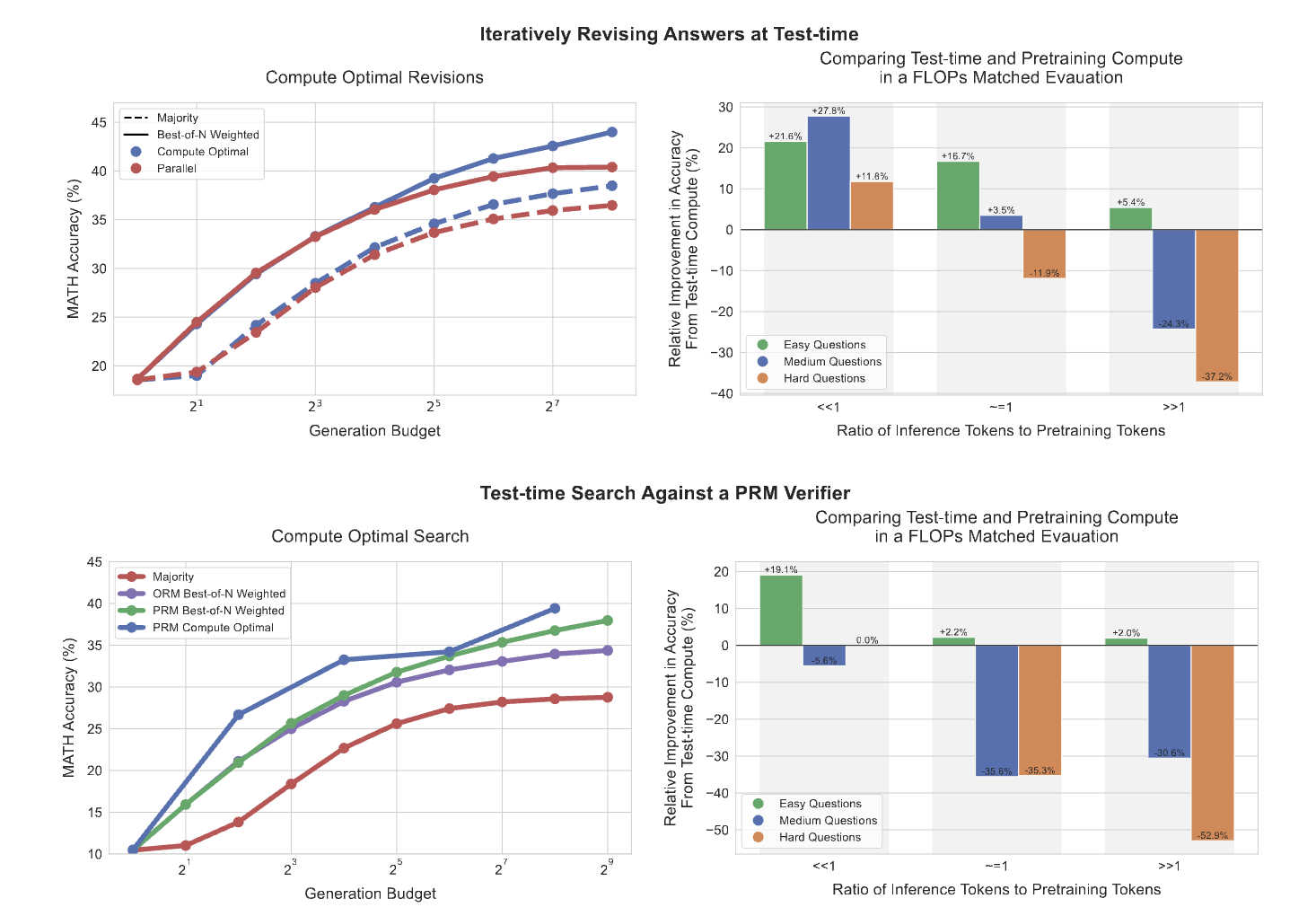
MATH · same total FLOPs
A: pretrain a ~14× larger model;
use greedy decoding.
use greedy decoding.
B: keep PaLM 2-S*;
spend more on revisions / search.
spend more on revisions / search.
Same pretraining token count in both options.
R = total inference tokens / pretraining tokens
Medium questions · revisions
R = 0.16+27.8%R = 22−24.3%
Relative accuracy of B vs A, not percentage points.
Positive: B wins. Negative: A wins.
Positive: B wins. Negative: A wins.